
Club author
Clubs · Dec 18, 2024 · 5 min read
Save
Share
Keep reading
authenticated by

Clubs · Dec 18, 2024 · 5 min read
Save
Share
Keep reading
iGuide Stories
This article will analyze in detail the 9 major challenges that Vietnam is facing in managing and protecting water resources. These challenges not only affect the environment but also have a strong impact on the country's economic and social development. Find out the solutions and strategies needed to overcome these difficulties.
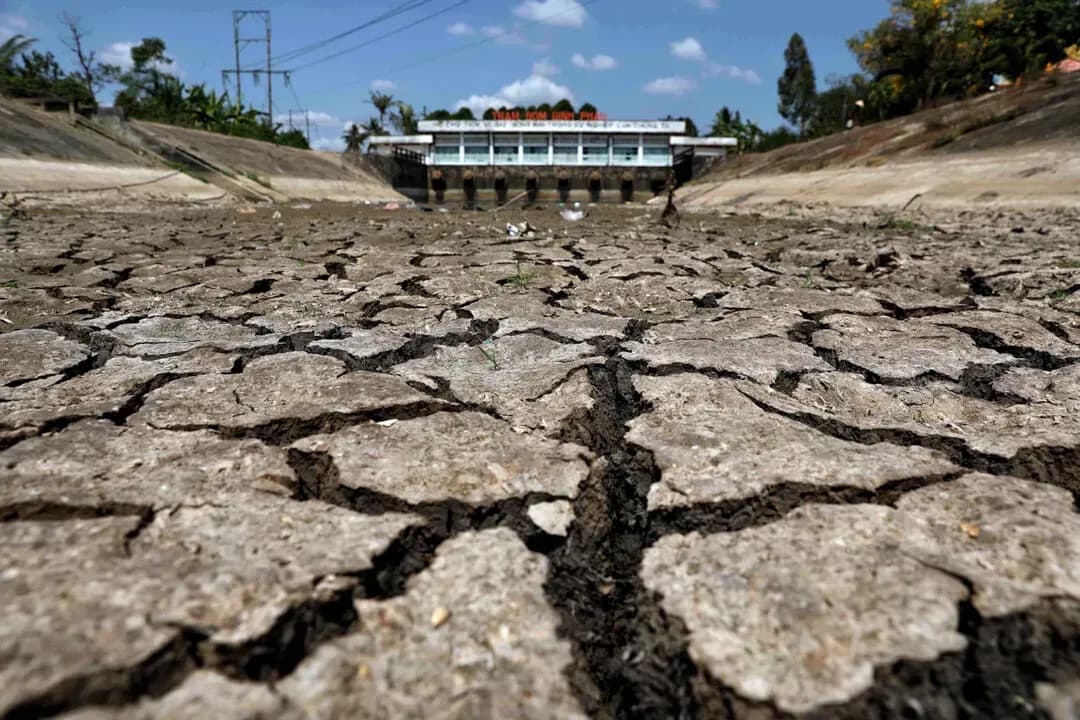
Vietnam is a country with a dense river network and abundant water resources. However, in many places, people are now facing a shortage of water for daily life and production, which raises concerns about water security in the coming time.
Vietnam is one of the countries that suffers the most natural disasters in Southeast Asia and the Pacific and the risk of natural disasters is increasing. Although it is not a country with serious water shortages, in recent years, Vietnam's water resources have faced many major challenges such as: water shortage, uneven water distribution in space and time; impacts of climate change; water pollution; water resources are heavily dependent on foreign countries; conflicts in water use in river basins; low access to safe clean water; protection of forests, water resources in river basins, low water use efficiency; resource issues to comprehensively solve the problem of water security, the consequence is that Vietnam's water resources are too abundant, too scarce, too dirty and are a threat, a cause of slowing down socio-economic growth.
The 9 major challenges of water resources in Vietnam are as follows:
1. Vietnam's water resources mainly depend on foreign countries.
Most of Vietnam's major river systems are transboundary rivers of which Vietnam is a downstream country. The total amount of water flowing into Vietnam from foreign countries is 520 billion m3, accounting for 63% of the total flow of our country's rivers.
2. Water resources are unevenly distributed in space and time.
The entire territory from the northern border provinces to Ho Chi Minh City, where 80% of the population and over 90% of production and service activities are located, has only nearly 40% of the country's water; the remaining 60% of water is in the Mekong Delta, where only 20% of the population and about 10% of production and service activities are located. The Dong Nai River basin, which has only 4.2% of water, is contributing about 30% of the country's GDP. The amount of water in the 3-5 months of the flood season accounts for 70-80%, while the 7-9 months of the dry season only accounts for approximately 20-30% of the year's water.
3. Water exploitation and use efficiency in industries is still low.
The rate of water loss for urban and rural water supply is still high (about 25%), the actual water exploitation capacity is much lower than the design capacity, especially water exploitation in irrigation and agriculture. Most irrigation systems have not yet exploited the design capacity, only at 50 to 90% depending on the area. Meanwhile, water regulation and water use efficiency are low, not economical, water loss is still large (about 30% in irrigation).
4. Pressure from socio-economic development, increasing water demand, and common patterns of water exploitation and use by sectors and localities.
According to statistics, on average, over the past 10 years, water demand has tripled. Over the next 25 years, daily water demand of residents in urban areas is expected to double compared to the current system's capacity. According to calculations, the World Bank forecasts that total dry season water demand in 2030 will increase by 32% compared to present (under the normal scenario), causing pressure and stress on water resources for 11/16 river basins in Vietnam.
5. Pressure on socio-economic development and increasing water pollution.
The pressure of economic development has been exerting increasingly large and serious impacts and pressures on both the quantity and quality of water resources in rivers, streams and aquifers, especially water sources used to produce clean water for domestic use. Most of the river sections flowing through densely populated areas, industrial zones and craft villages have been and are being polluted to varying degrees. In particular, the level of pollution increases in the dry season, when the amount of water flowing into the rivers decreases.
6. Access to clean, safe water at reasonable costs for production and daily life is still low..
Although the average total water reserves of the country and provinces are relatively abundant, some localities still have difficulty accessing clean, safe water sources. While water is considered important for health, sanitation and agriculture, water is also a vital issue for businesses, especially in manufacturing. According to the World Bank's 2015 enterprise survey in Vietnam, about 8% of manufacturing enterprises reported at least one incident of insufficient water supply in the previous year.
7. Maintain and develop forest areas and protect water resources.
The decline of upstream forests and deforestation in Vietnam has reached an alarming level, seriously affecting water resources in river basins. Vegetation loss is the biggest factor leading to basin erosion, topsoil is washed away, leading to sedimentation and reducing the useful capacity of reservoirs. In the 3 years from 2016 to 2018, the average damaged forest area was 2,430 ha/year, a decrease of 270 ha/year, equivalent to a decrease of 10% compared to the period from 2011 to 2015. It is estimated that the period from 2016 to 2020 will decrease by 30% compared to the period from 2011 to 2015.
8. Impacts of climate change and water-related risks.
Our country is one of the countries most severely affected by climate change, in which water resources will be affected the most and soonest due to unusual changes in rainfall and rising sea levels, most concentrated in the two main rice and aquatic product production areas of the country, the Mekong Delta and the Red River Delta. It is forecasted that by 2030, 45% of the Mekong Delta area will be at risk of salinity, reducing rice productivity by 9% compared to present.
9. Governance and resource issues to comprehensively address water resources tasks for the immediate future and the next 20-30 years.
Currently, the legal framework on water resources management is relatively comprehensive, but there is still no specific information on the responsibilities of ministries, branches and localities in state management of water resources, management and operation of water exploitation and use works, responsibility for protecting and developing water resources, and preventing harmful effects caused by water.
React to this story
Log in to leave a comment. Log in
Be the first to comment.
Curate
Sign in to curate


