
Club author
Clubs · Nov 24, 2024 · 3 min read
Save
Share
Keep reading
authenticated by

Clubs · Nov 24, 2024 · 3 min read
Save
Share
Keep reading
iGuide Stories
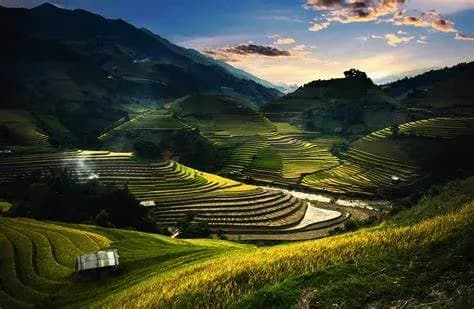
Vietnam possesses a rich and diverse natural capital, from pristine forests, marine ecosystems to freshwater resources and valuable minerals. Protecting these potentials is essential to maintain sustainable development and conserve resources for future generations. This article analyzes the important natural capital potentials of Vietnam and why they need protection.
The Law on Environmental Protection (amended in 2020) has added content on economic tools and resources for environmental protection, clearly stating the promotion of exploitation, use and development of natural capital. ; At the same time, add policies on green credit and green bonds to mobilize a variety of social resources for environmental protection.
Vietnam has a very important strategic position in the region and the world, connecting the large maritime economic region with the Asian continental economic region. Natural resources are rich and have much potential to exploit and use such as: Climate resources, land resources, forest resources, mineral resources, water resources, marine resources and biodiversity.
- Land resources: Statistics show that, as of December 31, 2017, the whole country had 33,123.6 thousand hectares, the land area used for purposes accounted for more than 93% of the total natural area. Of which, agricultural land group is 11,508.0 thousand hectares (accounting for 34.74% of the total natural area), forestry land is 14,910.5 thousand hectares (accounting for 45.01% of the total natural area), land specialized use is 1875.3 thousand hectares (accounting for 5.66% of the total natural land area); and 714.9 thousand hectares of residential land.
- Water resources: Vietnam has 3,450 rivers and streams with a length of 10 km or more. These rivers and streams are located in 108 river basins distributed and spread across the country with a total area of over 1,167 million square kilometers. Among them, there are 33 large, inter-provincial river basins, with 3,140 rivers (accounting for 91% of the country's number of rivers), the total basin area is about 306.44 thousand km2, equal to 92.6% of the country's land area. ta. The total dynamic reserve of underground water in the entire territory, not including islands, is about 2,000 m3/s (about 63 billion m3/year).
- Ecological resources: The diversity of Vietnam's topography, soil and climate has created a diversity of natural ecosystems, including forests, seas, wetlands and a wealth of natural resources. species and biological genetic resources. Vietnam has 9 world biosphere reserves; 2 World Natural Heritage sites; 8 Ramsar sites and 5 Heritage Gardens.
Vietnam is also a country with high biodiversity in animal, plant and biological species. According to statistics, up to now in nature there are up to 7.5 species of microorganisms, 16.4 thousand species of plants, 10.3 thousand species of terrestrial animals, 2 thousand species of freshwater aquatic animals, over 11 thousand species. marine life.
- Non-renewable resources: Vietnam has discovered over 5,000 mines and ore sites with over 60 different types of minerals, some of which are large-scale reserves, which are resources for socio-economic development. , especially during the period of industrialization and modernization of the country.
- Renewable resources: Vietnam has the potential to develop available renewable energy sources including: Small hydropower, wind energy, biomass energy, biogas energy, biofuel, magnetic energy. sources of household waste, solar energy, and geothermal energy.
Log in to leave a comment. Log in
Be the first to comment.
React to this story
Curate
Sign in to curate


