
Club author
Clubs · Dec 19, 2024 · 30 min read
Save
Share
Keep reading
authenticated by

Clubs · Dec 19, 2024 · 30 min read
Save
Share
Keep reading
%20performance%20taking%20place%20on%20the%20ornate%20stage%20inside%20Thai%20Hoa%20Palace%2C%20with%20musicians%20in%20traditional%20costumes%20playing%20classical%20instruments.webp&w=3840&q=75)
iGuide Stories
Folk art originates from the life of Vietnamese people. Along the length of the S-shaped country, each region preserves its own form of folk art, reflecting the real life, understanding the soul of the people, the country and the long-standing culture of Vietnam.
Vietnamese folk art, originating from the simple life of the people, is a vivid picture along the length of the S-shaped country. Each region, with its own unique culture, preserves different types of folk art, creating a harmonious whole, truly reflecting the life and soul of the Vietnamese people. Through this, international friends can understand more deeply about the country and its long-standing culture.
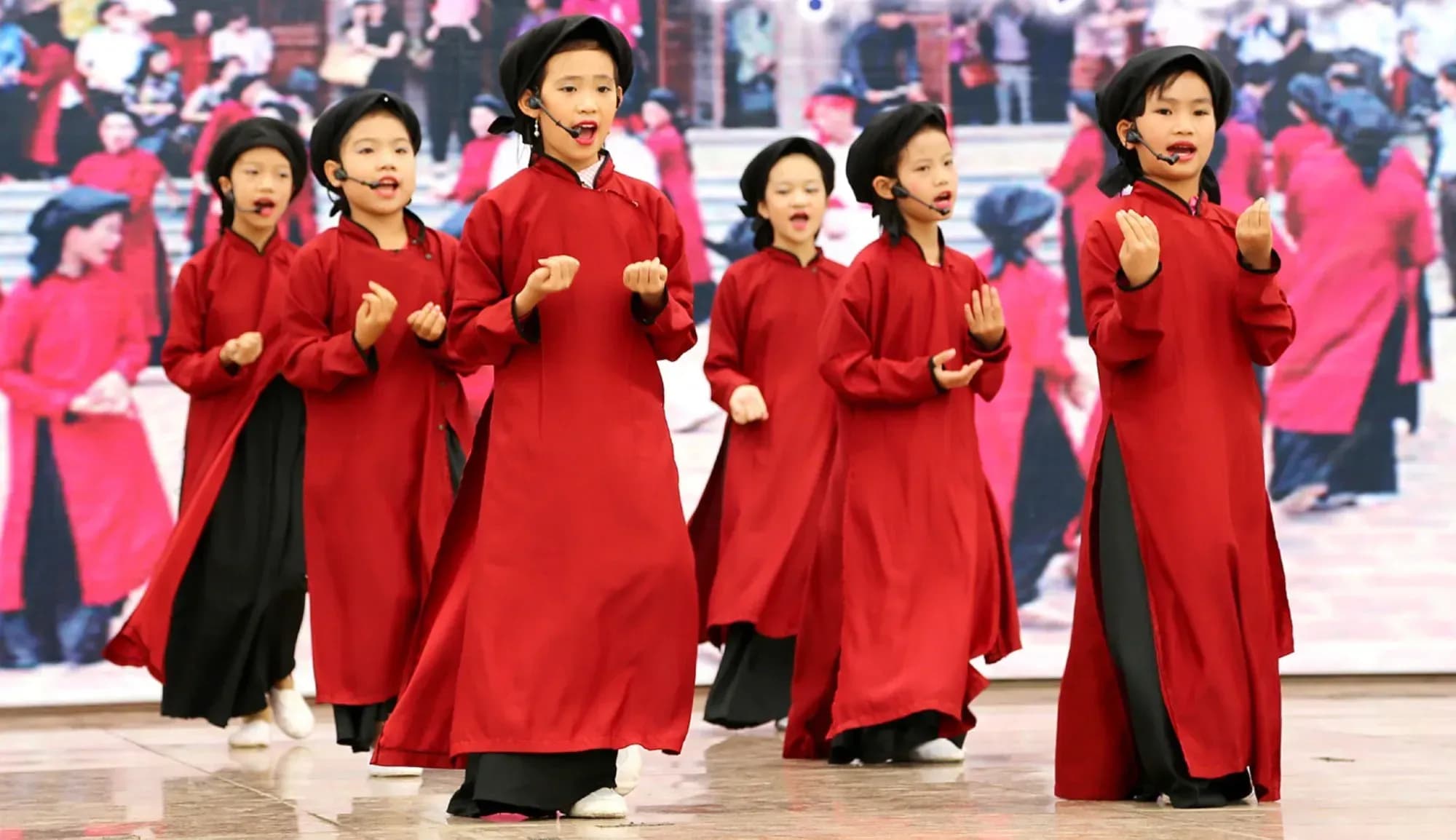
Xoan singing is an intangible cultural heritage from the ancestral land of Phu Tho, a solemn and colorful form of ceremonial folk music. Known by names such as hat cua dinh or “Khuc mon dinh”, Xoan singing is a wonderful combination of music, singing, and dance, serving the religious needs of the community. Xoan singing performances are usually performed in a certain order, demonstrating a long-lasting vitality through the combination of ceremonial singing and love singing.
The origin of Xoan singing, also known as Spring singing, is closely related to the agricultural residents who grew wet rice since the Hung King period. These were the first songs that reflected the working life, blending with the natural singing of daily life. King Hung, realizing the great value of Spring singing to society, encouraged and spread these simple melodies throughout the countryside, turning them into the spiritual part of festivals.
The story of the name change from Hat Xuan to Hat Xoan also contains many interesting features. The story is about Lan Lang Vuong, the eldest son of Lac Long Quan and Au Co, who stayed in Phong Chau to protect the country. One day, when the king returned from a victory, the queen had a difficult labor, thanks to the singing of the girl Que Hoa, both mother and child were safe. Moved by the magical power of music, the king spread Hat Xoan throughout the country for everyone to enjoy.
Xoan singing is a type of folk song, ritual, custom, also known as singing at the communal house or “Khuc mon dinh,” is a multi-element art form including music, singing, and dancing to serve the religious needs of the community. Xoan singing clearly shows its richness and diversity, from content to performance form. This type is not only a way to immerse yourself in rituals, but also a bridge connecting emotions between people, expressed through three main parts: Rituals singing, Qua cach singing, and Giao duyen singing.
The ritual singing section is often used for solemn events, with carefully selected singers, solemnly expressing respect. The singing is diverse and creative, expressing melodies originating from agricultural labor, closely associated with the lives of people through many generations. Meanwhile, the love song is a bridge of emotions, where the emotional singing between men and women expresses the affection and soul of the Vietnamese people through love songs and folk games.
Ritual singing includes songs: Songs to greet the King, invite the King, Drum teaching, Firecracker teaching, Incense poetry, Closing the ceremony. Hat qua cach includes 14 songs (qua is song; cach is singing form, singing style): Kieu giang cach; Nhan ngam cach; Trang mai cach; Ngu tieu canh muc cach; Doi day cach; Hoi lien cach; Xoan thoi cach; Ha thoi cach; Thu thoi cach; Dong thoi cach; Tu mua cach; Thuyen row cach; Tu dan cach; Choi dau cach. Hat hoi includes many songs, sung freely and freely, the content of the songs has deep lyrical meaning: Betel and betel (also known as Bom gai); Bo bo; Xin hue - Do hue; Do chu; Hat dum; Cai hue; Mo ca...
Xoan singing originated in Phu Tho, then spread to the villages on both banks of Lo River, Red River, and Vinh Phuc province. The four ancient Xoan guilds are An Thai, Phu Duc, Kim Doi and Thet, located in Kim Duc and Phuong Lau communes (Phu Tho).
International scientists have identified Vietnam as the cradle of wet rice civilization, in which Xoan singing is a precious gem, reflecting the brilliant development and unprecedented creativity. With outstanding global values, on November 24, 2011, at the 6th Conference of the Intergovernmental Committee for the Safeguarding of the Intangible Cultural Heritage of UNESCO held in Bali (Indonesia), Vietnam's Xoan singing dossier in Phu Tho was recognized as an Intangible Cultural Heritage in Need of Urgent Safeguarding of Humanity. On December 8, 2017, at the 12th Conference, the Intergovernmental Committee for the Safeguarding of the Intangible Cultural Heritage of UNESCO officially removed Phu Tho Xoan singing from the state of urgent protection and became a representative Intangible Cultural Heritage of Humanity. This is the first time the Intergovernmental Committee has decided to withdraw a heritage from the List of Intangible Cultural Heritage in Need of Urgent Safeguarding and transfer it to the Representative List of Intangible Cultural Heritage of Humanity. This event marked the initial success of Phu Tho province and the community that has made efforts and determination to fulfill its commitment to protect the Hat Xoan heritage in need of urgent protection over the past 6 years. Currently, more than 100 Hat Xoan clubs have been established throughout Phu Tho province, with the participation of many generations. Agencies, businesses, and schools have also included Hat Xoan in their activities and teaching programs, spreading this precious folk song everywhere.
Through Xoan singing, we see that Vietnamese culture exists side by side with strong vitality and valuable heritages. Preserving Xoan singing is not only to maintain cultural beauty, but also a noble duty of every Vietnamese person, ensuring that the singing will forever resonate for future generations.
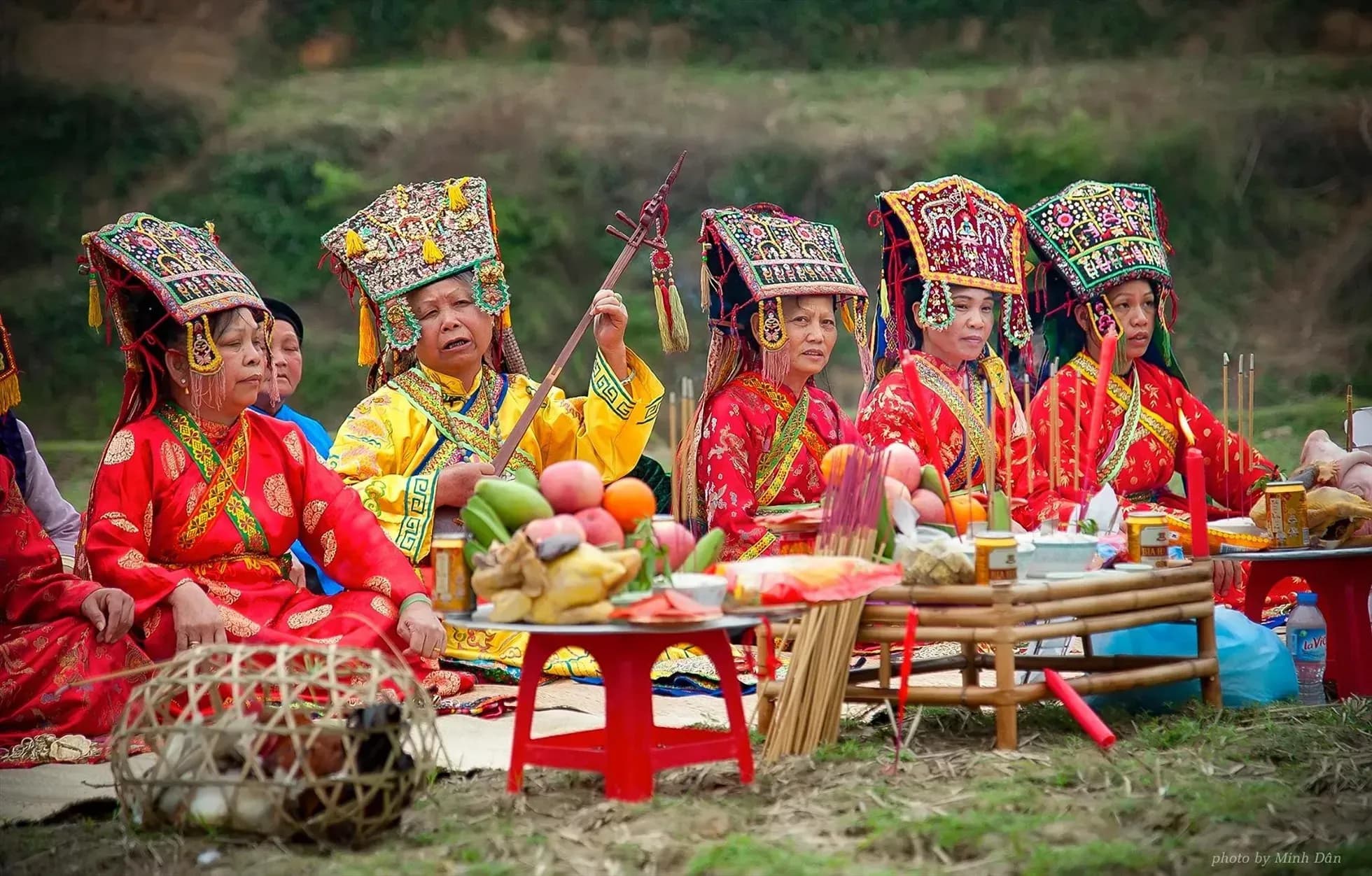
Originating from the lives of the Tay, Nung, and Thai people, Then singing is a religious performance art rich in cultural and historical values. Accompanied by the Tinh lute, Then singing carries the breath of working life, praising morality and criticizing bad habits. Then singing is considered a "fairy song", and often appears in important ceremonies such as praying for crops, praying for peace, and granting titles.
Then singing and Tinh lute originated from the working life of the ancient Tay people. According to folk beliefs, Then means Heaven, Heaven means “sky”, and is considered a song passed down from the gods. Therefore, in the life of the ancient Tay people, it is used in important events or ceremonies to pray for peace, crops, and to call the soul… The Tay people believe that Then melodies help send prayers to heaven.
Then singing is a combination of many artistic activities such as dancing, playing, singing... The Tinh is a unique folk musical instrument of the Tay people, bringing smooth, sweet and warm sounds. The instrument is made of a gourd shell, the surface is made of Vong wood, the handle is made of Khao Quang or Mulberry wood. Then singing and Tinh harmonize, responding to the feelings of the player and listener, creating a feeling of nostalgia.
Then lyrics are words that have been carefully selected and refined by the people; they are both lyrical and melodious poems, as well as advice and encouragement; and experiences in dealing with people... Therefore, listening to the Tinh lute and Then lyrics, people can see a part of their own life in them.
Cao Bang Then singing also has a prominent feature of community, singing during festivals, weddings, cultural activities, both men and women know how to sing. Therefore, Then singing has become an indispensable need in the life of the Tay people in Cao Bang.
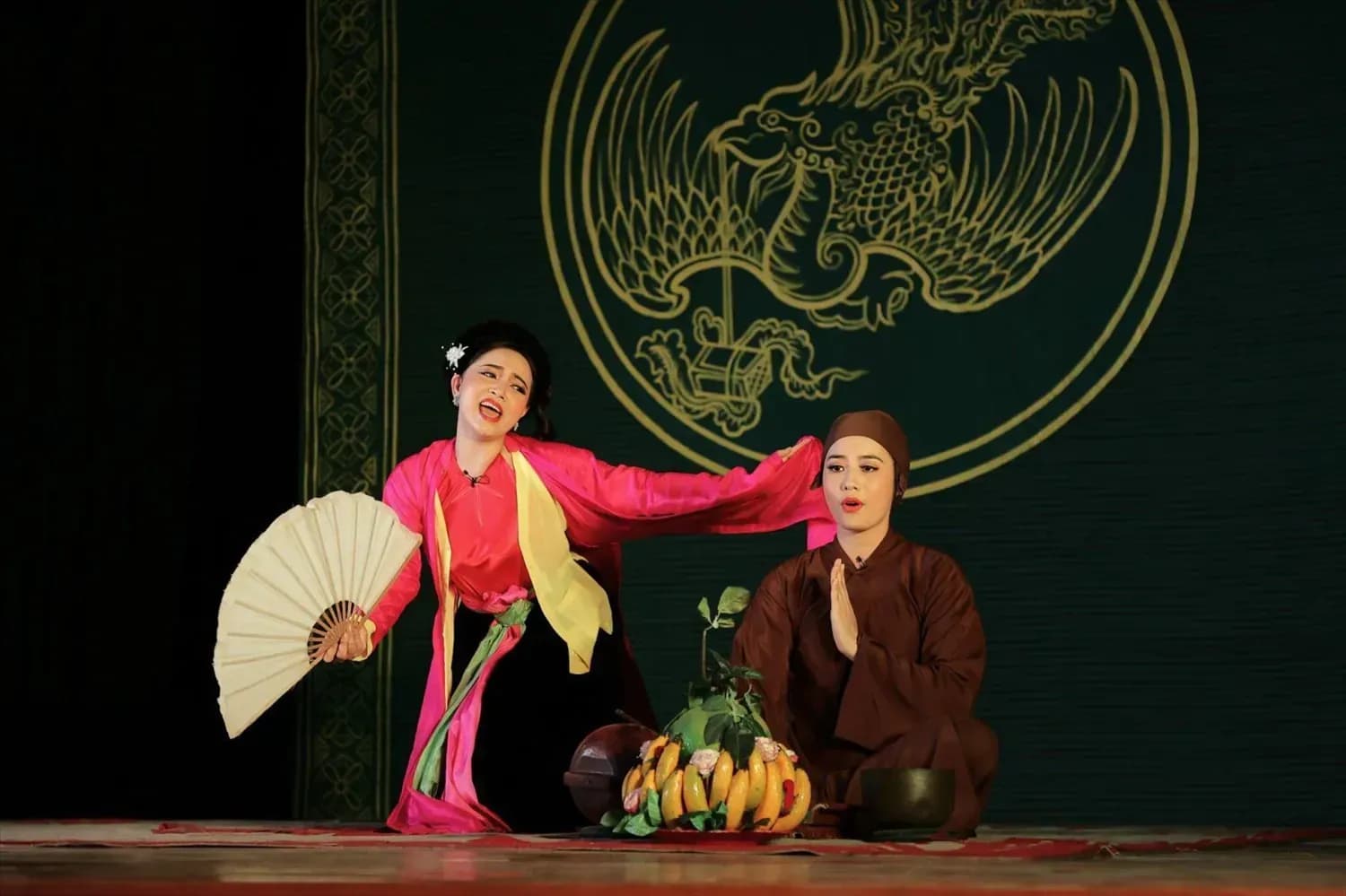
The Northern Cheo genre, which originated in the 10th century, is a symbol of the folk art of this land. Cheo is inspired by ancient stories and legends, deeply reflecting the tragic fates, troubled love affairs and bad habits of people. With the typical musical instrument being the drum, the emotional Cheo melodies have become an indispensable part of spring festivals at the communal house yard.
Born in the 10th century, Cheo is a unique folk art form of Vietnam, having an important meaning in the cultural and spiritual life of the Vietnamese people. The flow of time has witnessed the spread of Cheo art from the villages of the Red River Delta, expanding to the midland and mountainous areas of the North and North Central regions. With its unique artistic value, Cheo is being researched and a dossier is being built by Vietnam to submit to UNESCO for recognition as a world cultural heritage.
From San Dinh Cheo Theater to Modern Cheo Theater
Cheo originated in the capital Hoa Lu (Ninh Binh) in the 10th century, founded by Mrs. Pham Thi Tran, a famous dancer of the Dinh Dynasty. From there, this art developed strongly in the Northern Delta, especially in Thai Binh, Hai Phong, Ha Nam, Hung Yen, Hanoi, and then spread to the mountainous areas of the North and North Central regions. Khuoc village in Thai Binh province is famous for the strongest traditional Cheo movement, where many unique Cheo melodies are still preserved.
In the past, Cheo was often performed in communal houses, pagodas, or noble families' houses, where the stage was simply a mat spread in the middle of the yard, the actors performed on the mat, and the musicians sat on both sides of the mat. The audience could stand around on all sides to enjoy.
Cheo stands out with its diverse combination of elements: singing, dancing, music, and drama. Cheo singing can be solo, duet, or chorus, and the melodies are very close to the Vietnamese language and voice. Cheo plays usually last about two hours, requiring actors to demonstrate their singing, dancing, and acting skills on a musical background consisting of many instruments such as drums, wooden fish, flutes, two-stringed fiddles, and thirty-six-stringed zithers.
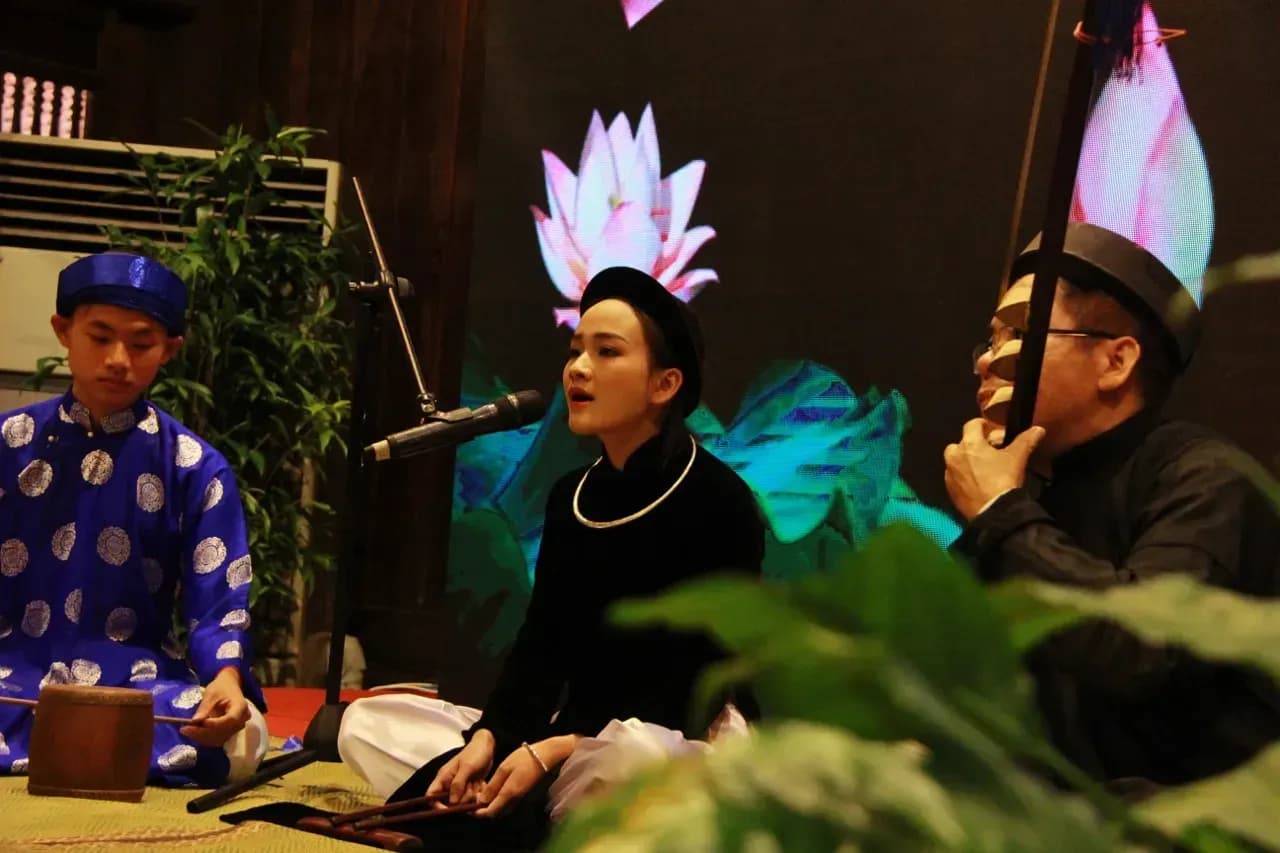
Ca Tru, an intangible cultural heritage of humanity, is a popular folk art from the North to the North Central region. With many names such as hat a dao, hat nha tro, Ca Tru is associated with festivals, customs, and the philosophy of life of the Vietnamese people. This art stands out with the combination of the humming voices of the female singers and the sound of the stone zither, creating an irresistible attraction. From being at risk of being lost, since being recognized by UNESCO as an intangible cultural heritage in need of urgent protection, the art of Ca Tru of Vietnam has overcome many difficulties, affirming its strong vitality. Today, Ca Tru has not only revived strongly but also attracted special attention from young people and increased the number of clubs nationwide.
Ca Tru: Unique Scholarly Imprint
Ca Tru, a long-standing art form, is an important part of the Vietnamese musical repertoire. It is closely associated with festivals, customs, beliefs, literature, and Vietnamese ideology. Although it is unclear exactly when Ca Tru first appeared, since the 15th century, this art form has been popular thanks to guilds - specialized organizations that often take place at village communal houses, temples, mansions, and singing houses.
Ca Tru not only contributes to the cultural life of villages and intellectuals, but also plays a role in national etiquette. With its rich and diverse singing style, Ca Tru often expresses typical Vietnamese poetic forms, mainly “hat noi” - a free-form, emotional poetic form. Ca Tru’s lyrics are sharp, profound, poetic and contain meanings ranging from romantic lyricism to philosophy and teachings.
The soul of Ca Tru lies in the ca nuong, the female lead singer with a skillful, melodious voice, combined with the musician, often called the djing. The role of the quan vien - the listener, holding the drum to evaluate, praise and criticize the artist through the way the drum is played, demonstrating the level of appreciation and talent of the performer.
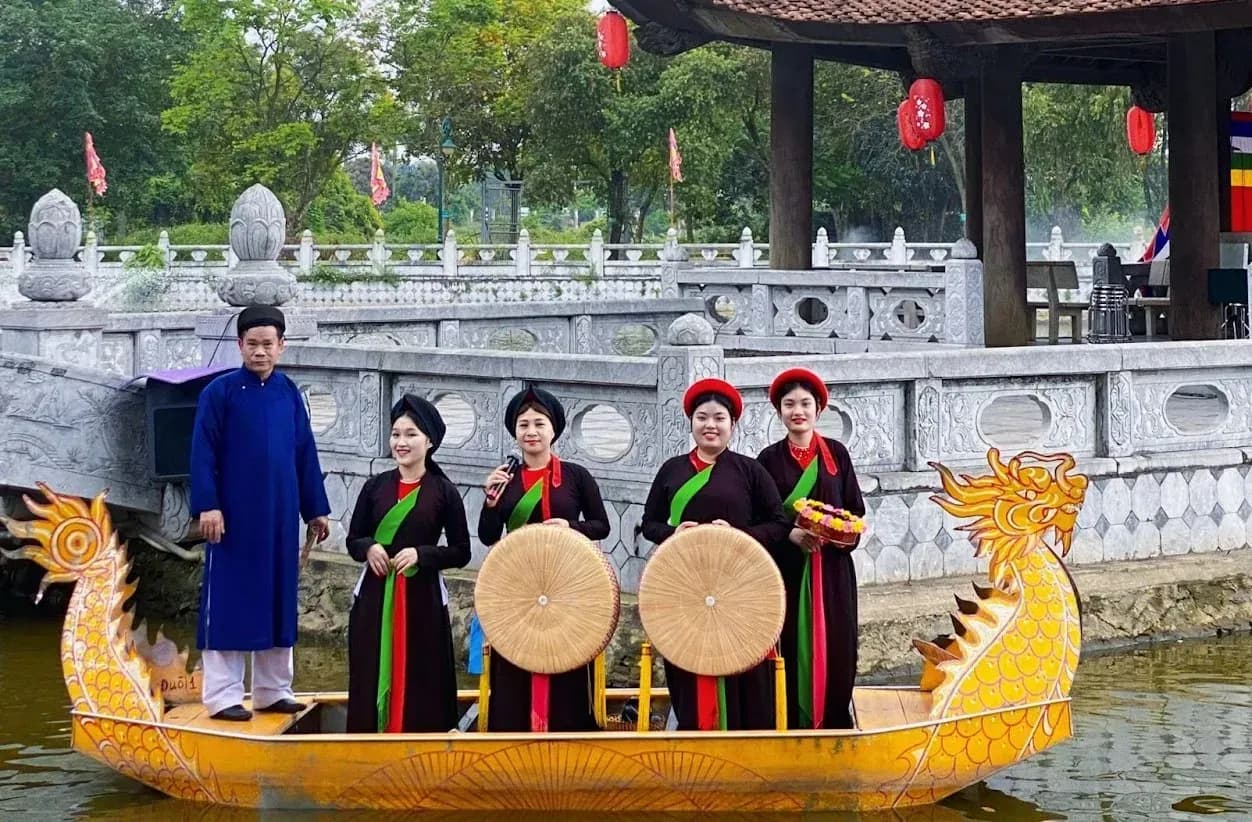
Quan Ho, a long-standing folk song genre, is notable for the antiphonal singing between male and female pairs. Quan Ho melodies convey deep emotions of love and patriotism, becoming the pride of Kinh Bac. During festivals, Quan Ho singing resounds everywhere, captivating anyone who has ever heard it. Bac Ninh Quan Ho folk songs are a unique art form of Vietnam, imbued with the cultural beauty and hospitality of Kinh Bac people. The antiphonal singing between male and female singers often resounds in early spring and autumn, when festivals take place or when friends come to visit, to show hospitality and friendliness.
The affectionate melodies of Quan Ho
Bac Ninh Quan Ho folk songs have existed for a long time, created by the Vietnamese (Kinh) community in Quan Ho villages and neighboring areas. Unlike other types of folk songs, Quan Ho was originally just a song of exchange in village activities. Over time, it has become a proud part of the culture of Kinh Bac people.
The Lien Anh and Lien Chi singers in traditional costumes with turbans, Ao The, three-piece seven-piece skirts and non quai thao, harmonize their voices in love songs without accompaniment but still full of music. Their performance is not only attractive because of the lyrics but also because of the simplicity and sophistication in the way they express themselves.
Quan Ho: The quintessence of Kinh Bac people
Quan Ho does not stop at simple melodies but carries within it more than 500 songs and 213 tunes with unique artistry. Lyrics usually have two parts: the main lyrics, reflecting the content, and the secondary lyrics, including filler sounds such as i hi, u hu to make the singing smoother.
Quan Ho poems and folk songs are often elaborated, expressing emotional states such as longing, sadness when apart, and joy when reunited. Quan Ho singing creates a cultural space imbued with poetry, allowing participants to feel the depth of emotions and spiritual beauty.
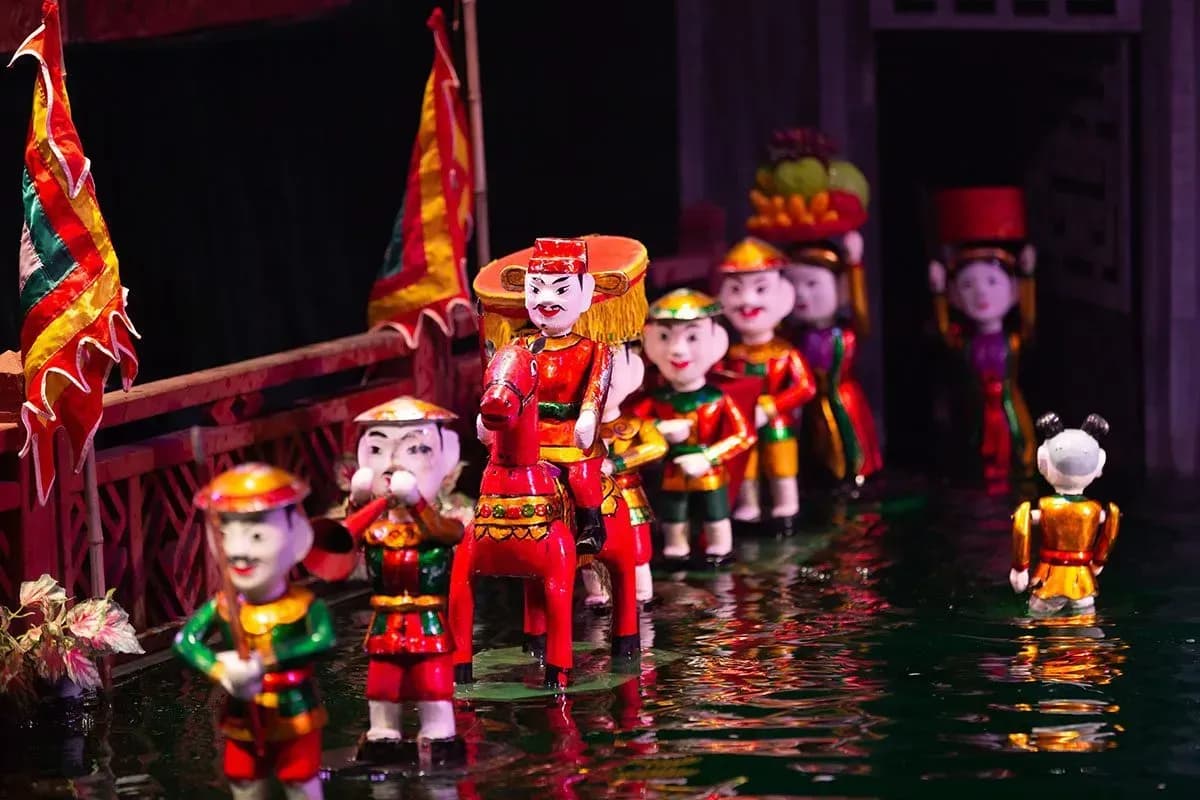
The art of Vietnamese water puppetry is a unique treasure, truly reflecting the beauty of the rice culture. Formed in the Dai Viet cultural period, water puppetry is not only a form of entertainment but also a quintessential artistic heritage, admired by the whole world. It has quickly become on par with art forms such as Tuong and Cheo in the Vietnamese national theater.
Water puppetry, a unique cultural feature of the Northern Delta, brings the audience into the daily stories of Vietnamese villages. Each puppet represents a familiar character, from a farmer to a plowing buffalo. The Water Puppetry Festival is closely associated with the rice civilization, and is an interesting discovery of Northern culture for domestic and foreign tourists.
Vietnamese water puppetry, a unique art form, is the crystallization of the intelligence and talent of Vietnamese farmers. While many ethnic groups in the world have puppetry, only Vietnam has water puppetry, demonstrating the endless creativity of this nation. Over thousands of years of history, currently in the whole country, there are only about 23 amateur water puppetry troupes operating, preserving and developing hundreds of unique performances, mainly located in six provinces and cities in the Red River Delta such as Thai Binh, Nam Dinh, Hai Duong, Hai Phong, Hanoi, and Bac Ninh. Although conservation is increasingly focused on, water puppetry is still not widely popular in the community, especially with young people. Most of these puppetry troupes operate in the form of serving festivals and village festivals, with members being ordinary but talented farmers.
Origin and Development
Originating from the creative intelligence and sophisticated techniques of Vietnamese farmers, water puppetry became a wonderful embodiment of the lifestyle and wet rice civilization combined with the influence of Buddhism in the 11th-12th centuries. This was also the period when the Thang Long citadel was filled with new vitality with bustling festivals around the countryside. From being an elegant game, this art has risen to become a cultural symbol preserved through many generations, especially in the Red River Delta.
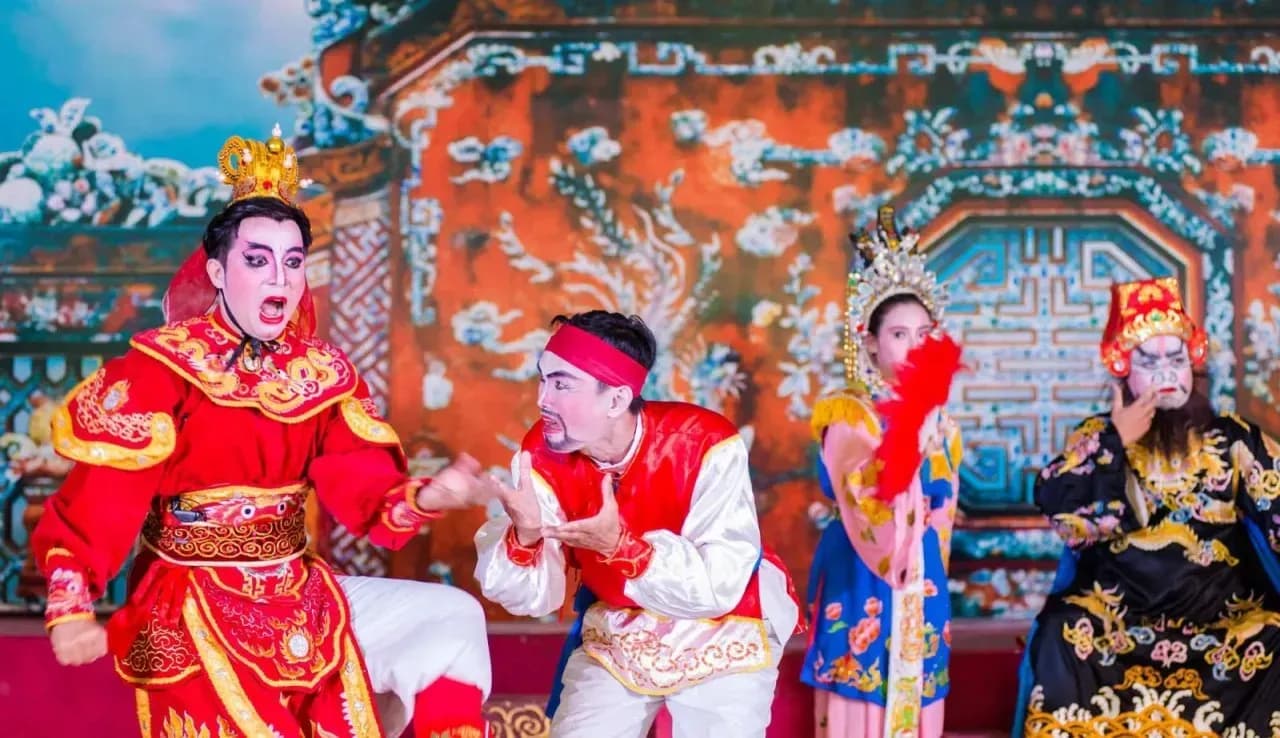
Hue Royal Opera, a precious gem in the Vietnamese art treasure trove, represents a perfect combination of music, lyrics, and elegant drama. Elaborately composed to serve the Nguyen Dynasty kings, Royal Opera has been deeply engraved in Vietnamese culture as a symbol of learned art.
The Flame of Art in the Nguyen Dynasty Royal Court
Originating from the Tran Dynasty (13th century) and entering a period of prosperity under the Nguyen Dynasty (19th century), Tuong quickly became a sought-after art form. Combining song, dance, fine arts and literature, Tuong is not only a form of entertainment but also a moral lesson, promoting the spirit of loyalty and patriotism. With splendid costumes and symbolic acting, royal Tuong brings a majestic sound, attracting not only intellectuals or nobles but also members of the royal family.
King Thanh Thai was famous for his passion for Tuong, he not only rewarded but also granted titles to many talented Tuong masters, and even participated in acting himself. During the reigns of Minh Mang and Tu Duc, theaters such as Duyet Thi Duong and Minh Khiem Duong witnessed the art of Tuong reaching its peak with large-scale performances and talented actors and actresses.
A Precious Heritage
Under the strict management of the royal court, Hue royal drama clearly reflected the worldview of the feudal regime at that time. The performance rituals did not allow the actors to look directly at the king, and the dialogue had to be strictly followed to avoid offending the royal family. These strict regulations helped Hue royal drama become a model for classical theater and a unique artistic heritage of the nation.
After the fall of the imperial court, Hue royal opera gradually faded away under the dust of time. However, talented artists from the Hue Traditional Royal Arts Theatre have persistently kept the artistic fire alive, bringing opera back to the audience through emotional performances and attractive promotional programs.
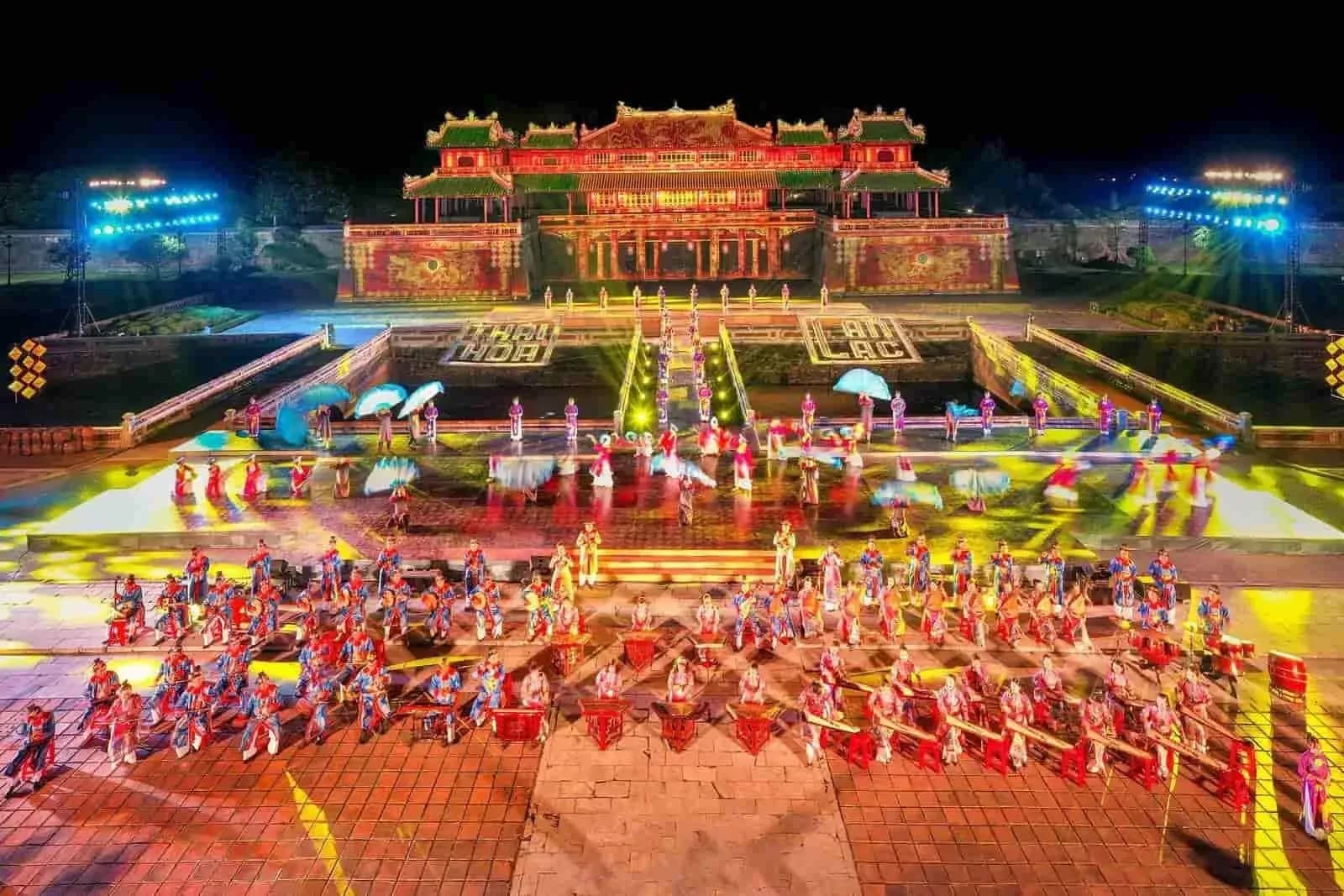
In the Asian art picture, Hue Royal Court Music shines like a precious gem, standing side by side with the court music of three countries with the same culture: China, Japan and Korea. Royal Court Music is not only an artistic product but also a cultural symbol, lasting through the centuries, making a strong contribution to the East Asian cultural picture.
History of Formation and Development
Nha Nhac, a name that has left a deep impression on the public, originated during the Ly Dynasty (1010 - 1225) and developed strongly under the Nguyen Dynasty (1802 - 1945). Through historical dynasties, Nha Nhac was systematically organized, serving important ceremonies such as Giao sacrifices, Temple sacrifices, or coronation ceremonies, becoming the national music of Vietnam. With its complex structure and sophisticated musical programs, Nha Nhac not only demonstrates authority but also connects the cultural spirit of the court with the nation.
Intangible Cultural Heritage
On November 7, 2003, Hue Royal Court Music was honored to be recognized by UNESCO as an Intangible Cultural Heritage of Humanity, listed in the list of eternal cultural values. Not only is it the pride of the people of the ancient capital, but Nha Nhac has become one of the bright spots on the Hue tourism map, along with the charming scenery of the Huong River.
Art and Cultural Values
Nha Nhac possesses a complete musical system, compiled by the Ministry of Rites to suit each type of ceremony, from the noble temperament of the royal family to the sophistication of traditional music. The band includes many musical instruments such as drums, erhu, pipa and cymbals, creating a rich and unique musical space. In particular, Nha Nhac always combines smoothly with royal dances, clearly showing the beauty of Vietnamese culture.
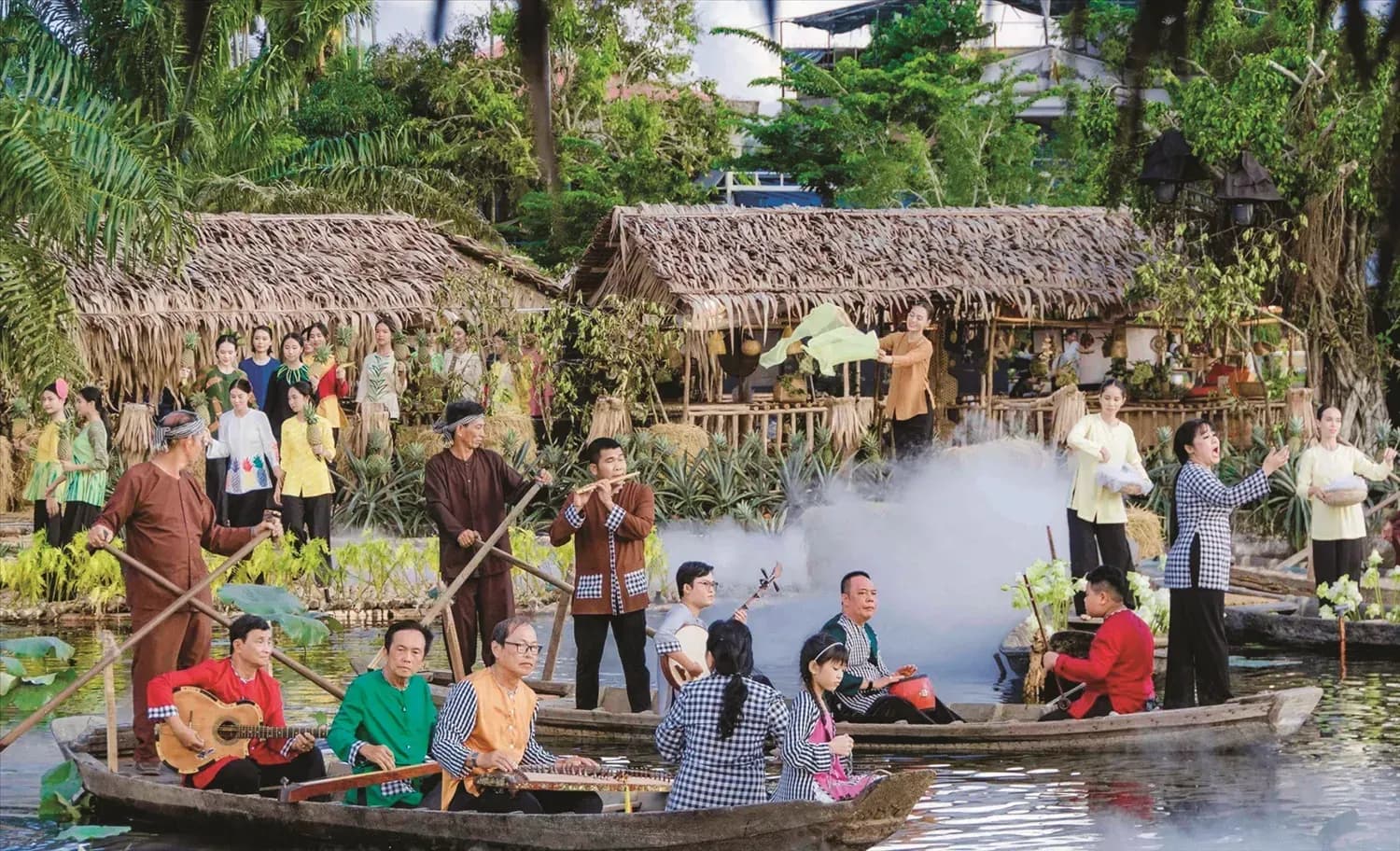
Don ca tai tu, a folk art form that has developed strongly in the Mekong Delta, uses musical instruments such as the dan kim and dan co. The combination of instruments and lyrics brings a subtle experience to the listener, the unique combination of scholarly and folk has helped Don ca tai tu create a strong mark in the cultural life of the Southern community. Don ca tai tu Nam Bo has been honored by UNESCO as a representative intangible cultural heritage of humanity.
Don Ca Tai Tu has expressed the soul of the nation, a colorful picture imbued with love for the homeland, not only for the Vietnamese people but also leaving an unforgettable impression in the hearts of tourists.
Origin and Development
Originating from ceremonial music, Hue royal court music and folk literature, Don Ca Tai Tu emerged in the late 19th century, becoming a gem in the national art treasure. Considered the voice, breath and strong vitality of the people who value righteousness over money in the river region, Don Ca Tai Tu has become an indispensable part of the spiritual life of the people of the South.
Cultural Pride
With its simple, rustic melodies and singing, Don Ca Tai Tu has long been associated with the community. With flexible performance environments, from the shade of trees, on river boats or on moonlit nights, this genre has a deep sense of community, with just enough space for the harmony between artists and audiences without the need for modern sound equipment.
With a rich musical structure, based on 20 original songs and 72 ancient songs, Don Ca Tai Tu skillfully combines traditional instruments and modified Western instruments such as guitar and violin. Participants, from the lute master, Tuong master to famous musicians, all demonstrate their skillful techniques and passion for traditional music.
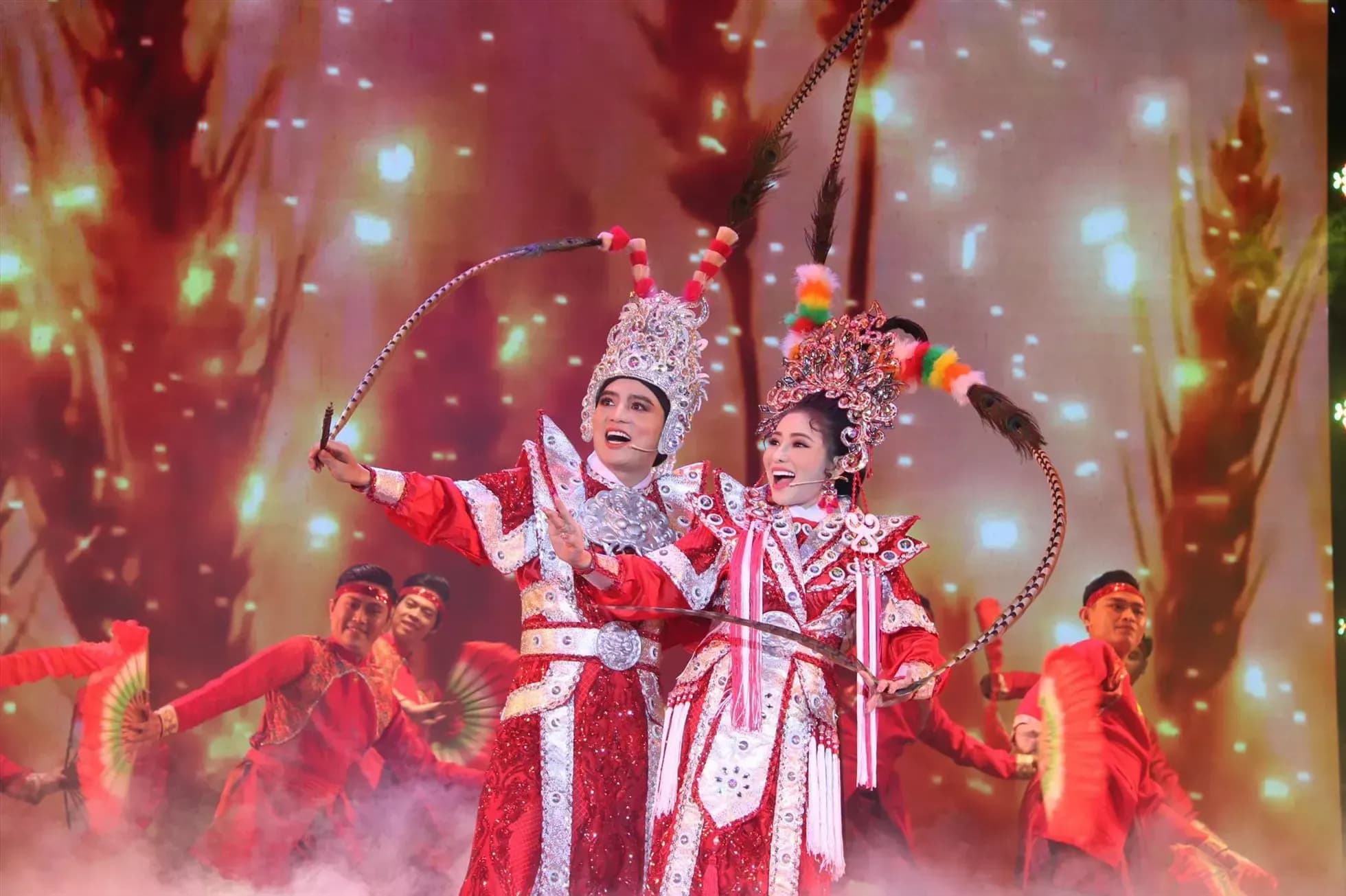
Cai Luong, a theatrical art form originating from the South, has sprouted and developed brilliantly through many historical ups and downs. Born after the Cheo and Hat Boi genres, Cai Luong distilled the quintessence of Don Ca Tai Tu to create a vivid and rich theatrical picture. Since the early decades of the 20th century, Cai Luong has grown strongly on the fertile land of the Southwest and conquered all classes of people. Cai Luong has gradually become popular in both the North and the South, often inspired by famous literary works such as Kim Van Kieu Story. Cai Luong's performance style, with the combination of folk musical instruments and enchanting voices, always captivates the audience.
Origin and Formation Process
Originating from Don Ca Tai Tu, Cai Luong developed from the "Ca Ra Bo" style created by musician Nguyen Tong Trieu in Cai Thia - Tien Giang. Initially, it was just a spontaneous phenomenon but when brought to the stage in My Tho, Cai Luong quickly attracted the public because of its sophisticated artistry. "Cai Luong" or "better change" compared to Hat Boi, symbolizes the progress in performing arts in the South.
Unlike other genres such as Cheo or Royal Opera, Cai Luong expands the stage space with carefully invested sound, lighting, and backdrop systems, creating a grandiose stage picture while still maintaining a rustic, simple look. Not only meeting the auditory needs, Cai Luong also stimulates the viewer's vision, creating an irresistible attraction.
The Rise and Value of Cai Luong
Cai Luong is marked by rich music, from folk songs to traditional and modern music. Vong Co melodies are the soul of Cai Luong, helping to fully convey the characters' thoughts. Musical instruments used in Cai Luong such as the Dan Co, Dan Nhi, Dan Nguyet and Trong Com have a typical Southern style, gentle and haunting, suitable for each verse and scene.
The content of Cheo often depicts the daily life of farmers, praises noble qualities, criticizes bad habits, and shows love and tolerance. The Cheo clown, although only a supporting role, is extremely important with the saying "no clown, no Cheo". Cheo clowns bring laughter through criticizing feudal society, and are also considered the ones who convey the profound message of the play.
Rowing - Journey to World Cultural Heritage
Nowadays, Cheo has gone beyond the space of village communal houses to large stages with the support of modern sound and lighting technology. Modern Cheo plays with topical content and the breath of contemporary life attract audiences. The 2022 National Cheo Festival has recorded many quality plays, attracting the public with innovation and creativity.
Efforts to preserve and promote the art of Cheo are urgent in the context of cultural integration. Cheo theaters light up their stages every week, and Khuoc village artisans continue to teach Cheo skills from generation to generation. Actor and musician training classes at the Hanoi Academy of Theatre and Cinema also play a vital role.
With the active participation of the state and the public, many community projects have brought the art of Cheo closer to the younger generation, such as the "Tieng Trong Cheo" performance in Hanoi. These activities not only help the public understand and love Cheo more, but also create opportunities for this art to flourish in a modern form.
Vietnam is making efforts to complete the dossier of "The Art of Cheo in the Red River Delta" to submit to UNESCO for recognition as a world cultural heritage. This is a testament to the determination to protect and promote this national art form, aiming for Cheo to be recognized and honored internationally.
Strong Resurrection
On February 23, 2020, Google Doodle honored the art of Ca Tru, symbolizing the strong revival of this art form. Ca Tru has now clearly recovered in both scale and quality. According to statistics, in 2010 there were about 63 Ca Tru clubs nationwide, with nearly 770 participants, from singers, musicians to drum players.
The Vietnam National Institute of Music currently preserves 7 Ca Tru dances, 42 songs and many valuable documents, helping to research, preserve and develop Ca Tru.
Ca Tru art is present in 14 provinces and cities: Hanoi, Phu Tho, Bac Ninh, and many other localities. With efforts to preserve and develop in the capital Hanoi - the cradle of Ca Tru, the number of clubs has increased significantly. The clubs have researched and performed more than 30 ancient melodies and composed new ones to serve tourists.
The Thai Ha Ca Tru Club, a famous guild, regularly organizes performances at special cultural events, contributing to the revival of Ca Tru art. Many foreigners come to study and research Ca Tru, affirming the value and international appeal of this art form.
Overcoming prejudice and challenges, Ca Tru has returned to the public with its inherent identity and beauty. Hopefully, with this strong revival, Ca Tru will soon leave the list of urgent protection, develop sustainably and glorify Vietnamese music.
Reaching out from local culture to the world
Quan Ho is not only a cultural specialty of Bac Ninh but also a far-reaching traditional symbol. In 2009, Bac Ninh Quan Ho folk songs were recognized by UNESCO as an Intangible Cultural Heritage, affirming the cultural and spiritual value of this art form.
Nowadays, although society is increasingly modernized, Quan Ho melodies still persist, serving as a bridge to bring Bac Ninh cultural values to international friends. The strong vitality of Quan Ho continues to attract domestic and foreign tourists, becoming an indispensable part of Vietnam's cultural identity.
Quan Ho has been preserved and taught by generations of Kinh Bac people. Many villages still maintain the Quan Ho culture with hundreds of ancient, soulful songs that have a strong influence. Lien Anh and Lien Chi singers not only exchange lyrics but also pass on the values of mutual love and connection between people.
With its profound cultural and human significance, Bac Ninh Quan Ho folk songs are truly a precious cultural heritage, not only of Bac Ninh province but also the common spiritual asset of the Vietnamese people.
Performing Arts and Technology
Water puppetry is set against a backdrop of water, where the puppets, made from floating light fig wood, are brought to life by the delicate techniques of the artisans behind the curtains. The poles and strings are hidden, making the puppets’ movements surprising and magical. The music, mainly traditional Cheo and Northern folk songs, blends with the magical lighting and smoke to create a colorful and captivating stage.
A typical water puppet stage is usually centered on a pond or lake, with a water pavilion architecture reminiscent of the roof of an ancient Vietnamese village communal house. The puppet room, where the artists work, is the heart of every performance. With skillful hands, they convey stories through the soft movements of the puppets, bringing joy and delight to the audience.
Water puppetry not only reflects the spiritual life of Vietnam, but also reaches the pinnacle of art. From folk culture, water puppetry has reached the level of national culture, becoming a "cultural ambassador" loved by international friends.
Puppets: messengers of folk art
Puppets, often made from fig wood due to its light and waterproof properties, are the messengers of folk art. Each puppet character has its own soul, and even if a puppet does not follow the original model, it can still become another character. As Uncle Phi - head of the water puppet workshop in Dao Thuc village said, "There is no such thing as broken, nothing is discarded. Each puppet has its own soul." Making water puppets is a complex and elaborate process, requiring excellent qualities from the artisans. Water puppetry not only reflects spiritual life but also reaches the pinnacle of art, becoming a "cultural messenger" loved by the world. Each puppet over time becomes a unique work of art, with its own soul, although it no longer has its original appearance, but instead each puppet has its own story, still creating a unique and special character.
Despite its strong folk culture, water puppetry is also facing the risk of extinction due to the rapid development of the entertainment market. To preserve and develop it, efforts are needed not only from artisans, but also from the community and the government. Maintaining traditional performances in festivals, teaching in schools, and promoting it to international tourists are essential. For this art to survive, artists must not only perform but also convey the depth of culture to the younger generation. Traditional art not only possesses entertainment value, but also encapsulates the cultural and historical quintessence of a nation. When young people clearly understand and are proud of their nation, they will participate more in preserving and promoting traditional values, including water puppetry.
Water puppetry has been deeply engraved in the minds of the people of the Northern Delta, becoming an indispensable part of Vietnamese cultural life. It is not only a symbol of creativity and love of art, but also a living proof of the Vietnamese soul through the ups and downs of history.
Desire for Resurrection
Although not as brilliant as before, Hue royal opera is still alive through performances for tourists. The Traditional Arts Theater is nurturing many big plans to revive this art form. Typical excerpts are restored and skillfully staged in the Hue Festival's art programs, bringing opera closer to the audience.
Hue Festival, with more than 200 participating artists, is a testament to the vitality of Hue royal Tuong, through the craft-transfer ceremonies, mask processions, and street performances. These non-stop activities demonstrate that the desire to revive the art of Tuong is always burning in the hearts of Hue artists, bringing a new and sophisticated look at an art form that used to be the "national drama" of Vietnam.
Preservation and Development
Despite facing many challenges due to the invasion of Western music and the historical events of 1945, Nha Nhac has steadfastly preserved its value. Thanks to the preservation work and efforts of the Hue Royal Traditional Theatre, many famous pieces of music and repertoire have been restored and performed at major events such as the Hue Festival, folk festivals or traditional rituals, bringing unforgettable experiences to international visitors.
Bright Future
With the desire to spread Nha Nhac throughout the world, Thua Thien Hue has proposed an investment strategy to train a generation of young artisans, while promoting international cooperation. These efforts not only preserve the heritage but also elevate Vietnamese scholarly art, so that Nha Nhac becomes a cultural ambassador, bringing the vitality of tradition to five continents.
Duyet Thi Duong - a nearly 200-year-old ancient theater in the Imperial City, Hue Monuments Complex is regularly open to visitors. This used to be a place to perform theatrical arts for the king, the royal family, mandarins and foreign guests with relations with the Nguyen Dynasty... Since 2004, Duyet Thi Duong has been restored by the Hue Monuments Conservation Center, becoming an attractive destination for tourists when visiting the World Cultural Heritage - Hue Monuments Complex. Visitors can enjoy ancient dances, many excerpts from ancient plays, especially Royal Court Music with famous performances: Thai Binh Drum, Tam Luan Cuu, Phu Luc Dich, Kim Tien; Vu Phien, Luc Cung Hoa Dang. Meritorious Artist Hoang Trong Cuong said that today, Royal Court Music has rich conditions and performance spaces. The unique artistic values of Royal Music are constantly being preserved, passed down and promoted by generations of artisans and artists.
Hue Royal Court Music, with its solemn beauty and profound spirit, is not only a national treasure but also a source of pride that generations of Vietnamese people will forever pass on. In the gentle atmosphere of Hue, the melodies of Royal Court Music still resonate, blending with the flow of history, giving wings to the national cultural values to fly far and wide.
Despite many historical changes, from the fall of the Hue capital in 1885 until now, Don Ca Tai Tu has not only stood firm but also become the cradle of Cai Luong theater. Artist groups in the Eastern and Western regions of the South continue to adapt and create based on the Northern and Southern music, forming the characteristics of Southern music.
Bringing Don Ca Tai Tu Closer to Modern Audiences
In 21 provinces and cities in the South, Don Ca Tai Tu still maintains its long-lasting vitality and strong influence, expressing a liberal spirit and love for the homeland. Many researchers and artists have made efforts to maintain and promote this art form, bringing it beyond the borders of the South through tourism programs, festivals, and on the media.
Local authorities, organizations and artists are joining hands to preserve traditional music and bring it closer to the public. Efforts to build thematic tourist attractions around this heritage, such as the Southern Traditional Music and Musician Cao Van Lau Memorial Site, are creating great opportunities to develop local tourism and culture.
These efforts show that Don Ca Tai Tu is not only a cultural heritage, but also an endless source of inspiration for the sustainable cultural and tourism development of the Southern region, as well as a model of cultural heritage preservation that contributes to enriching the cultural identity of the Vietnamese people.
Conservation and Development
Thanks to its flexibility and ability to adapt to new foreign performance styles, Cai Luong flourished after the 1954 Geneva Accords, becoming a cultural phenomenon not only in the South but also spreading throughout the country. Cai Luong is constantly innovating, absorbing the best from East and West, thereby creating diversity in scripts, music and performance costumes.
Cai luong is the embodiment of traditional national music, worthy of being preserved and promoted. Each Cai luong singer such as Le Thuy, Bach Tuyet, Minh Vuong is not only loved by the public but also inspires the younger generation of artists. For Cai luong to remain evergreen, there needs to be specific policies from the government, coordination from art troupes and the attention of the general public.
Cai Luong carries within it the beauty of Southern culture, which needs to be passed on to future generations. Gradually, this art form is not only a spiritual food but also a cultural bridge, creating a unique identity in the picture of Vietnamese theatrical art.
Log in to leave a comment. Log in
Be the first to comment.
Curate
Sign in to curate
React to this story


