
Club author
Clubs · Dec 17, 2024 · 3 min read
Save
Share
Keep reading
authenticated by

Clubs · Dec 17, 2024 · 3 min read
Save
Share
Keep reading
iGuide Stories
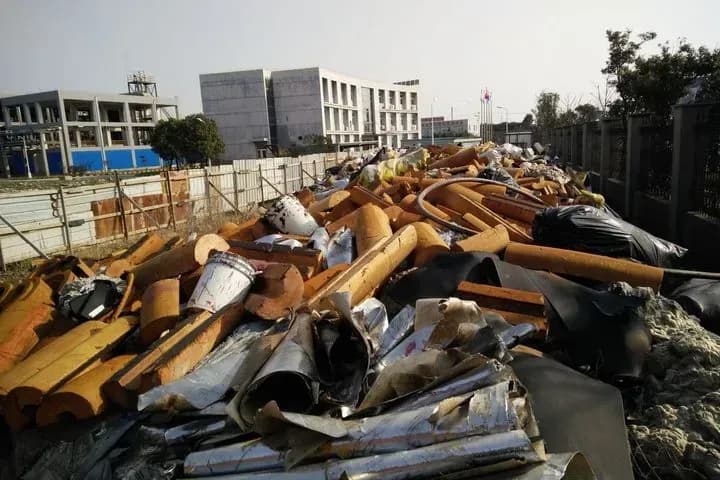
Conventional industrial solid waste treatment is an important part of industrial environmental management, aiming to minimize negative impacts on the environment and human health. Current legal regulations require businesses to collect, classify and treat industrial solid waste according to technical standards. Compliance with these regulations not only helps protect the environment but also enhances the reputation and social responsibility of businesses. This article will provide detailed information on the regulations for conventional industrial solid waste treatment, helping you better understand your responsibilities and obligations in this area.
According to Clause 8, Article 3 of Decree 08/2022/ND-CP, waste treatment is the process of using technological and technical solutions (different from preliminary processing) to reduce, eliminate, isolate, quarantine, incinerate, destroy, and bury waste and harmful elements in waste.
According to Article 82 of the Law on Environmental Protection 2020, regulations on the treatment of ordinary industrial solid waste are as follows:
- Production, business and service establishments, concentrated production, business and service zones, industrial clusters, agencies and organizations that generate ordinary industrial solid waste must reuse, recycle, recover energy and treat ordinary industrial solid waste or transfer it to the following subjects:
+ Production facilities directly used as raw materials for production, construction materials production or site leveling are allowed to operate according to the provisions of law;
+ Production facilities have appropriate waste co-treatment functions;
+ Regular industrial solid waste treatment facilities have appropriate functions;
+ The facility transporting ordinary industrial solid waste has a transfer contract with the subjects specified in points a, b or c, Clause 1, Article 82 of the Law on Environmental Protection 2020.
- Facilities providing regular industrial solid waste treatment services must meet environmental protection requirements as prescribed.
- The owner of the facility providing regular industrial solid waste treatment services has the following responsibilities:
+ Ensure that systems, facilities, equipment, storage and treatment of ordinary industrial solid waste including pre-processing, reuse, recycling, co-processing, treatment and energy recovery of ordinary industrial solid waste meet technical requirements and management processes according to regulations;
+ In case hazardous waste is generated from a facility providing regular industrial solid waste treatment services, the responsibility of the owner of the hazardous waste source must be fulfilled according to regulations;
+ Periodic and ad hoc reports on the generation and treatment of common industrial solid waste as required by competent state management agencies;
+ Use the handover minutes of ordinary industrial solid waste that must be treated for each transfer; create an operating log of systems, means, and treatment equipment including pre-processing, reuse, recycling, co-processing, and energy recovery of ordinary industrial solid waste;
Logbook to track the quantity of products recycled or recovered from regular industrial solid waste (if any).
- Organizations and individuals generating ordinary industrial solid waste must be able to self-recycle, treat, co-treat, and recover energy when meeting the following requirements:
+ Implemented using technology, environmental protection works, and production equipment available within the premises of the facility generating ordinary industrial solid waste and must ensure compliance with environmental protection requirements as prescribed;
+ Must be consistent with the decision approving the results of the environmental impact assessment report and environmental license;
+ Do not invest in new incinerators and landfills to treat common industrial solid waste, except in cases consistent with solid waste management content in relevant planning.
Log in to leave a comment. Log in
Be the first to comment.
Curate
Sign in to curate
React to this story


