
Club author
Clubs · Oct 31, 2024 · 13 min read
Save
Share
Keep reading
authenticated by

Clubs · Oct 31, 2024 · 13 min read
Save
Share
Keep reading

iGuide Stories
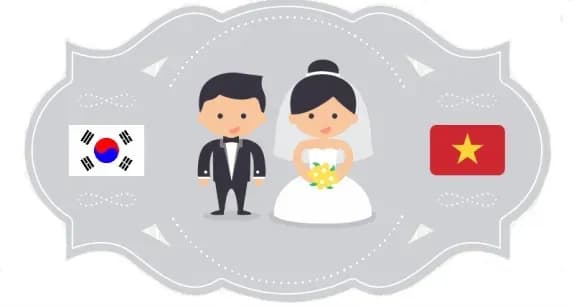
Marriage with foreigners in Vietnam requires compliance with specific legal provisions. This article provides detailed information on the necessary conditions to help foreigners prepare best for a legal and happy family life in Vietnam.
Marriage conditions are requirements stipulated by the state in legal documents that the person wishing to marry must meet. If both parties fail to meet these conditions, they cannot register for marriage, the state will not recognize or protect them under the law.
Article 126 of the Law on Marriage and Family 2014 stipulates the conditions for marriage with foreign elements as follows:
1. In the marriage between a Vietnamese citizen and a foreigner, each party must comply with the marriage conditions of their country; if the marriage takes place at a Vietnamese state agency with jurisdiction, the foreigner must also comply with the provisions of this Law regarding marriage conditions.
2. Marriages between foreigners residing in Vietnam at the authorized agency of Vietnam must comply with the provisions of this Law regarding marriage conditions.
According to the above provisions, when getting married at a Vietnamese state agency, foreigners must simultaneously meet marriage conditions according to the laws of their nationality (or place of residence) and marriage conditions as stipulated by Vietnamese law.

Marriage conditions of Vietnamese law are stipulated in the Law on Marriage and Family 2014, applicable to Vietnamese citizens or when marriage has foreign elements in Vietnam. Accordingly, both men and women who want to marry each other must meet the following conditions:
Clause a, Article 8 of the Law on Marriage and Family 2014 stipulates:“Men aged 20 and above, women aged 18 and above are allowed to marry.”
According to Clause 1, Article 2 of Joint Circular 01/2016/TTLT-TANDTC-VKSNDTC-BTP dated January 6, 2016 guiding the implementation of the Law on Marriage and Family, “Men aged 20 and above, women aged 18 and above are cases where men are twenty years old, women are eighteen years old and are determined by their date of birth; If the birth date and birth month cannot be determined, the following applies:
a) If the birth year is known but the birth month is not, the birth month is considered January of the birth year;
b) If the birth year and birth month are known but the birth date is not, the birth date is considered the first day of the birth month.”
Therefore, the age requirement for marriage according to Vietnamese law is for men aged 20 and above, and women aged 18 and above. Vietnamese law does not specify a maximum age, only the minimum age requirement, and does not limit the age difference between men and women in marriage.
Clause c, Article 8 of the Law on Marriage and Family 2014 stipulates that both men and women at the time of marriage registration must“Not be legally incapacitated”. Those who are legally incapacitated do not have the qualifications to get married.
Article 19 of the Civil Code 2015 stipulates:“The legal capacity of an individual is the ability of the individual through their behavior to establish, exercise civil rights and obligations”.
Clause 1, Article 22 of the Civil Code 2015 also stipulates: “When a person is suffering from mental illness or other conditions that prevent them from understanding their actions, at the request of the concerned parties or the relevant authorities, the court will issue a decision declaring the person to be legally incapacitated based on a forensic psychiatric conclusion.
When there are no grounds to declare someone legally incapacitated, at the request of the person themselves or the appropriate authorities, the court will issue a decision to revoke the declaration of legal incapacity.

To ensure the rights of the parties when marrying with foreign elements, Vietnamese law requires proof that they are not legally incapacitated by providing a certificate from a qualified medical organization in Vietnam or abroad confirming that they do not suffer from mental illness or other conditions that prevent them from understanding and controlling their actions. This certificate is valid for 6 months from the date of issue.
4. The parties must not fall into any prohibited cases of marriage:First,
fake marriages are prohibited.Clause 11 of Article 3 of the Law on Marriage and Family 2014 stipulates:“A fake marriage is the abuse of marriage for emigration, immigration, residence, citizenship in Vietnam, foreign citizenship; to enjoy state incentives or for other purposes not related to building a family.
Second, forced marriage, deception, coercion, or obstruction of marriage are prohibited.
Clause 8 of Article 3 of the Law on Marriage and Family 2014 stipulates:“Forced marriage is taking a spouse when one or both parties are not of legal marriageable age”.
Clause 9 of Article 3 of the Law on Marriage and Family stipulates: Coercion of marriage is the act of threatening, intimidating mentally, abusing, forcing someone to marry against their will.
Clause 3 of Article 2 of Joint Circular 01/2016/TTLT-TANDTC-VKSNDTC-BTP dated January 6, 2016 providing guidance on the implementation of the Law on Marriage and Family stipulates:

5. Người kết hôn không được cùng giới tính
Khoản 2 Điều 8 Luật Hôn nhân và gia đình năm 2014 quy định: “Nhà nước không thừa nhận hôn nhân giữa những người cùng giới tính.”
Mục đích của kết hôn là xây dựng gia đình, thực hiện chức năng sinh đẻ để duy trì nòi giống cho xã hội. Chức năng này được thực hiện bởi hai chủ thể khác nhau về giới tính. Nếu thừa nhận hôn nhân giữa những người cùng giới thì không phù hợp với mục đích của kết hôn. Đồng thời, kết hôn giữa những người cùng giới tính là không thuận theo lẽ tự nhiên, không phù hợp với thuần phong, mĩ tục, với truyền thống văn hoá của Việt Nam.
Trước đây, pháp luật Việt Nam (Luật Hôn nhân và Gia đình năm 1986) quy định cấm kết hôn giữa những người cùng giới tính. Tuy nhiên, nhằm thể hiện sự tôn trọng các quyền cơ bản của con người, trong đó có quyền tự do cá nhân, quyền mưu cầu hạnh phúc, Luật Hôn nhân và gia đình năm 2014 không còn cấm việc kết hôn giữa những người cùng giới tính nữa mà chỉ quy định nhà nước không thừa nhận hôn nhân giữa những người cùng giới tính. Những người cùng giới tính nếu sống chung với nhau sẽ không phải chịu các chế tài của pháp luật, nhưng về quan hệ nhân thân, người cùng giới kết hôn sẽ không có ràng buộc nào về mặt pháp lý; quan hệ giữa họ không được gọi là quan hệ vợ chồng, không phát sinh quyền và nghĩa vụ về nhân thân giữa vợ và chồng; về quan hệ tài sản, giữa họ cũng sẽ không có chế độ tài sản trong thời kỳ hôn nhân, nếu có phát sinh tranh chấp, tài sản giữa họ sẽ được giải quyết theo Bộ luật Dân sự.
Các trường hợp kết hôn giữa những người cùng giới tính có yếu tố nước ngoài, pháp luật Việt Nam cũng không thừa nhận. Tương tự như vậy, đối với trường hợp công dân của các quốc gia thừa nhận hôn nhân đồng giới mà kết hôn với công dân Việt Nam hoặc họ kết hôn với nhau ở Việt Nam thì pháp luật Việt Nam cũng không thừa nhận và quan hệ giữa họ không được pháp luật Việt Nam bảo vệ khi có tranh chấp xảy ra.
According to Clause 2, Article 2 of Joint Circular 01/2016/TTLT-TANDTC-VKSNDTC-BTP dated January 6, 2016 guiding the implementation of the Law on Marriage and Family, voluntary consent means that men and women establish a husband-and-wife relationship freely according to their own will.
Vietnamese law has specific provisions to ensure the voluntary consent of both men and women when conducting marriages with foreign elements, most clearly demonstrated in the requirement that when registering for marriage, both men and women must be present to sign the Marriage Certificate. If they cannot be present, the competent authority will extend the time to issue the certificate, if after 60 days both parties do not come to receive the Certificate, they must re-register for marriage from the beginning.
Clause 10 of Article 3 of the Law on Marriage and Family 2014 stipulates: Obstruction of marriage is the act of threatening, intimidating mentally, abusing, demanding material benefits, or other acts to force another person to marry against their will as intended by them.
These actions violate the marriage age conditions, voluntary marriage conditions, and are violations of the law and social ethics, deviating from the purpose of marriage, hindering the development of families and society.
Third, marriage is prohibited between individuals of the same bloodline; between individuals with the same surname within three generations; between adoptive parents and their adoptive children; between individuals who were previous adoptive parents and their adoptive children, step-father with step-daughter, mother-in-law with son-in-law, step-father with step-daughter-in-law, step-mother with son-in-law.Clause 17 of Article 3 of the Law on Marriage and Family 2014 stipulates:
“Individuals of the same bloodline are those with blood relationships, where one person gives birth to the next”Clause 18 of Article 3 of the Law on Marriage and Family 2014 stipulates:“Individuals with the same surname within three generations include those who share the same root of parents, with the parents being the first generation; siblings, including those with the same parents, with different fathers, with different mothers as the second generation; siblings of uncles, aunts, nieces, nephews, cousins, nieces being the third generation
”.
According to scientific research, individuals closely related by blood who marry each other have a very high risk of genetic disorders, many cases of death, and as the blood relations between the parents get closer, the mortality rate increases. Therefore, Vietnamese law prohibits marriages between close blood relatives to ensure the health of their offspring, to maintain a healthy lineage, and to protect family relationships, social ethics, and social interests.
The prohibition of marriages between adoptive parents and their adoptive children, between individuals who were previous adoptive parents and their adoptive children, step-father with step-daughter, mother-in-law with son-in-law, step-father with step-daughter-in-law, step-mother with son-in-law is for the purpose of maintaining stable family relationships both within the family and in society. This provision is both legal and social in nature. Legally, the provision helps prevent the abuse of dependency relationships leading to coercion in marriage contrary to the will of the individuals involved. Socially, this provision is a moral norm, Vietnamese society does not accept marriage relationships between those who have had parent-child relationships in the past, even if they do not have a blood relationship.
5. Individuals must not be of the same gender
Clause 2 of Article 8 of the Law on Marriage and Family 2014 stipulates:
“The State does not recognize marriages between individuals of the same gender
.”The purpose of marriage is to build a family, carry out the function of procreation to maintain offspring for society. This function is carried out by two different entities by gender. Recognizing marriage between individuals of the same gender is not in line with the purpose of marriage. At the same time, marriage between individuals of the same gender is contrary to the natural order, not in line with the traditions, customs, and cultural heritage of Vietnam.
Previously, Vietnamese law (Law on Marriage and Family 1986) prohibited marriage between individuals of the same gender. However, to demonstrate respect for basic human rights, including individual freedom, the right to pursue happiness, the Law on Marriage and Family 2014 no longer prohibits marriage between individuals of the same gender but only stipulates that the state does not recognize marriages between individuals of the same gender. Individuals of the same gender who live together will not be subject to legal penalties, but in terms of personal relationships, same-gender marriage does not have any legal obligations; their relationship cannot be called a marital relationship, no legal rights and obligations regarding personal relationships between husbands and wives will arise; in terms of property relations, they also do not have a property regime during the marriage period, if there are disputes, property between them will be resolved according to the Civil Law.Cases of marriage between individuals of the same gender with foreign elements are also not recognized by Vietnamese law. Similarly, for cases where citizens of countries that recognize same-sex marriage marry Vietnamese citizens or marry each other in Vietnam, Vietnamese law also does not recognize and the relationship between them is not protected by Vietnamese law in case of disputes.
Marriage regulations with foreigners in VietnamLearn about the regulations for marrying foreigners in Vietnam to ensure a legal and smooth process.Marriage regulations, marriage with foreigners, marriage conditions in Vietnam, international marriage procedures, Vietnamese marriage laws, Vietnam Travel, Vietnam Tourism, Vietnam Travel Guide, Vietnam Vacation, Vietnam Trip, Vietnam Holiday, Vietnam Tours, Vietnam Destinations, Travel to Vietnam, Visit Vietnam, Vietnam Travel Packages, Vietnam Travel Itinerary, Best Places to Visit in Vietnam, Vietnam Tourist Attractions, Vietnam Sightseeing, Vietnam Adventure Travel, Vietnam Cultural Tours, Vietnam Beach Resorts, Vietnam Historical Sites, Vietnam Nature Tours, Vietnam City Tours, Vietnam Cruise, Vietnam Travel Deals, Vietnam Honeymoon, Vietnam Family Vacation, Vietnam Backpacking, Vietnam Road Trip, Vietnam Food Tours, Vietnam Travel Blog, Vietnam Travel Agency, iGuide, iGuide Vietnam, iGuide Travel Vietnam
Theo kết quả nghiên cứu khoa học thì những người có quan hệ huyết thống gần mà kết hôn với nhau thì những đứa con mà họ sinh ra tỷ lệ bị dị tật rất cao, nhiều trường hợp tử vong và khi quan hệ huyết thống của bố mẹ càng gần thì tỷ lệ tử vong càng tăng cao. Do đó, pháp luật Việt Nam cấm những kết hôn đối với các cặp nam, nữ có quan hệ huyết thống gần để đảm bảo con của họ sinh ra khỏe mạnh, đảm bảo phát triển nòi giống lành mạnh; bảo vệ các quan hệ gia đình, đạo đức và lợi ích xã hội.
Quy định cấm kết hôn giữa cha, mẹ nuôi với con nuôi; giữa người đã từng là cha, mẹ nuôi với con nuôi, cha chồng với con dâu, mẹ vợ với con rể, cha dượng với con riêng của vợ, mẹ kế với con riêng của chồng là nhằm mục đích ổn định các mối quan hệ trong gia đình và cả ngoài xã hội. Đây là quy định vừa mang tính pháp lý vừa mang tính xã hội. Về mặt pháp lý, quy định giúp ngăn chặn việc lợi dụng mối quan hệ phụ thuộc dẫn tới hành vi cưỡng ép người bị phụ thuộc kết hôn trái với ý muốn của họ. Về mặt xã hội, quy định này là một quy phạm đạo đức, xã hội Việt Nam không chấp nhập quan hệ hôn nhân giữa những người trước đây đã từng có quan hệ cha, mẹ và con dù họ không có quan hệ huyết thống.
Log in to leave a comment. Log in
Be the first to comment.
Curate
Sign in to curate
React to this story


