
Club author
Clubs · Dec 17, 2024 · 3 min read
Save
Share
Keep reading
authenticated by

Clubs · Dec 17, 2024 · 3 min read
Save
Share
Keep reading
iGuide Stories
Habitat plays a vital role in sustaining life on Earth. It not only provides living space for living organisms, but also regulates climate, provides resources, and supports biological cycles. This article will help you explore the important functions of habitat and the importance of protecting it.
1. For living organisms in general and humans in particular, the living environment has the following main functions:
a. Environment is the living space for humans and the biological world (Habitat)
In daily life, each person needs a certain space to serve life activities such as: Housing, resting place, land for agricultural production, forestry, aquaculture, warehouses, ports, etc. On average, each person needs about 4m3 of clean air to breathe every day; 2.5 liters of water to drink, an amount of food corresponding to 2000 - 2400 Calories. Thus, this function requires the environment to have a suitable space range for each person. The living space of human society is the Earth.
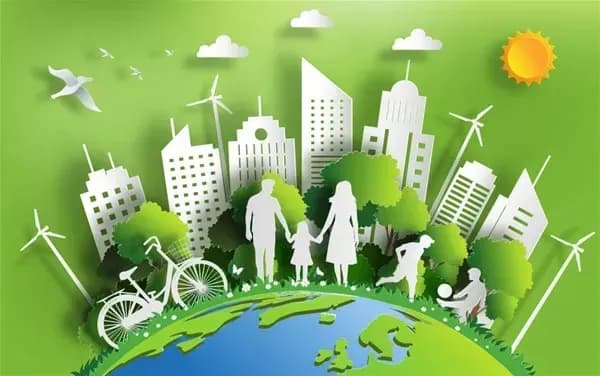
Thus, the environment is the living space of humans (Figure 1) and the functions of human living space can be classified into the following specific forms:
b. The environment is a place that contains resources necessary for human life and production.
This function of the environment is also called the group of natural production functions including:
- Natural forests: Have the function of providing water, preserving biodiversity and soil fertility, providing firewood, medicinal herbs and improving ecological conditions.
- Water bodies: Have the function of providing water, nutrition, entertainment places and seafood resources.
- Animals and plants: Provide food and rare genetic resources.
- Air, temperature, sunlight: To help people breathe, trees flower and bear fruit.
- Minerals and oil: Provide energy and raw materials for agricultural production activities.
c. The environment is a place that contains waste created by humans in life and production activities.
In the process of production and consumption of material goods, humans always release waste into nature and back into the environment. Here, waste under the influence of microorganisms and other environmental factors will decompose, transform from complex to simple and participate in a series of complex physical - chemical - biological processes. This function can be classified in detail into the following types:
- Physical and chemical transformation functions: Dilution, chemical decomposition by light; absorption; separation of waste and toxins.
- Biochemical transformation function: Absorption of excess substances; nitrogen and carbon cycles; detoxification of toxins by biochemical pathways.
- Biological transformation function: Mineralization of organic waste, humification, ammonification, nitrification and denitrification,...
d. Function of storing and providing information to people
The earth's environment is considered a place to store and provide information for humans. Because, the earth's environment is the place:
- Provide resources for recording and archiving geological history, evolutionary history of matter and organisms, history of the emergence and development of human culture.
- Providing spatial and temporary indicators that are signals and early warnings of dangers to humans and living organisms on earth such as physiological reactions of living organisms before natural disasters and natural disasters occur, especially storms, earthquakes, volcanoes, etc.
- Preserve and provide people with a diversity of genetic resources, animal and plant species, natural and artificial ecosystems, beauty, landscapes with aesthetic value for enjoyment, religion and other cultures.
Log in to leave a comment. Log in
Be the first to comment.
Curate
Sign in to curate
React to this story


