
Club author
Clubs · Dec 17, 2024 · 1 min read
Save
Share
Keep reading
authenticated by

Clubs · Dec 17, 2024 · 1 min read
Save
Share
Keep reading
iGuide Stories
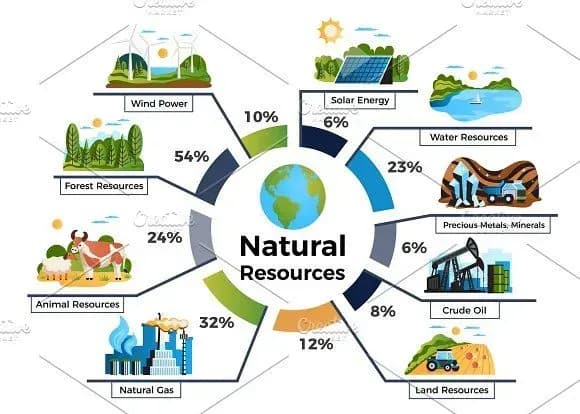
Natural resources play an important role in our lives. From green forests, seas to precious minerals, each resource has its own unique characteristics and values. This article will help you explore more about natural resources and their importance for sustainable development.
According to the Law Dictionary, natural resources are explained as follows:
1. Natural resources
Natural resources are owned by the entire people and managed by the State, including land resources, water resources, mineral resources, forest resources and other resources.
Accordingly, natural resources can be understood as materials available in nature that humans can exploit, process, use, and serve human life. Natural resources can be classified according to many different criteria.
2. Types of natural resources include:
- Renewable resources are resources that can maintain or replenish themselves continuously when managed properly. However, if used improperly, renewable resources can be degraded and become irreversible.
For example, water resources can be polluted, land resources can be salinized, degraded, eroded,...
- Non-renewable resources are limited resources that will be lost or transformed after use.
For example, mineral resources such as oil and coal of a mine can be exhausted after exploitation.
- Eternal energy resources are clean energy sources that, when used, do not pollute the environment or are lost, such as solar energy, wind energy, wave energy, fusion energy, etc.
(The above information is for reference only)
Log in to leave a comment. Log in
Be the first to comment.
Curate
Sign in to curate
React to this story


