
Club author
Clubs · Nov 26, 2024 · 2 min read
Save
Share
Keep reading
authenticated by

Clubs · Nov 26, 2024 · 2 min read
Save
Share
Keep reading
iGuide Stories
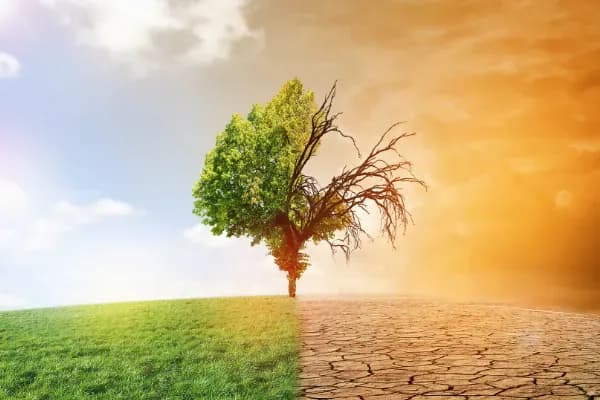
Climate change is causing severe consequences for human life globally. Health is affected by extreme weather events and air pollution, while economic instability arises from natural disasters and climate fluctuations. Society faces issues like environmental migration and changes in livelihoods. To cope, humans need to develop effective adaptation and mitigation strategies.
Climate change is a change in climate over a long period of time due to the impact of natural conditions and human activities, manifested by global warming, sea level rise and increased climate change. extreme hydrometeorological phenomena.
Simply put, the human population increases over time, leading to the cutting down of forests to make room for living, and the exploitation of mineral resources for human use.
These activities increase carbon dioxide emissions, causing the greenhouse effect, global warming effect, and increased global temperature causing climate change.
Climate change has consequences on human life, further changing the Earth's living environment. The following are the clear consequences of climate change on human life:
1. Increasing global temperature: Increasing global temperature causes harsher environmental temperatures for humans, such as record high temperatures increasing year by year, prolonged heat waves above 40 degrees Celsius, leading to The human body cannot bear it.
2. Rising sea levels: The next consequence of increasing global temperatures is the melting of ice sheets in Antarctica and the Arctic, leading to flooding in coastal areas and lower plains. with sea level.
3. Change in living environment: Temperature extremes cause losses in food and agricultural production, because plants and animals cannot adapt in time to too hot climate conditions. . Causing alarm at the risk of extinction of some animal and plant species.
4. Increase in diseases: Climate change causes an increase in infections, waterborne diseases, malaria, and Japanese encephalitis. In addition, high temperatures also cause impacts on the immune system, stress, cardiovascular disease, respiratory and neurological diseases.
5. Economic damage: Climate change affects productivity and output of agricultural and seafood products. Floods hinder the transportation of goods and import and export.
Log in to leave a comment. Log in
Be the first to comment.
React to this story
Curate
Sign in to curate


