Save
Share
Keep reading
authenticated by

Save
Share
Keep reading

Vietnamese ethnic groups
Learn about the Lo Lo people: history, culture, cuisine, to discover the colorful cultural heritage in Vietnam.
The Lo Lo people are one of the ethnic groups with the most beautiful and colorful women's costumes, which are meticulously and elaborately handcrafted and still preserved to this day. Let's find out information about the Lo Lo ethnic group in Vietnam with iGuide.ai!
The Lo Lo people in Vietnam have close relations with the Di people in China. The Lo Lo people first came to Vietnam in the Dong Van, Meo Vac (Ha Giang) and Phong Tho (Lai Chau) regions, then a part of Ha Giang moved to Bao Lac, Cao Bang. Regarding ethnic names: In addition to the name Lo Lo, there are also other names such as Mun Di, Di, Man Di, La La, Qua La, O Man, Lu Loc Man. The Lo Lo ethnic group includes the Black Lo Lo and Flower Lo Lo groups. In addition to the two groups above, there is also the White Lo Lo group.
According to the results of the survey on collecting information on the socio-economic status of 54 ethnic minorities in 2019 by the Vietnam Ethnic Minorities Committee - General Statistics Office, the Lo Lo population as of April 1, 2019 was 4,827 people, of which 2,413 were men and 2,414 were women.
The Lo Lo language belongs to the Tibeto-Burman language group.
The Lo Lo people are concentrated in Cao Bang and Ha Giang, and also in some central and Central Highlands provinces such as Binh Dinh and Gia Lai.
Housing: Traditional housing consists of three different types of houses: ground-based houses, stilt houses, and half-ground-based houses.
Family structure:Patriarchy.
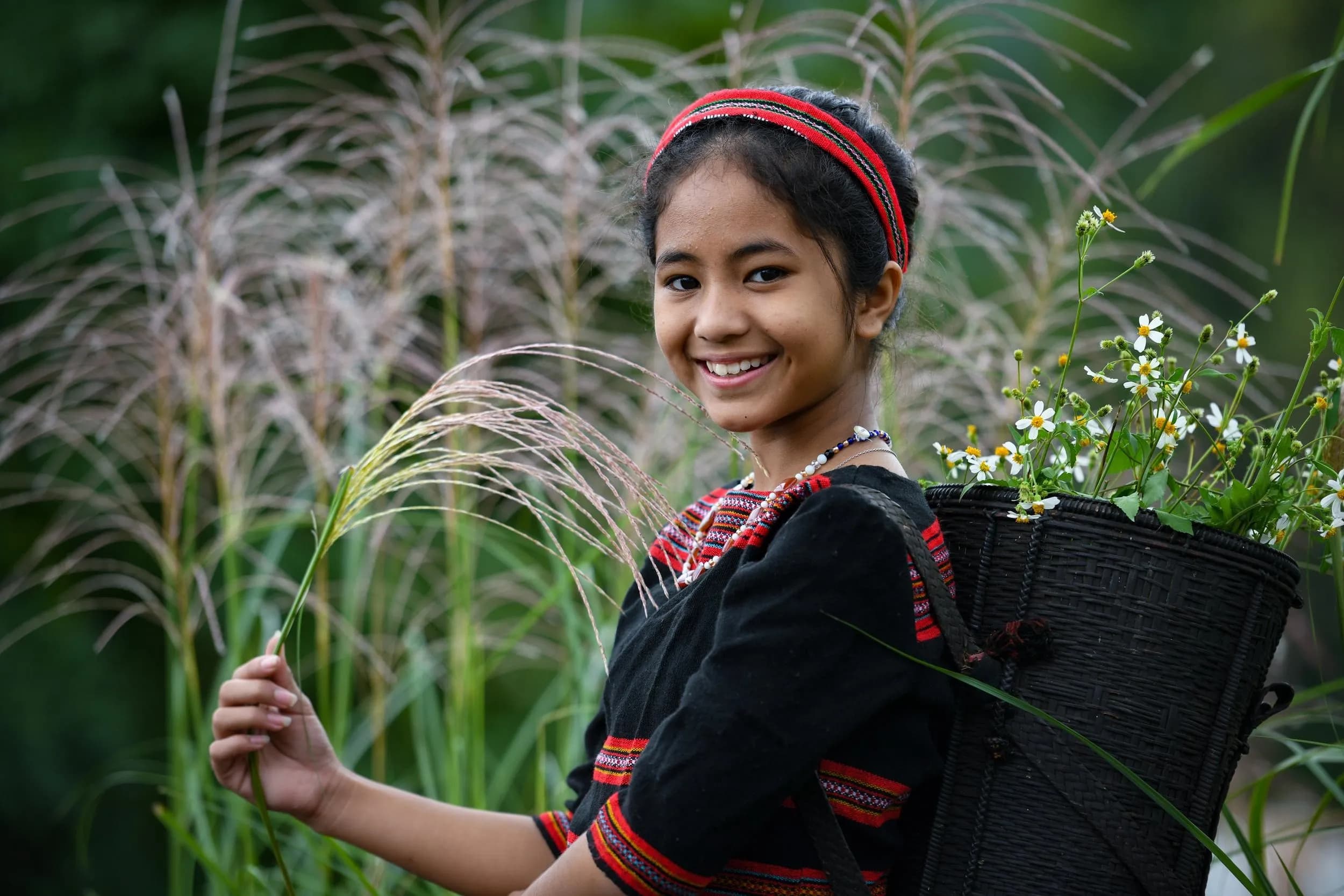
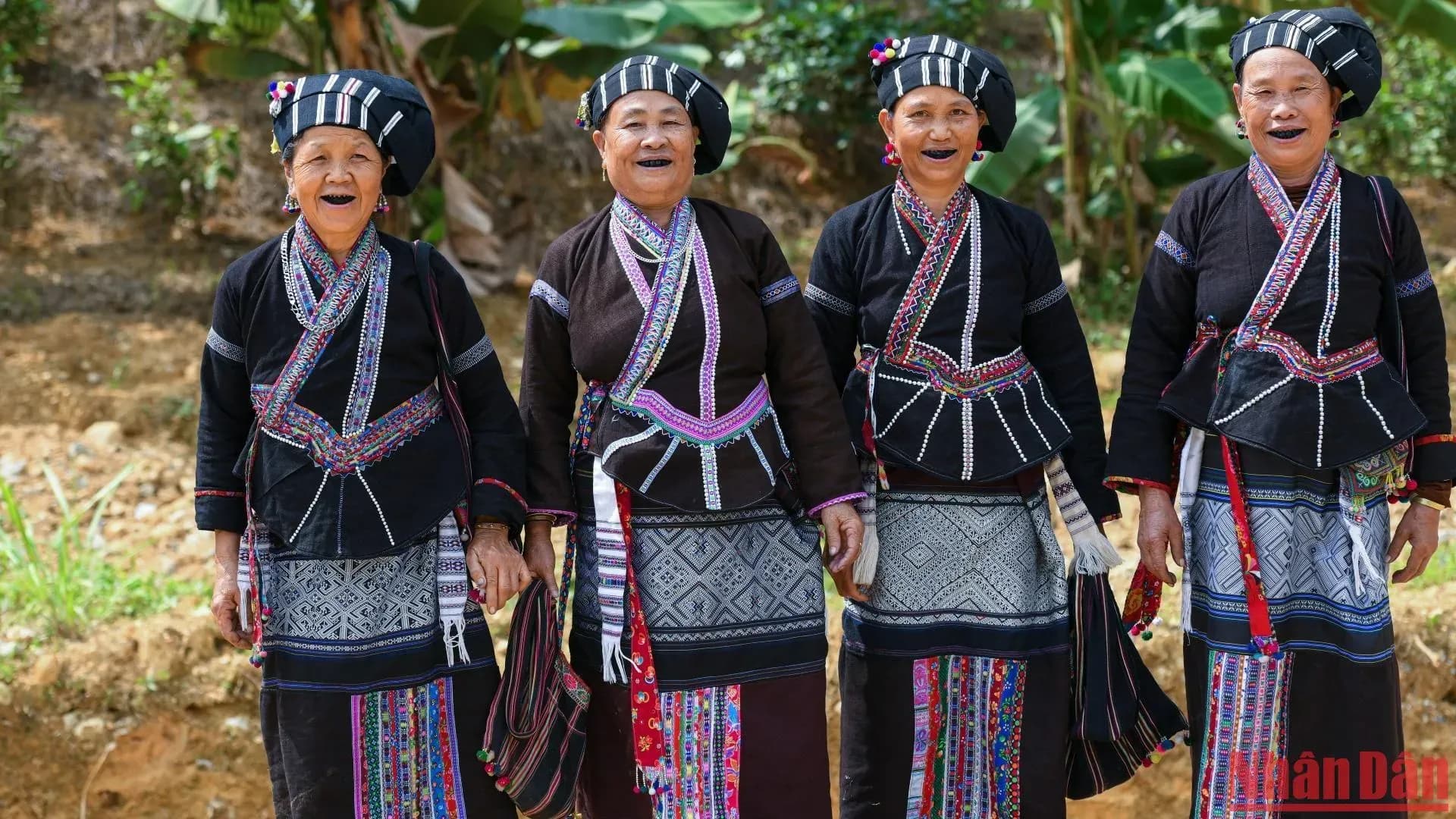
Traditional Costume:Women's clothing includes scarves, shirts, pants, aprons, belts, leggings, skirts, and shoes. Lo Lo women often use scarves to wrap around their heads. The scarves of Lo Lo women in Ha Giang are black or indigo with many different patterns and colors at the ends of each end and in the middle of the scarf. Lo Lo women in Cao Bang use two types of scarves: white and black. These two types of scarves are not decorated, embroidered with tassels and patterns.
Black Lo Lo women wear square-neck shirts with fabric or copper buttons at the chest. The sleeves are decorated with many floral motifs or attached with many pieces of different colored fabric. The back of the shirt is decorated with small square motifs. Flower Lo Lo women wear round-neck shirts, black or indigo, with a slit at the chest. The entire shirt is embroidered with fabric pieces in red, blue, yellow, and white. The skirt is a highlight in the traditional costume of the Black Lo Lo people, divided into three layers: the outermost layer is fringed strips attached to colorful woolen cotton clusters; the second layer is a fabric wrapped around the skirt with many patterned patches; the innermost layer is a black pleated skirt. The popular pattern on the fabric wrapped around the skirt is the pa pu pattern. Men wear black fabric clothes, a four-panel style shirt, buttoned on the right armpit, and wrapped in an indigo scarf.
Cuisine:The Lo Lo people's daily meals usually include starchy dishes such as rice, corn rice, sticky rice, men men, and bamboo rice; dishes rich in protein and fat such as meat, fish, eggs, peanuts, sesame, bee pupae; and dishes made from vegetables, tubers, and fruits. During holidays, the Lo Lo people prepare many other dishes such as blood pudding, roasted meat, banh troi, banh ran, and banh chung. During Tet, the Lo Lo people in Meo Vac wrap banh chung with sticky corn. In daily life, the Lo Lo people have the habit of drinking alcohol and have the custom of offering alcohol to guests when they come to visit.
Holidays:The Lo Lo people celebrate Lunar New Year like the Han and Vietnamese people. In addition, they also have the custom of eating New Rice, the Duanwu Festival, and the Full Moon Festival in July...
Beliefs:The Lo Lo worship their ancestors, parents and deceased relatives. On the altars are wooden tablets with faces drawn in black charcoal. The soul holds an important place in spiritual life.
Economic conditions:Growing rice, corn, crops, vegetables, fruit trees on the fields, raising livestock, poultry, hunting, gathering, fishing. The Lo Lo people also have some handicrafts such as weaving, making tiles, embroidery... Commercial activities and exchange of goods in the life of the Lo Lo people are also quite developed. According to the "Basic characteristics of 54 ethnic minorities in 2019" of the Ethnic Committee and the General Statistics Office, the poverty rate: 53.9%; The near-poor household rate: 14.4%; The unemployment rate: 0.22%; The rate of trained workers with degrees and certificates: 6.9%; The rate of workers working in the non-agricultural sector: 14.5%; The rate of workers doing management or high and medium-level technical and vocational jobs: 3.4%; The rate of households doing traditional handicrafts: 3.17%.
Educational conditions:According to the "Basic characteristics of 54 ethnic minorities in 2019" conducted by the Ethnic Committee and the General Statistics Office, the rate of people aged 15 and over who can read and write: 56.0%; The rate of people attending primary school: 102.1%; The rate of people attending lower secondary school: 76.8%; The rate of people attending upper secondary school: 34.3%; The rate of out-of-school children: 21.0%.
Above is some interesting information about the Lo Lo ethnic group in Vietnam. Let's plan to interact, meet and experience the culture with the Lo Lo people in the near future with iGuide.ai!
Source:
- Ethnic groups in Vietnam (National Political Publishing House Truth)
- Basic characteristics of 54 ethnic minorities in 2019 (Committee on Ethnic Minorities and General Statistics Office)
- Website of the Ethnic Committee, Website of Nhan Dan Newspaper
- Survey results collect information on the socio-economic status of 54 ethnic groups in Vietnam)
Curate
Sign in to curate
Log in to leave a comment. Log in
Be the first to comment.
React to this story