Vietnamese ethnic groups
Unique culture of the Mnong ethnic group
Discover the rich culture, diverse customs and vibrant lifestyle of the Mnong people in the Central Highlands of Vietnam.
Formed and developed right in the mountainous region of the Central Highlands, the Mnong ethnic group has many traditional customs and practices, which are characteristic and have truly become one of the owners of the regional culture. Let's join iGuide.ai to learn about the information about the Mnong ethnic group, Vietnam!
Origin of the Mnong people
- The Mnong are one of the 12 indigenous ethnic groups that have long lived in the Central Highlands. They are one of the cultural owners of the region. In other words, the Mnong ethnic group plays an important role in socio-economic development, as well as preserving and promoting the Central Highlands culture.
- The Mnong ethnic group also has other names: Pnong, Mnong Nong, Mnong Pre, Mnong Bu Dang, DiPri, Biat, Mnong Gar, Mnong Ro Lam, Mnong Chil, Mnong Kuenh, ...
Geographical distribution of the Mnong people
Geographical distribution: The Mnong are distributed in 51 out of 63 provinces and cities. However, the traditional settlement area of the Mnong is the southwestern region of the Central Highlands (in the two provinces of Dak Nong, Binh Phuoc and the southwestern provinces of Dak Lak, Lam Dong).
Population and language of the Mnong ethnic group
Population, language - Population: According to the survey data of 53 ethnic minorities on April 1, 2019, the total population of the Mnong people: 127,334 people; male population: 62,002 people; female population: 65,332 people; household size: 4.5 people/household; proportion of population living in rural areas: 93.8%. - Language: The Mnong ethnic language belongs to the South Asian language family, Mon-Khmer language group. However, the Mnong vocabulary is more or less influenced by the Ede language of the Malayo-Polynesian language group (Austronesian language family).
Main characteristics of Mnong culture
- Population: According to the survey data of 53 ethnic minorities on April 1, 2019, the total population of the Mnong people: 127,334 people; male population: 62,002 people; female population: 65,332 people; household size: 4.5 people/household; proportion of population living in rural areas: 93.8%.
- Language: The Mnong language belongs to the South Asian language family, the Mon-Khmer language group. However, the Mnong vocabulary is more or less influenced by the Ede language of the Malayo-Polynesian language group (Austronesian language family).
Housing and costumes of the Mnong people
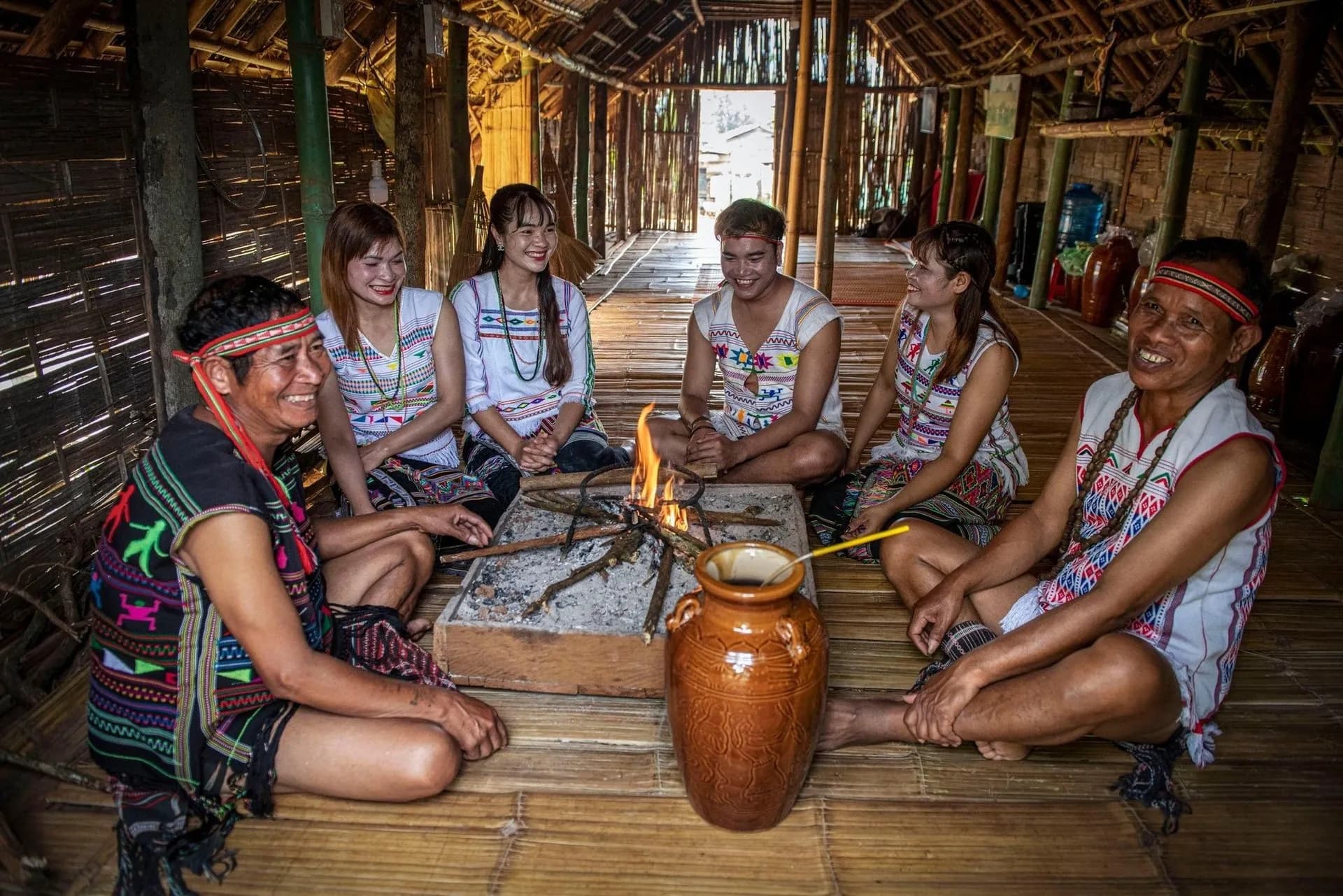
- Housing: Depending on the region and local groups, the Mnong people build ground-level houses or low stilt houses. The Mnong Rlam group in the Lak Lake area in particular build high stilt houses following the architecture of the Ede people. However, nowadays, the Mnong people often live in houses with Kinh architecture instead of traditional earthen houses and stilt houses because they are more durable and safe.
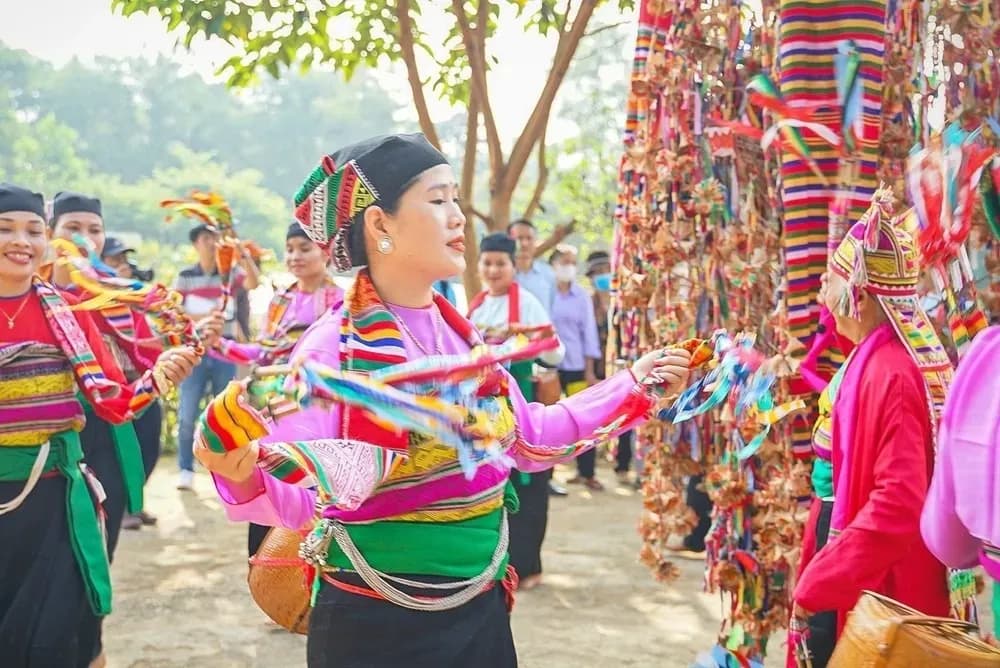
- Costume: In the hot season, the Mnong men of the past often wore loincloths and were shirtless; while the women wore skirts and were shirtless. In the cold season, they wore a blanket. However, nowadays, the Mnong costumes have absorbed many Vietnamese elements. The jewelry favored by the Mnong people are gold and copper bracelets and multi-colored beaded necklaces.
Ethnic beliefs and cuisine
- Religion and beliefs: Currently, in terms of religious life and beliefs, the Mnong people can be divided into two groups: the group following traditional beliefs and the group following Protestantism and Catholicism. The group of Mnong people following traditional beliefs consider all things to be spiritual and they worship many gods that they believe exist, influence, and control their lifestyle and life. On the contrary, the Mnong group following religion places absolute faith in a single god, God, abandoning the traditional customs of the people.
- Cuisine: The Mnong eat rice cooked in earthen pots, in the past, the most popular dish was bamboo rice. When working in the fields, they often eat sour porridge served in dried gourds. The Mnong love to drink rice wine, smoke or "chew" tobacco.
Music and education in the Mnong community
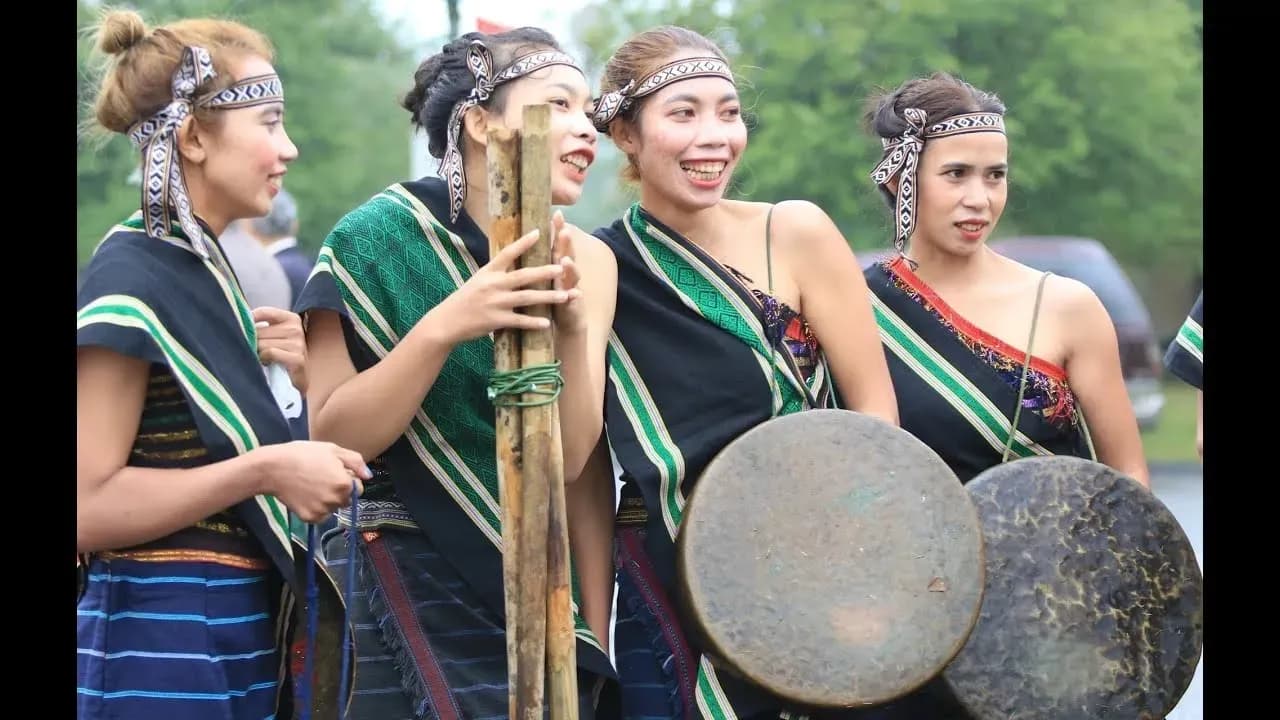
Musical instruments: The Mnong people's musical instruments are quite diverse, including gongs, gourd trumpets, buffalo horn trumpets, lip trumpets, one-stringed zithers, eight-stringed zithers, and vertical flutes. People also found in the Mnong people's residential areas a set of primitive stone instruments famous from the mid-20th century. Education: According to the survey data of 53 ethnic minorities on April 1, 2019: the rate of people aged 15 and over who can read and write is 73.3%, the rate of people attending primary school is 104.1%, the rate of people attending lower secondary school is 72.1%, the rate of people attending upper secondary school is 34.3%, the rate of out-of-school children is 24.9%.
Marriage customs and festivals of the Mnong people
Marriage: In ancient Mnong society, endogamy was strictly regulated, but now intermarriage has appeared. Mnong people often live at their wife's house after marriage, in some places there is a form of rotating residence and then living separately. Festivals: The buffalo stabbing festival is the most important traditional festival of the Mnong people. At the end of the annual rice harvest season, each village organizes a festival to celebrate new rice, thank heaven and earth and the rice god.
Economic conditions of the Mnong ethnic group
Economic conditions: - The Mnong people mainly live by farming with the "fire-cutting" method: slashing, burning, then making holes to sow seeds; harvesting by threshing rice by hand. In addition, they grow wet rice with the "water-cutting" method in swampy areas, using buffalo to till the soil and sow seeds, not transplanting seedlings like in the plains. Along with agricultural production, hunting and gathering also play an important role in their daily lives.
Traditional occupations and employment rates
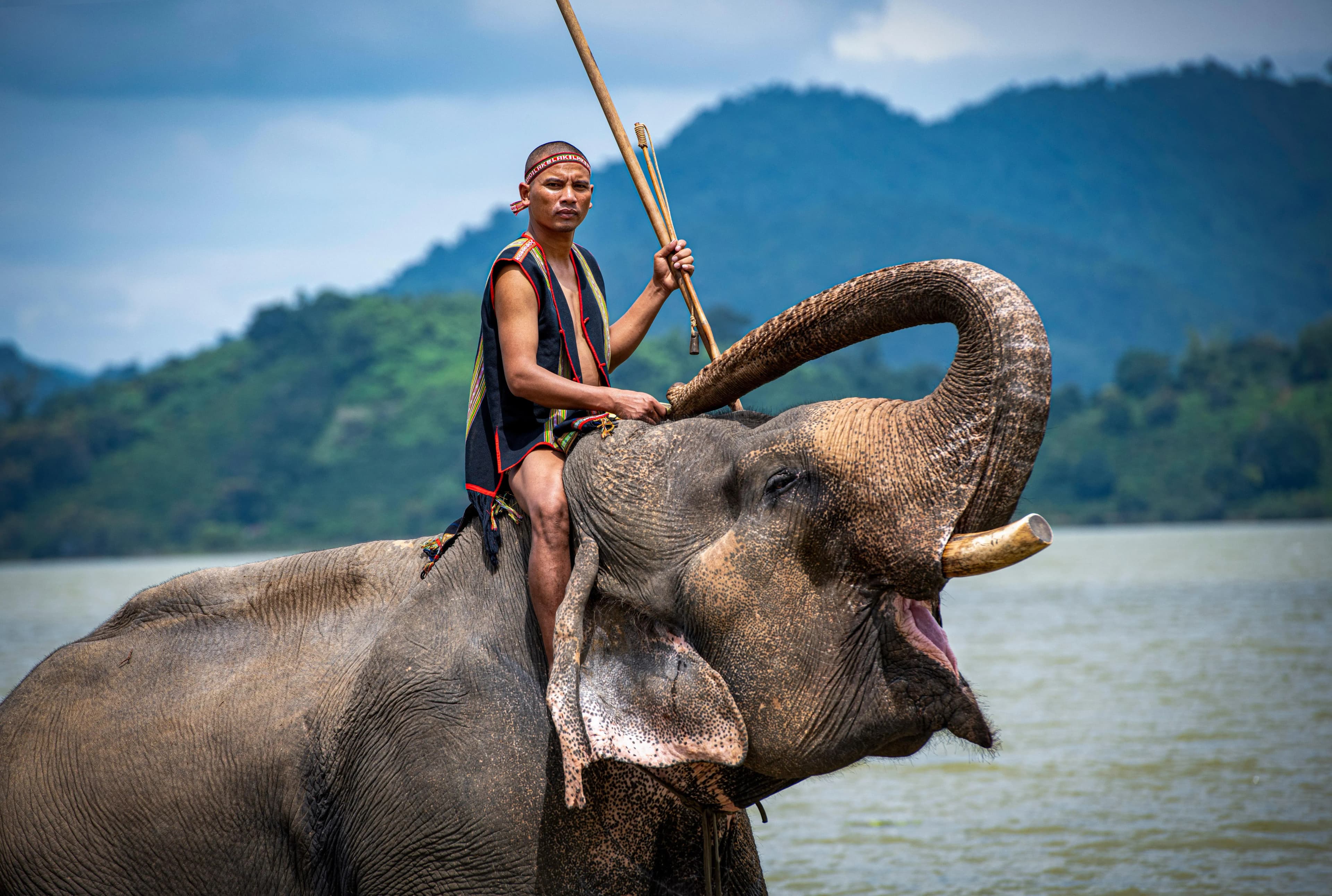
- The Mnong also have the profession of weaving household items, growing cotton and weaving. In each village, there are also some people who know how to make rough pottery, molding by hand and firing in the open air. In particular, in the Buon Don area, the residents are very famous for hunting and taming wild elephants.
- According to the survey data of 53 ethnic minorities on April 1, 2019: The Mnong ethnic group has: Unemployment rate of 1.07%; Rate of trained workers with degrees and certificates: 5.4%; Rate of workers working in the non-agricultural sector: 6.1%; Rate of workers working in management or high and middle-level technical and vocational training: 1.7%; Rate of poor households: 42.2%; Rate of near-poor households: 15.4%; Rate of households using clean water sources: 88.5%; Rate of households using grid electricity for lighting: 97.7%.
Source:
- Ethnic groups in Vietnam (National Political Publishing House Truth)
- Basic characteristics of 54 ethnic minorities in 2019 (Committee on Ethnic Minorities and General Statistics Office)
- Website of the Ethnic Committee, Website of Nhan Dan Newspaper
- Survey results collect information on the socio-economic status of 54 ethnic groups in Vietnam)