Save
Share
Keep reading
authenticated by

Save
Share
Keep reading
Vietnamese ethnic groups
Experience the unique culture, rich traditions and stunning natural landscapes of the Hmong people, a colorful highlight in Vietnam.
Hmong is one of the ethnic groups with the largest population in Vietnam and also has a long history of migration to Vietnam. Let's find out information about the Co Lao ethnic group, Vietnam with iGuide.ai!
1. Historical origin
About 4-5 thousand years ago, the Hmong and Dao people were both pushed out of the Tam Mieu region in China by the Han people, and had to endure wars and migrations that lasted for thousands of years. In the late 17th and early 18th centuries, they began to migrate to Southeast Asia.
Based on the color of clothing and pronunciation, the Hmong people in Vietnam are divided into four local groups: White Hmong, Black Hmong, Green Hmong and Flower Hmong.
Population: 1,393,547 people as of April 1, 2019. 711,066, 682,481 (According to the results of the survey collecting information on the socio-economic status of 54 ethnic minorities in 2019 by the Vietnam Ethnic Committee - General Statistics Office).
Language: Hmong-Dao family.
Geographical distribution: Mainly in the provinces of Ha Giang, Son La, Dien Bien, Lao Cai, Lai Chau, Yen Bai, Thanh Hoa, Nghe An, Dak Lak, Dak Nong... Currently, the Hmong people have migrated to many other places such as Cao Bang, Bac Kan, Lam Dong.
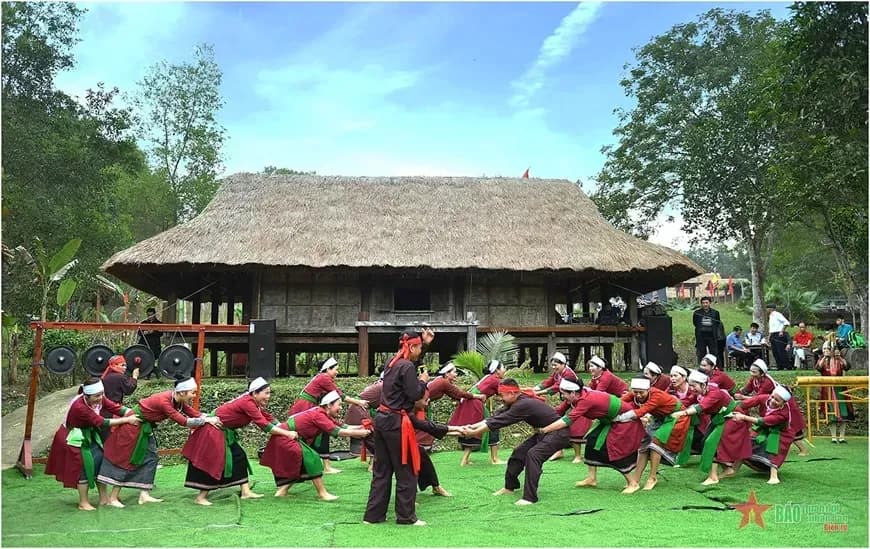
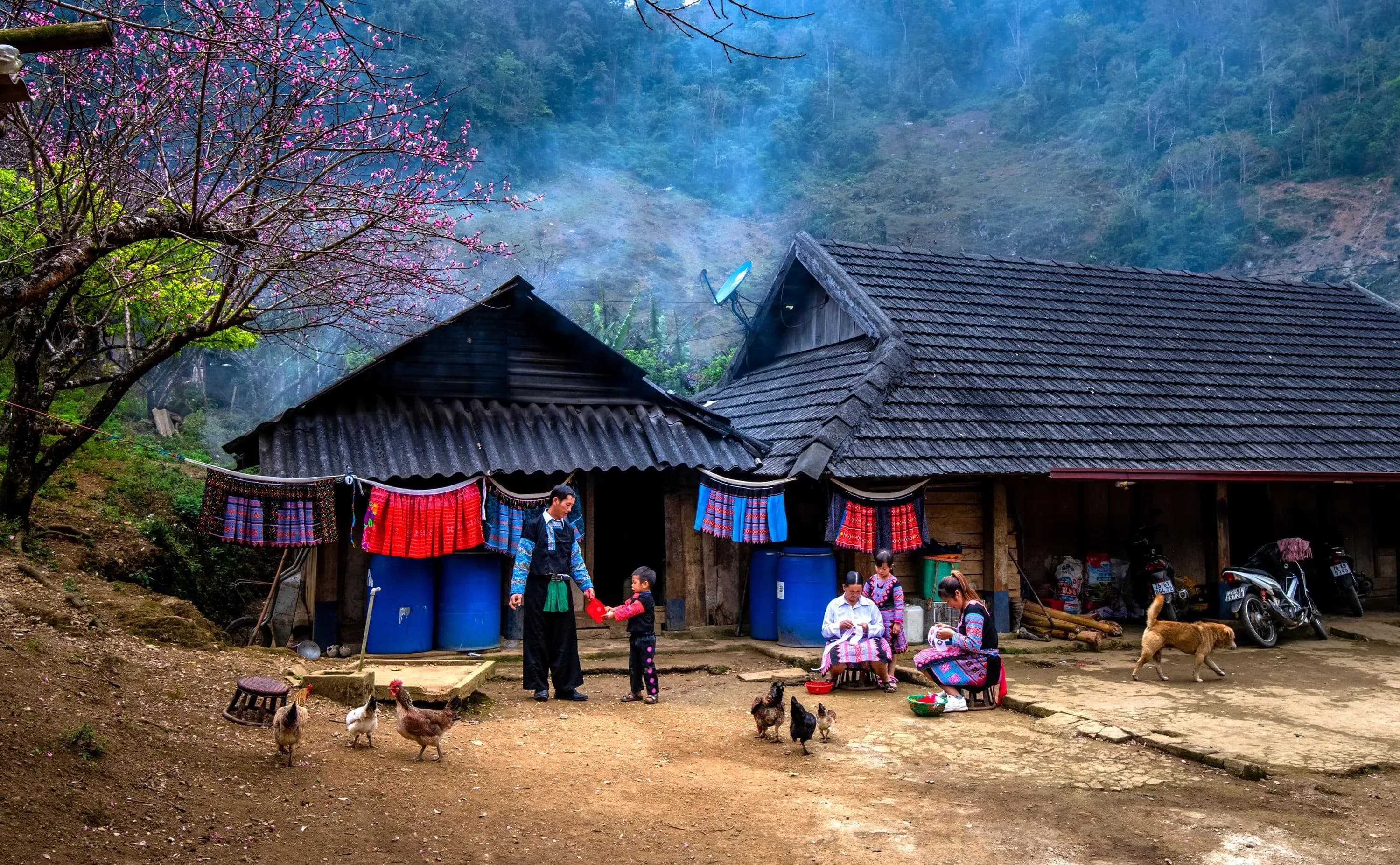
- Housing: Stilt houses, thatched wooden houses, rammed earth houses. Ground floor houses have three rooms and two wings, with two to three doors. The middle room has an altar. In the high rocky mountains, each house has its own yard, separated by a stone wall about 2 meters high.
- Family structure: Patriarchal.
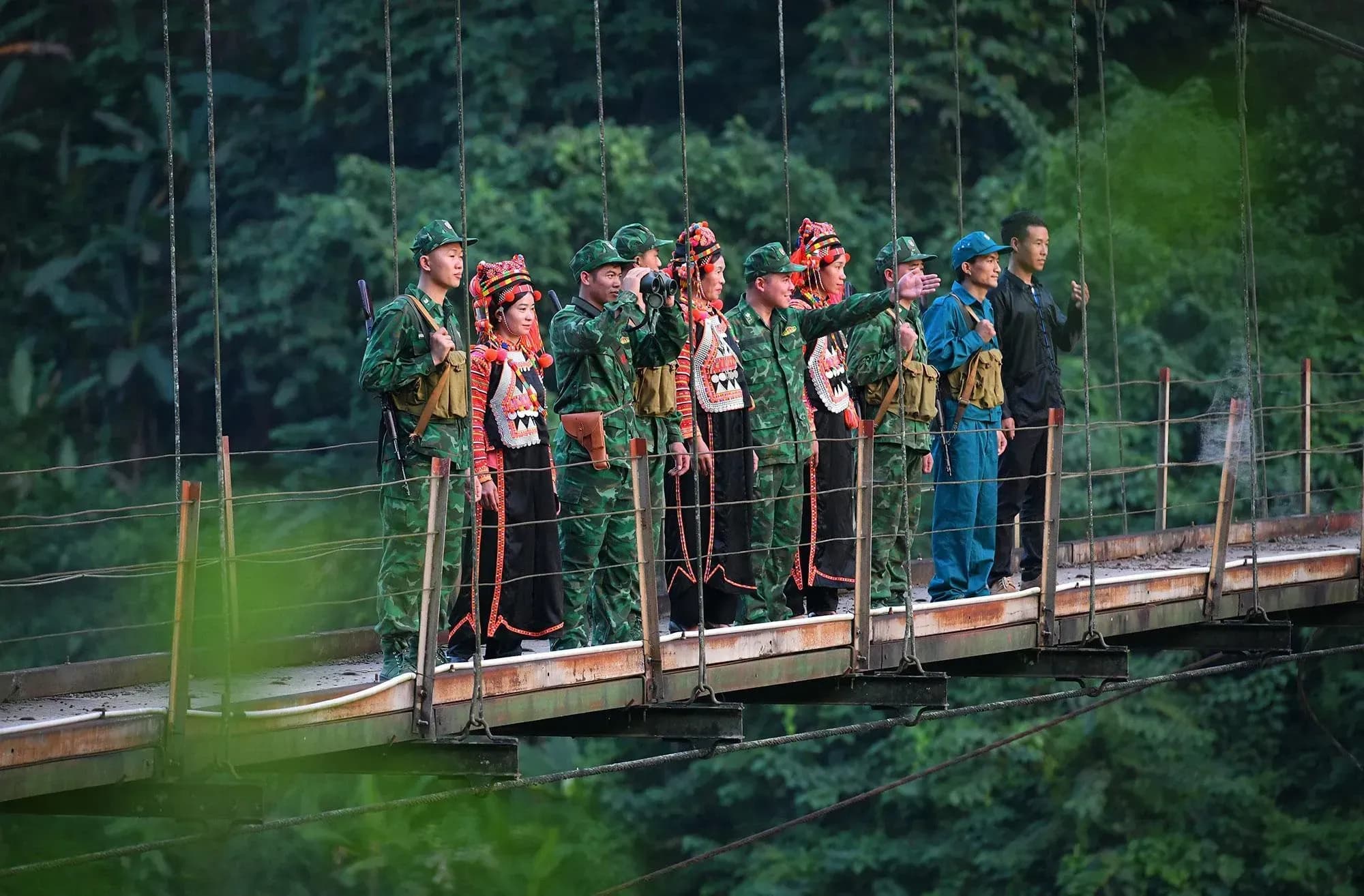
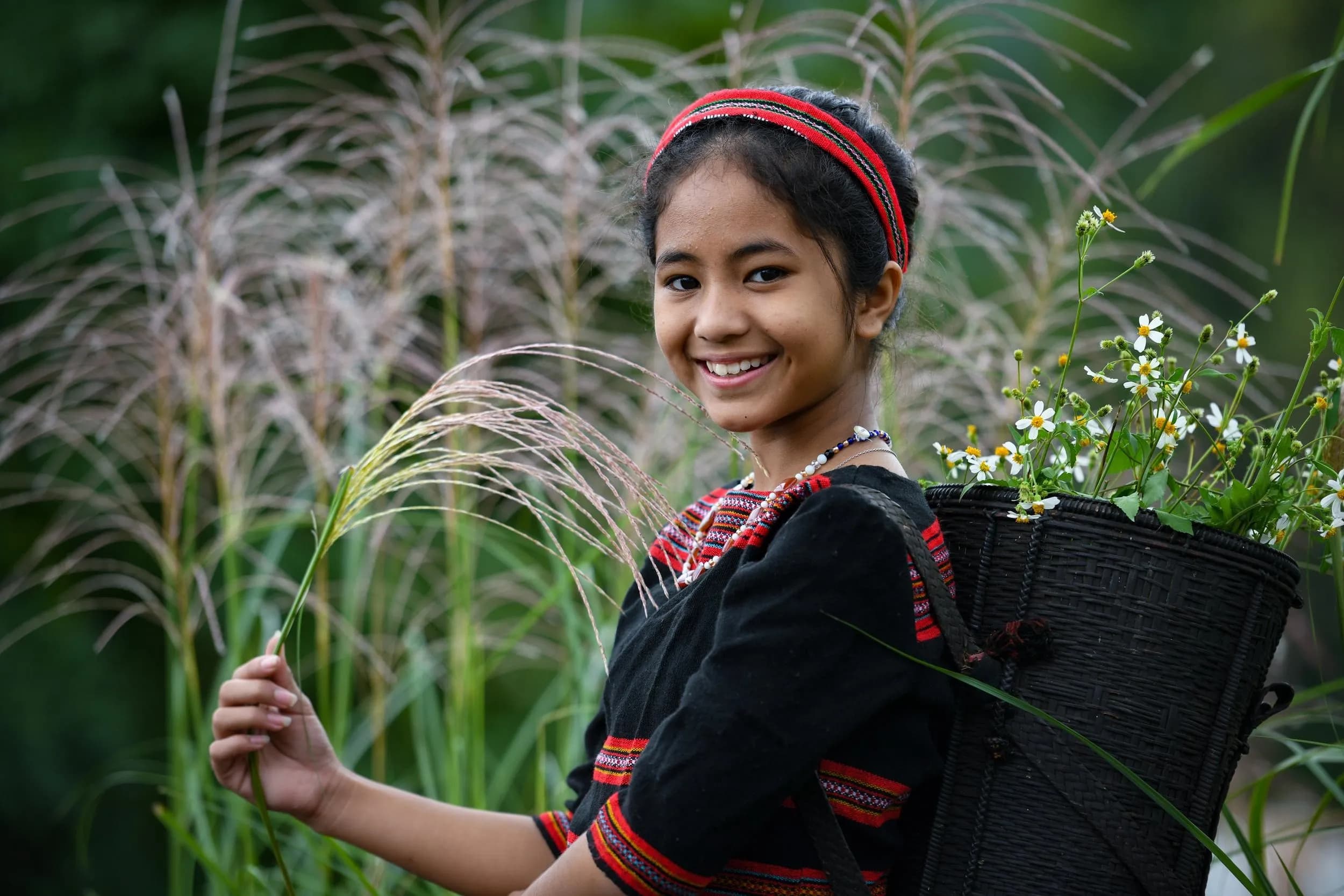
- Traditional costumes: Hmong costumes are very colorful and diverse. White Hmong women grow flax, weave flax, white skirts, open-chest shirts, embroidered patterns on the arms and back. Shave their hair, leave a topknot, and wear wide-brimmed scarves. Flower Hmong women wear indigo skirts embroidered or printed with beeswax, open-armpit shirts, and colored and embroidered cloth on the shoulders and chest. Keep their hair long, and wear a bun and wig. Black Hmong women wear indigo skirts, printed with beeswax, open-chest shirts. Green Hmong women wear tube skirts. Married Green Hmong women roll their hair up on top of their heads, pin it with a horseshoe comb, and wear scarves outside. Decorations are mainly made of patchwork colored fabric, embroidered patterns are mainly snails, squares, diamond shapes, and crosses. Men: Black clothes, short blouses, long pants, and use scarves to wrap their heads.
- Cuisine: Typical dishes include men men (steamed corn flour), various types of cakes made from corn flour, rice, corn wine, rice wine, thang co (pan soup) consisting of meat, bones, intestines, liver, heart, lungs of cows (goat, horse...) cooked together in a large pan.
- Festivals: The Hmong celebrate the traditional New Year from the beginning of the 12th lunar month, one month earlier than the Lunar New Year. In some places, the Hmong also celebrate Independence Day on National Day, September 2nd every year.
The Hmong people worship God. In addition, due to the influence of Animism, to this day the Hmong people still believe in "all things have souls", meaning that all things have souls. When an object dies, its soul turns into a ghost; if a relative dies, its soul turns into an ancestral ghost and is worshiped by descendants at the altar in the house. In addition, the Hmong people are also influenced by Confucianism, Taoism and Buddhism. However, these religions are all intertwined with Animism, so the Hmong shaman always plays the role of an intermediary between humans and gods. In addition to ancestor worship, each family also worships kitchen ghosts, door ghosts, room ghosts...; within the clan, they worship the clan ghosts; within the community, they worship the village ghosts including the guardian gods and the local gods, pray for rain or sun, pray to kill insects...
Mainly agricultural production, such as cultivation, animal husbandry, hunting, fishing, gathering. In addition, the Hmong also produce household handicrafts, do commercial services and other occupations. According to the "Basic characteristics of 54 ethnic minorities in 2019" conducted by the Ethnic Committee and the General Statistics Office, the poverty rate is 52.6%; The rate of near-poor households: 12.8%; The unemployment rate: 1%; The rate of trained workers with degrees and certificates: 4.2%; The rate of workers working in the non-agricultural sector: 5.2%; The rate of workers doing management or high and medium-level technical and vocational jobs: 1.3%; The rate of households doing traditional handicrafts: 0.30%.
According to "Basic characteristics of 54 ethnic minorities in 2019" conducted by the Ethnic Committee and the General Statistics Office, the rate of people aged 15 and over who can read and write: 54.3%; The rate of people attending primary school: 99.9%; The rate of people attending lower secondary school: 77.3%; The rate of people attending upper secondary school: 29.5%; The rate of out-of-school children: 22.6%.
Source:
- Ethnic groups in Vietnam (National Political Publishing House Truth)
- Basic characteristics of 54 ethnic minorities in 2019 (Committee on Ethnic Minorities and General Statistics Office)
- Website of the Ethnic Committee, Website of Nhan Dan Newspaper
- Survey results collect information on the socio-economic status of 54 ethnic groups in Vietnam)
Log in to leave a comment. Log in
Be the first to comment.
React to this story
Curate
Sign in to curate