Save
Share
Keep reading
authenticated by

Save
Share
Keep reading
Vietnamese ethnic groups
Experience the rich life and culture of the Bouyi people, from rural rhythms to unique customs.
The Bo Y ethnic group is one of the 16 ethnic groups with the smallest population among the 54 ethnic groups in Vietnam. Up to now, the Bo Y ethnic group still maintains its cultural identity and fine traditions. Let's find out information about the Bo Y ethnic group in Vietnam with iGuide.ai!
The ancestors of the Bo Y people are a branch of the "Lac Viet" people in the developed Bach Viet block. The Bo Y people call themselves Bo Y, Bo Trong, Bo Man and Lieu, Trong Gia, Ly Lieu, Di Lieu (possibly from ancient times). The Bo Y ethnic name in Vietnam today refers to two groups: the Bo Y group (self-named Pu Y) in Ha Giang province and the Tu Di group in Lao Cai province.
The Bo Y group in Ha Giang province followed the Nhiem and Nho Que rivers to settle in several communes of Dong Van and Quan Ba districts.
According to the 2019 Census of 53 Ethnic Minorities: the Bo Y ethnic population is 3,232 people, of which the male population is 1,695 people and the female population is 1,537 people.
- The Bo Y group speaks the Tay - Thai language (Thai - Ka Dai language family), while the Tu Di group speaks the Han language (Sino - Tibetan language family). - Education: According to the 2019 Survey of 53 Ethnic Minorities, the proportion of people aged 15 and over who can read and write in common script is 80.0%, the general school attendance rate of children at the primary level is 100.6%. The general school attendance rate of children at the lower secondary level is 96.1%, the general school attendance rate of children at the upper secondary level is 72.6%, and the proportion of out-of-school children is 7.8%.
- Traditional social institutions: Under the feudal regime, the social status of the Bo Y people was considered low, they were managed by the old administrative apparatus: the village chief, the chief of the village and the deputy chief were all Nung people. Under the French colonial period, Quan Ba had two administrative units: Dai Mien and Tieu Mien. The area where the Bo Y people lived belonged to Tieu Mien, with the Tay people as chiefs and the Hmong and Dao as deputy chiefs. Under the village were the villages, headed by the Pao ta mua, usually a shaman who knew Chinese characters, had prestige and was knowledgeable about customs and practices, and held this important responsibility.
- Religion, belief: The concept of the universe and the soul, in the consciousness of each nation, there is a system of belief about the existence of one or more worlds outside the world of human life. The Bo Y people believe that the universe consists of three levels, divided vertically: the middle is the earthly world, where humans live, above the earthly world is the dwelling place of the gods and below is the muong of the tiny people (pầu cung reverently) living underground.
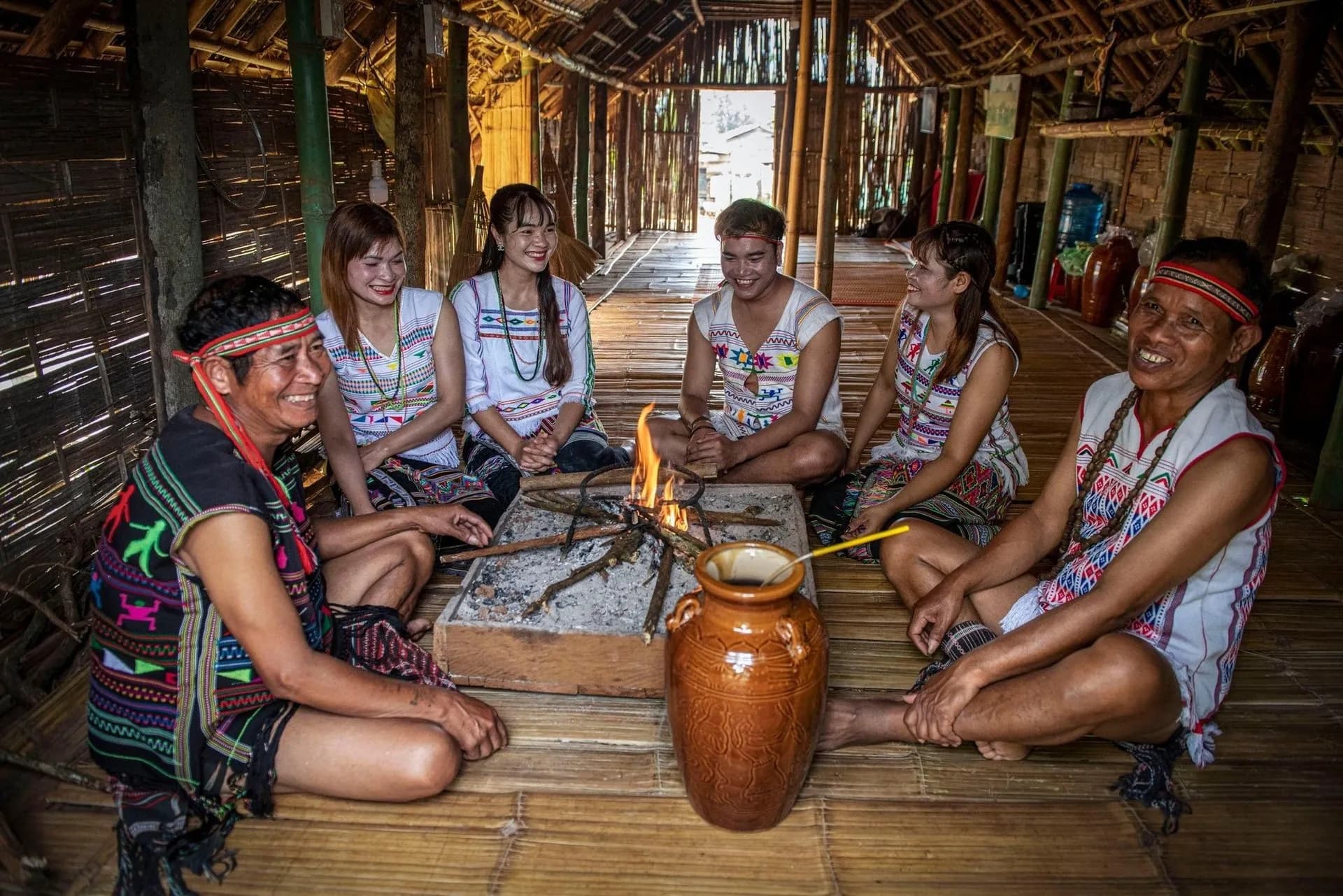
- Housing: As agricultural residents who cultivate wet rice fields, the Bo Y people in Quan Ba district when choosing land to build a house often choose places near water sources for convenience in living and farming. To choose land to build a house, the Bo Y people often choose flat land, about 40 - 50m2 wide, then hold a ceremony to worship the local god on that land to pray for the house they are about to build to be sustainable, prosperous, and for the family members to be healthy.
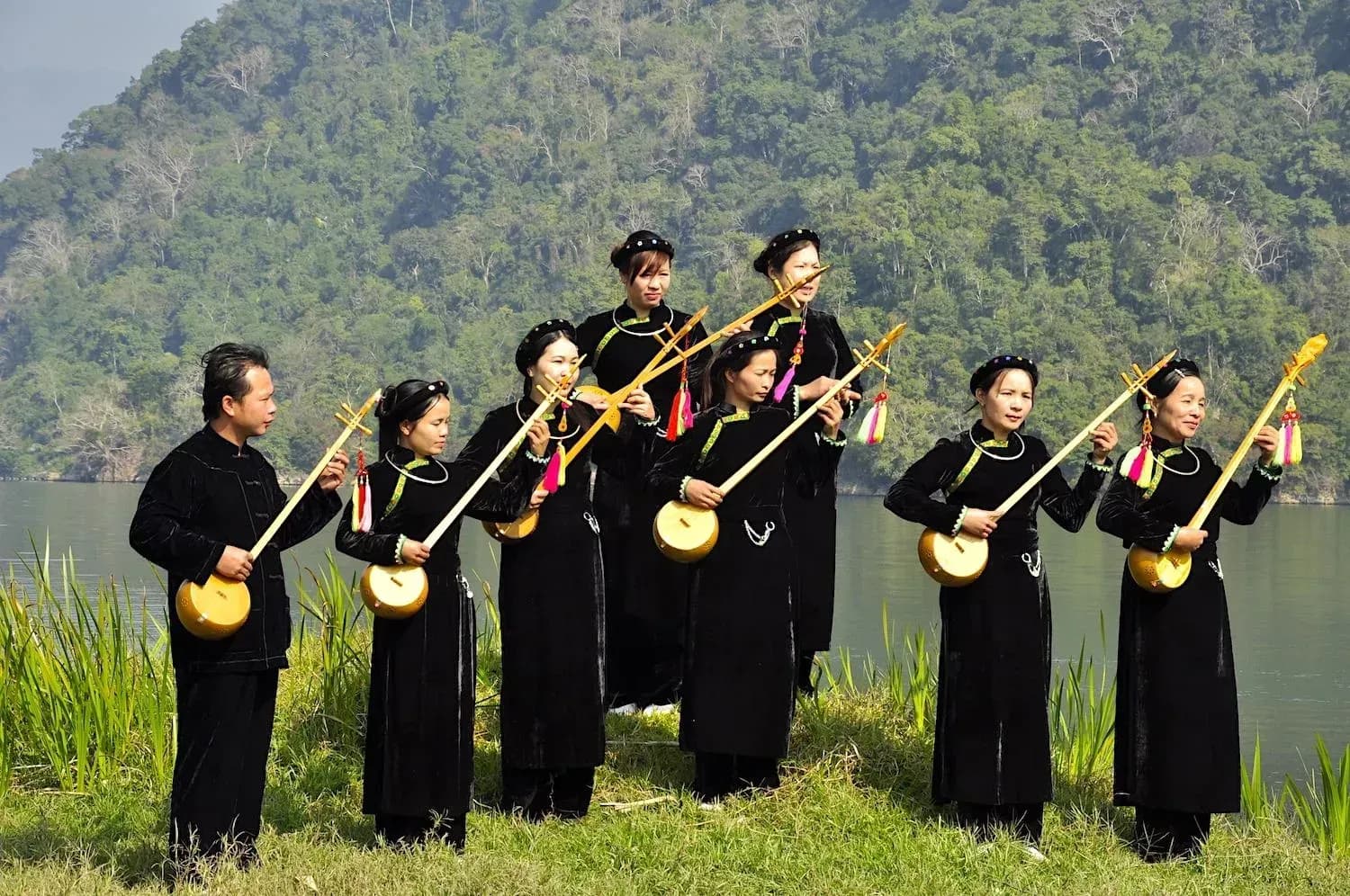
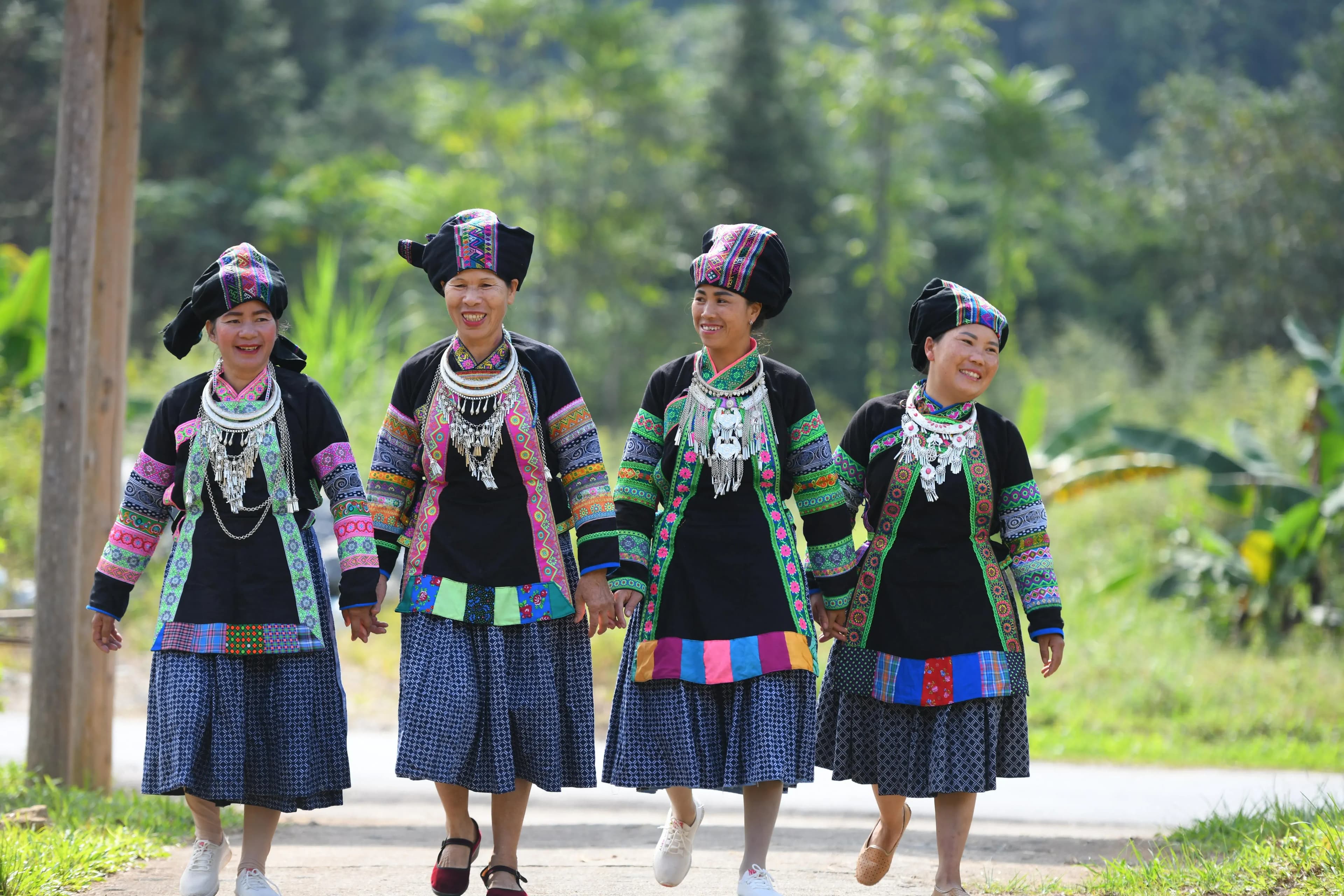
- Clothing: Men often wear collared shirts, short blouses, four panels; indigo-dyed leaf pants made of self-woven fabric. Bo Y women wear short five-panel shirts with slits on the right armpit, with collars, sleeves, and buttonholes decorated with different colored fabric borders and colorful patterns. In the past, Bo Y jewelry was also engraved with silver, but it was rare and fragmented.
- Cuisine: The Bo Y people are attached to fields and farming activities, the economy is still mainly self-sufficient. Currently, rice is mainly used for cooking, while corn is used to make goods to increase income and raise livestock and poultry.
- The Bo Y people have a tradition of wet rice cultivation and have a high level of agricultural cultivation. Currently, forests have been assigned to households for care and protection, so the Bo Y people no longer cultivate extensively as before but have gone into intensive farming and intercropping. In addition to growing rice, corn, cassava... the Bo Y people in Muong Khuong, Lao Cai province, also grow chili, soybeans, tea, tobacco, and sugarcane. Chili is both a favorite spice of the people and considered a commodity crop that brings income to the people.
- Animal husbandry is a livelihood activity that complements the cultivation activities of the Bo Y people. Poultry, especially chickens, are raised by the Bo Y people. Chickens are also an indispensable offering during festivals and New Year's and meet the food needs of the family. Poultry farming of the Bo Y people is also mainly free-range.
- The Bo Y people have practiced many handicrafts such as weaving, weaving, carpentry, forging, and wine making. Weaving is a traditional handicraft of Bo Y men, to create items used in production and daily life of the family such as baskets, trays, sieves, winnowing, and containers. The Bo Y carpentry is still maintained until now. Making corn wine is a fairly developed handicraft of the Bo Y people.
In the past, hunting was an activity of Bo Y men to both protect crops and provide food for daily life. Hunting products included wild animals, birds, mice, fish, and crabs.
Above is some interesting information about the Bo Y ethnic group, Vietnam. Let's join iGuide.ai to plan to explore, meet and interact with the Bo Y people in the near future!
Source:
- Ethnic groups in Vietnam (National Political Publishing House Truth)
- Basic characteristics of 54 ethnic minorities in 2019 (Committee on Ethnic Minorities and General Statistics Office)
- Website of the Ethnic Committee, Website of Nhan Dan Newspaper
- Survey results collect information on the socio-economic status of 54 ethnic groups in Vietnam)
Log in to leave a comment. Log in
Be the first to comment.
React to this story
Curate
Sign in to curate