Save
Share
Keep reading
authenticated by

Save
Share
Keep reading
Temples
Hoa Lu Cave, also known as Thung Lau, Ninh Binh, Vietnam is a national historical and cultural relic. With its majestic natural beauty, this place is associated with the first steps in the unification of the country by warlord Dinh Bo Linh.
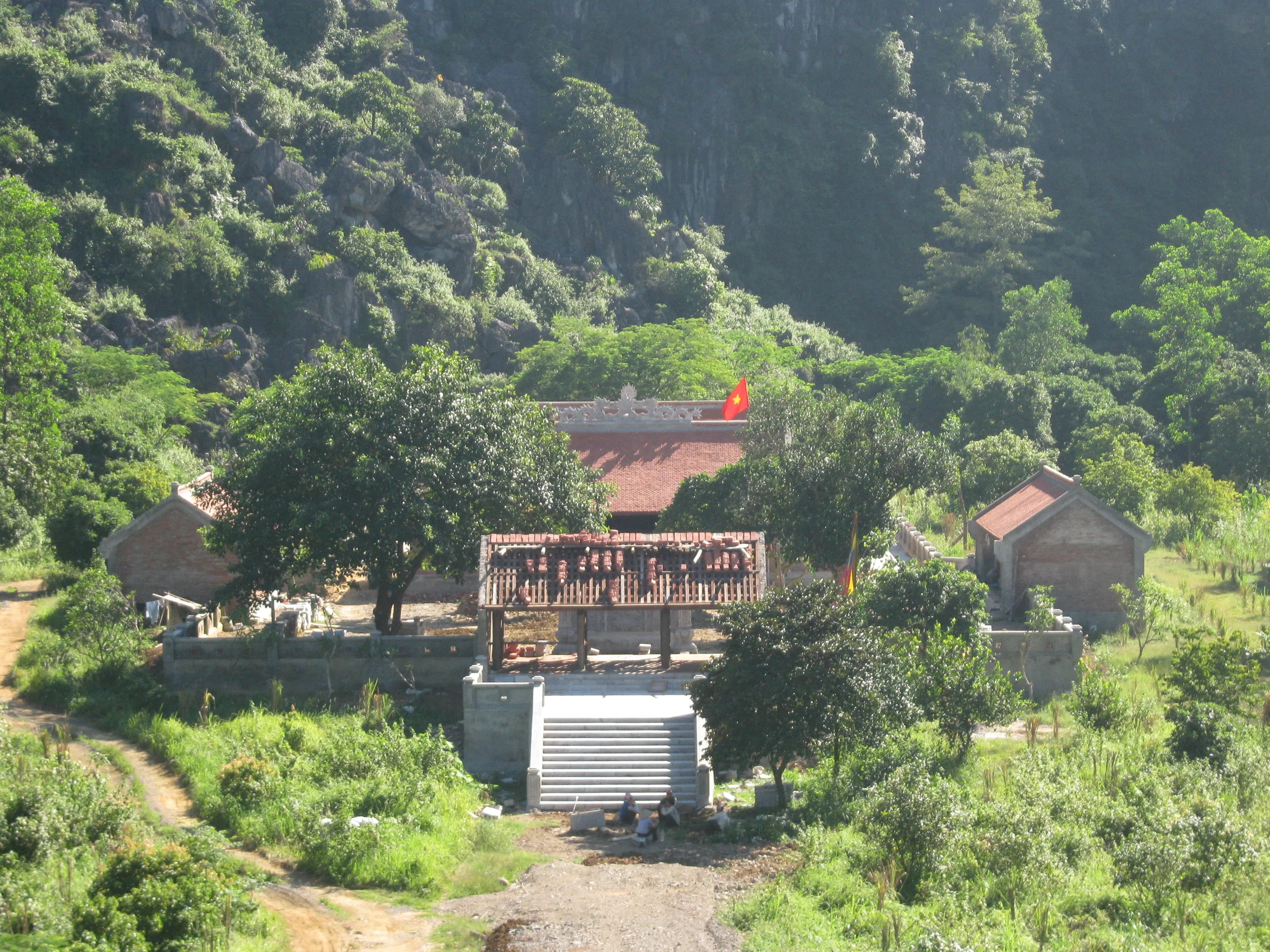
Located about 15km from the ancient capital of Hoa Lu and 20km north of Ninh Binh city, Hoa Lu Cave is a valley of about 16 acres, exposed and surrounded by curved mountains. The cave is located between four sides of steep mountains, has a nearly circular shape, about 200m in diameter, creating a solid wall separating Hoa Lu Cave from the outside. There is only one way into the cave, a small lagoon about 30m high. Surrounding the cave is Cut lagoon, about 3km long and 500m wide, like a natural moat protecting Hoa Lu Cave.
Hoa Lu Cave, in addition to the name Thung Lau, is also called Thung Ong. The name Thung Ong was named after the temple of “Saint Ong” Nguyen Minh Khong in the old valley. This was also the first base of the warlord Dinh Bo Linh in his career of unifying the country.
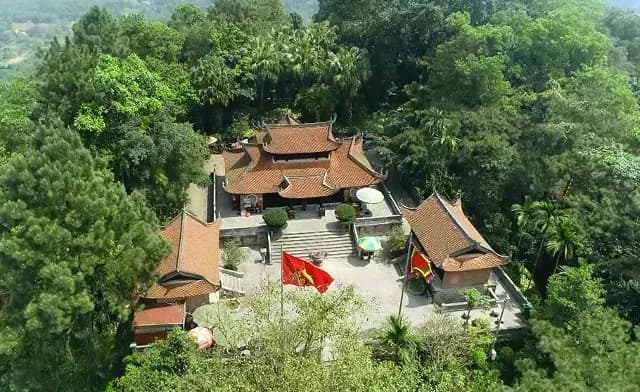
In recent years, Hoa Lu Cave has been invested in renovation and embellishment to be more spacious. Outside the cave, there is a stone gate and a parking lot for visitors. To facilitate the travel of tourists, the local government has built a road with about 240 stone steps winding into 9 sections, symbolizing the image of the Dragon. Located in the middle of Hoa Lu Cave is a temple worshiping King Dinh Tien Hoang and Saint Nguyen Minh Khong. The temple was built on the foundation of his old palace, which is also on the foundation of the old temple built over 300 years ago. History records Saint Nguyen Minh Khong as a politician with many contributions to Dai Viet during the Ly Dynasty.
Nguyen Minh Khong was a famous monk and a genius physician. He also collected and revived bronze casting - the quintessence of Dong Son culture - ancient Vietnamese civilization and is considered the founder of bronze casting. Previously, it was a 3-room temple, now it has been restored to 5 rooms, with a closed gable. The temple's ground plan is in the shape of the letter T. The statue of Nguyen Minh Khong is made of wood, placed in a shrine in the back palace with an artistic style around the end of the 18th century.
With the moral of drinking water, remembering its source, every year, on the 8th day of the 10th lunar month, in Thung Lau Ninh Binh, a festival called Hoa Lu Dong Festival or Thung Lau Temple Festival takes place. The festival is solemnly organized by local people with many rituals, sacrifices, and processions. Besides, there are also folk games such as wrestling, lau drills, lion dances, cheo singing or folk singing, creating a joyful and exciting atmosphere for local people and visitors to attend. The festival has become a spiritual and cultural activity of the people to honor good historical and cultural values, expressing respect and deep gratitude to the ancestors.
With the majestic beauty of nature, associated with the first steps in the unification of the country of the first emperor of Vietnam, Hoa Lu Cave (Thung Lau) was ranked by the state as a national historical and cultural relic in 1996, a place that preserves the heroic imprint of the nation and needs to be cared for, preserved and developed.
Valley of Leaves
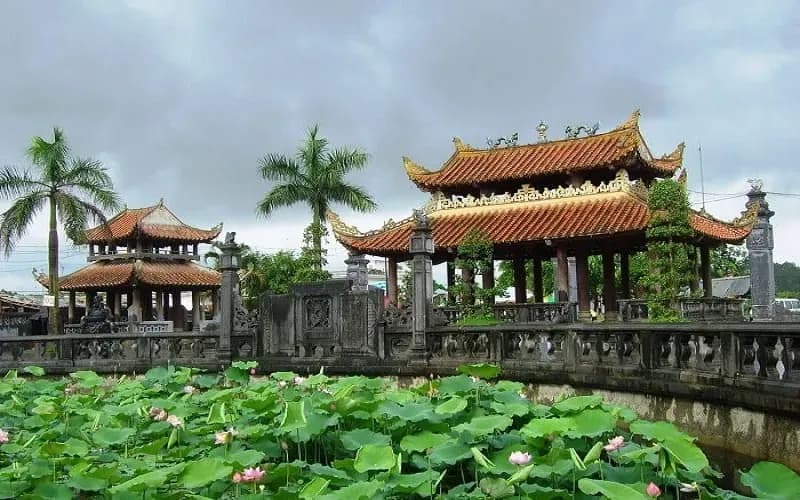
Located next to Hoa Lu Cave, in Gia Hung commune, Gia Vien district, with an area of about 4 hectares, Thung La is a deep valley, surrounded by five large mountains, in front of which is a large lotus lake with a fragrant scent.
According to legend, this was the place where Saint Nguyen Minh Khong grew medicinal herbs. This place has many precious medicinal plants, so it was also the base where King Dinh's army secretly retreated to for treatment after each battle. In the past, there was a queen (later people built a temple and called her Vuong Ba) who was very good at fortune telling, often reading the leaves for King Dinh Tien Hoang before going to war or doing important things. Perhaps for those reasons, this place was named Thung La. With its quiet and poetic appearance, Thung La Temple is a sacred place to worship the National Mother, one of the attractive destinations for tourists.
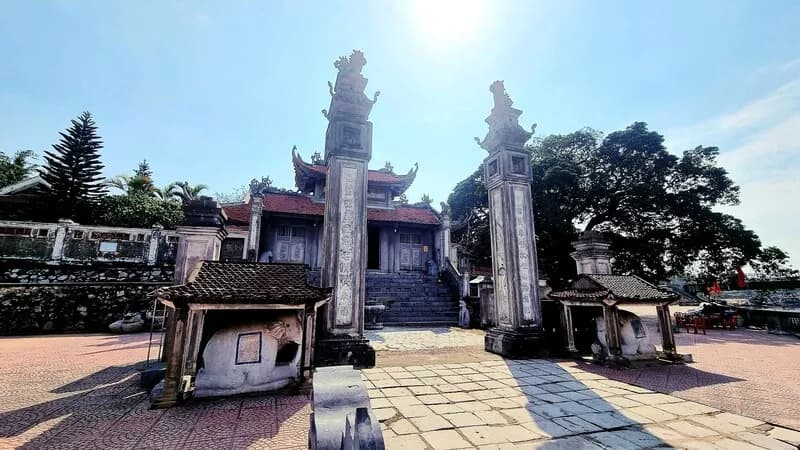
Thung La Temple has the architecture of “Tien Nhi, Hau Dinh”. The three-room front hall opens to three doors, has no porch, and is decorated with two dragons facing the moon. The back hall connects to the back palace. Through the brick yard is the Front Hall, consisting of five rooms, with a tiled roof, and inside is the Tran Dynasty altar. With its majestic natural beauty, ancient architecture, and stone reliefs with elaborate patterns, this place adds harmony and serenity.
Every year, at the beginning of spring, visitors often come here to pray for a good new year and to practice or enjoy the bronze statues - a unique cultural form in the Vietnamese Mother Goddess worship.
Thank you for choosing iguide.ai to accompany your exciting experience!
Log in to leave a comment. Log in
Be the first to comment.
React to this story
Curate
Sign in to curate