Save
Share
Keep reading
authenticated by

Save
Share
Keep reading

Vietnamese ethnic groups
The Gia Rai ethnic group brings a rich culture and unique life to the Central Highlands of Vietnam.
The Gia-rai are one of the five ethnic groups belonging to the Malayo-Polynesian language group and are one of the indigenous ethnic groups in the Central Highlands (Vietnam). Let's find out information about the Gia-rai ethnic group in Vietnam with iGuide.ai!
Historical origin Self-name: Gia Rai. Other names: Giơ Ray, Chơ Ray. Local groups: Chor, Hđrung (including Hbau, Chor), Arap, Mthur, Tơbuân. The Gia Rai ethnic group is one of the earliest inhabitants of the Central Highlands, spreading to part of Cambodia.
In the ancient Gia Rai society, there were Pơtaoia (King of Water) and Pơtaopui (King of Fire) who worshiped heaven and earth, praying for favorable weather. Before the 11th century, the Ede and Gia Rai people were called by the same name, Rang Dey. In the 15th-16th centuries, Vietnamese feudal history books recorded the titles Thuy Xa (King of Water) and Hoa Xa (King of Fire). Only men with the surname Siu were allowed to be kings of fire and water, and daughters with the surname Rơchom were allowed to be wives of two kings. Perhaps the word Pơtao is synonymous with Mtao of the Cham, Tao of the Thai and Thao of the Lao, all referring to leaders.
Population: According to the Census of 53 Ethnic Minorities on April 1, 2019, the total population is 513,930 people. Of which, males are 252,234; females are 261,696. Percentage of population living in rural areas is 89.5%. Language: The Gia-rai are one of the five ethnic groups in the Malayo-Polynesian language group and are one of the indigenous ethnic groups in the Central Highlands of Vietnam.
The Gia-rai ethnic group in the Central Highlands mainly resides in Gia Lai province, the west of Phu Yen province, the south of Kon Tum province, and the north of Dak Lak province.
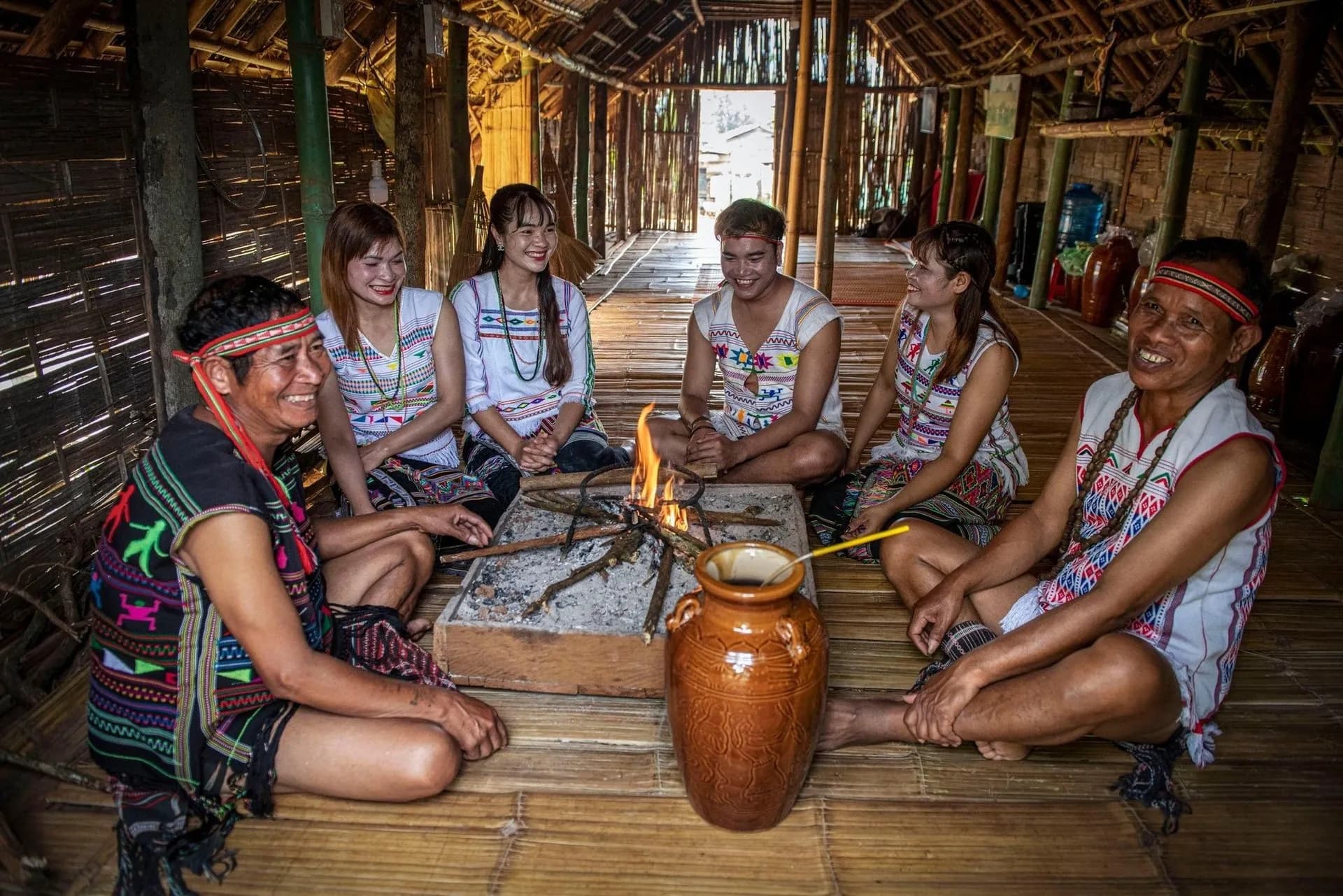
Food: Rice is the staple food; corn is the secondary food. Food includes vegetables, salt, chili, vegetable soup, and occasionally meat and fish. The party is centered on a cup of rice wine, surrounded by dishes served on bowls, plates, or banana leaves for eating and drinking. When tipsy, there is singing, dancing, and gong playing.
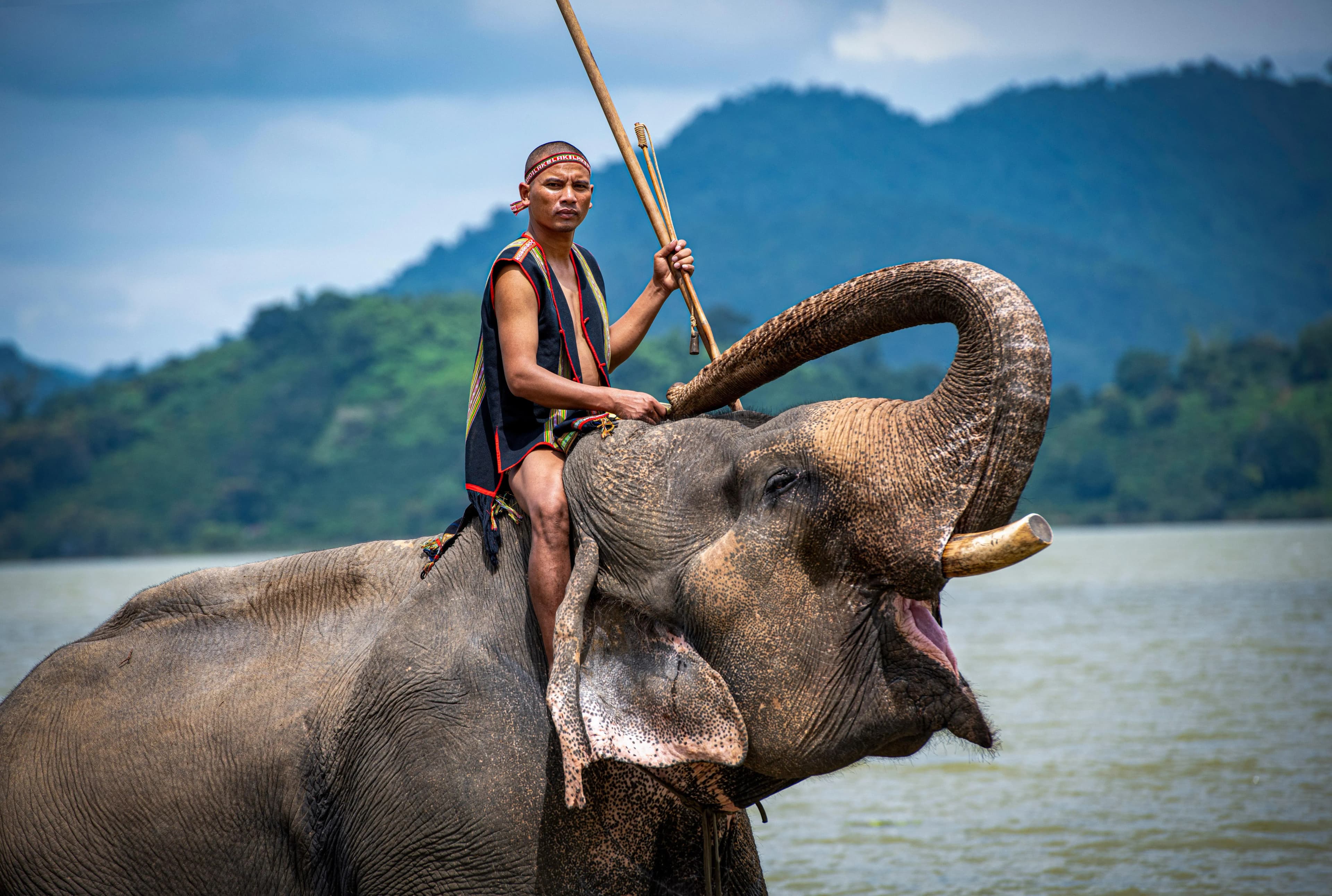
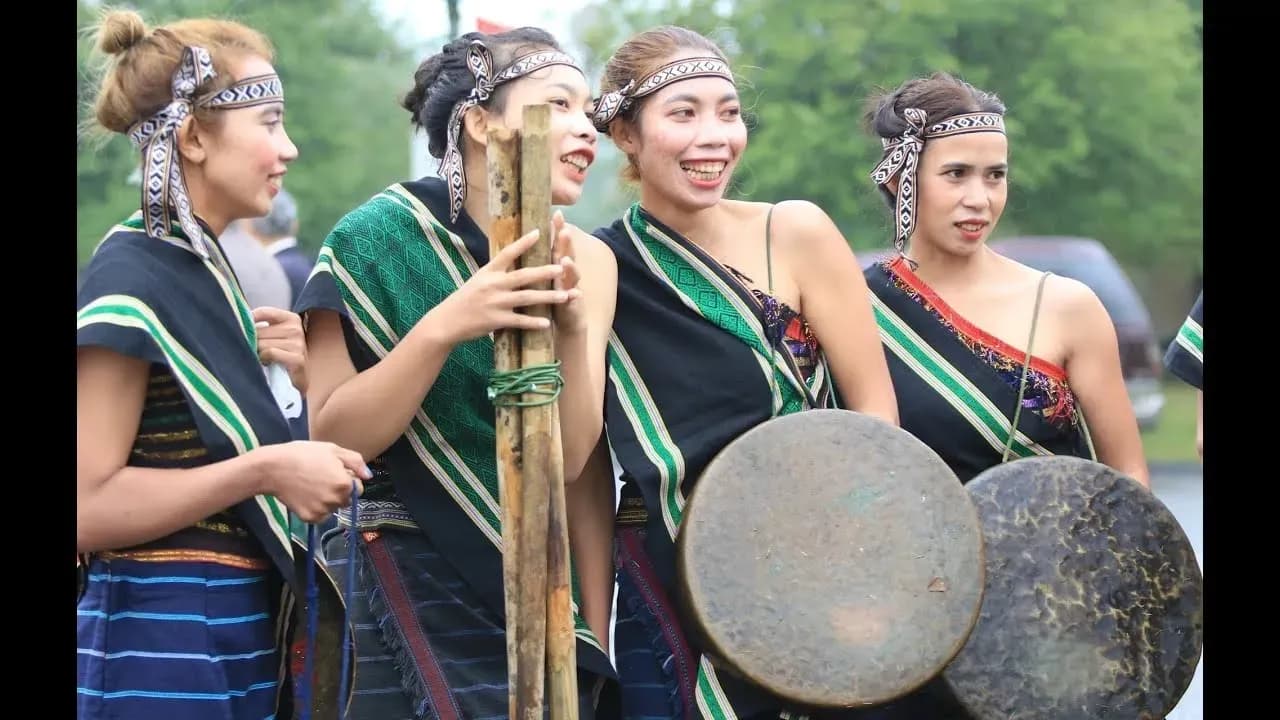
Costumes: Men wear white loincloths with multi-colored stripes (toai), on holidays they wear indigo loincloths 4m long and 0.30m wide, with patterned borders and multi-colored thread tassels at both ends. Black shirts are short-sleeved, open-armpit, with colored thread patterned borders running along both sides, bearing strong traces of the poncho style. The potao or village chief wears indigo shirts that cover the buttocks, have long sleeves, are pulled over the head, and have a red thread panel for buttons and buttonholes from neck to chest. Below the button strip is a square piece of red fabric sewn in to mark the shirt. Women wear indigo skirts (1.4m long x 1m wide), with patterned borders running around the hem. The waistband has white or colored thread tassels. The skirt is not sewn into a tube, so when worn, it is rolled up to the body with the two ends facing forward. They wear short, tight-fitting, long-sleeved blouses. On the sleeves are embroidered colored thread patterns. The place is hot all year round so both men and women like to go shirtless.
Accommodation: There are two types of stilt houses: Long stilt houses in the la-yun-pa style, 13.5m long and 3.5m wide, the average size for each house. The house is divided into two parts: the mang side and the oc side. The oc side door only faces north and is reserved for women - the matriarchal heads of the family. There are two kitchens in the house. Small Hđrung style houses are 3m wide x 9m long. The height from the ground to the roof beam is not more than 4.5m. The main door leading to the drying floor only faces north. There are two windows on both sides of the main door. There is only one kitchen in the house.
Funeral: The Gia Rai follow the custom of burying all relatives of the mother in the same grave. A dead man must be carried back to be buried in his mother's grave. In that common grave, the coffins are placed side by side horizontally and then stacked vertically. When the coffins are as high as the mouth of the grave, boards are placed on all sides to bury them a few more layers before performing the "grave abandonment" ceremony (Hoa lui, Thi nga or Bo thi) - a major ritual during the funeral process.
Worship: The Gia Rai people believe in animism. There are many types of gods (Yang), of which three prominent types are mentioned in annual or multi-year worship ceremonies: The house god (Yang sang) is a force that protects the house and is worshiped in the house. When a new house is built, a buffalo stabbing and kapok tree planting ceremony must be performed. The village god (Yang ala bon) and the water god (Yang ia) are forces that protect the village and the lives of all members and are worshiped at the water wharf and the foot of the mountain. The king god (Yang po tao) is performed by the king of fire, king of water, king of wind (ptao agin) to pray for favorable rain, wind and good crops. In addition, the Gia Rai people also believe that when they die, souls turn into ghosts. There is a phenomenon of assigning harmful magic to people called ma lai.
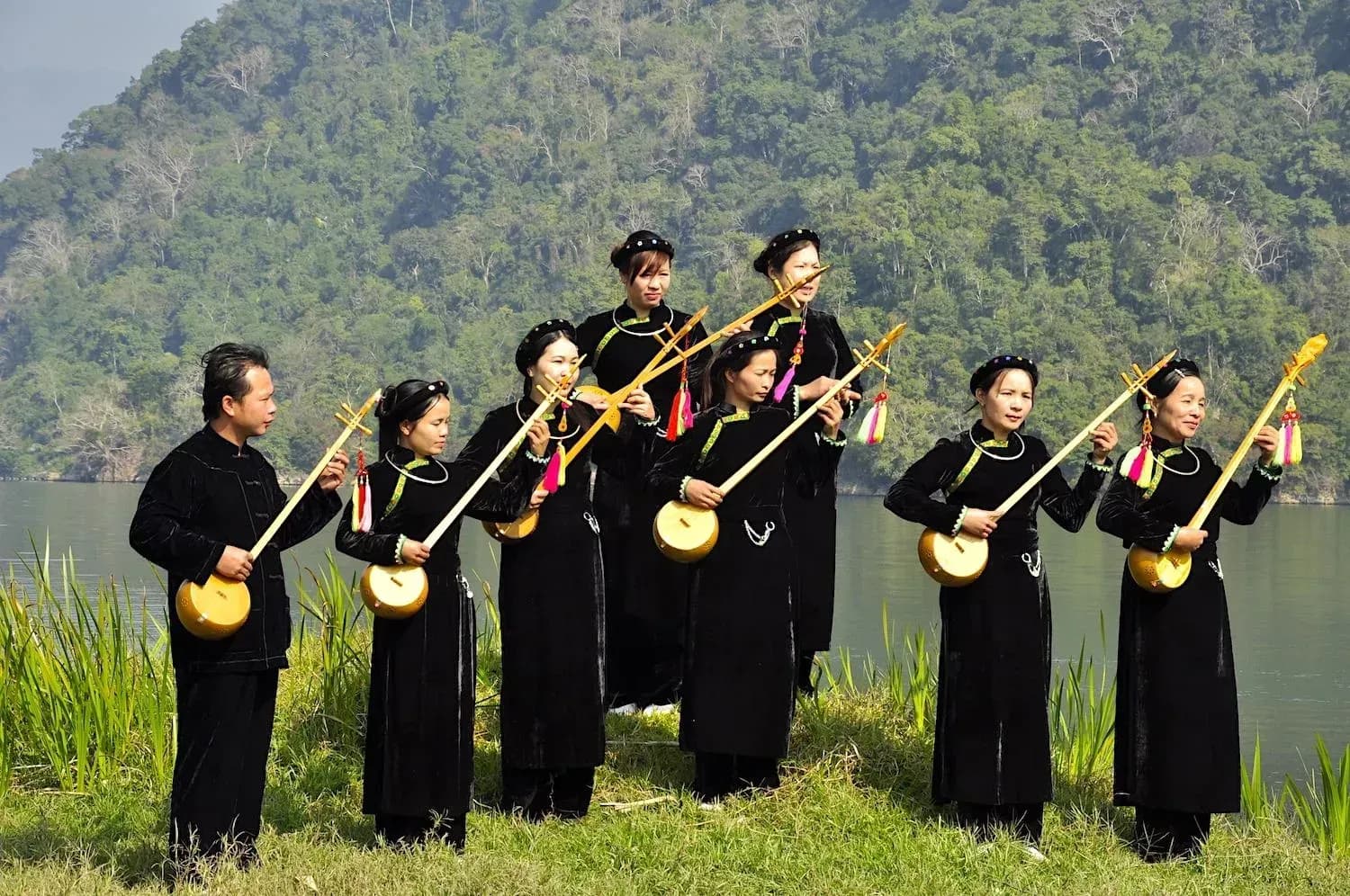
Culture and arts: The Gia Rai have many epic poems such as Dam San, Xinh Nha, Dam Di... performed in the form of poetic singing accompanied by the Tung nung. Gia Rai folk dances have movements simulating wars between tribes. The Tơ rưng, Krông put, Tung nung... are very popular.
Cultivation economy is the root of production activities. Land is the object of labor impact divided into two types: uncultivated land called: dike, tra, lon, ownerless and cultivated land called Hma, the part owned by each family. Hma includes land cultivated in the way of half garden, half field; slash and burn, hoeing and digging holes to sow seeds. As for wet rice fields, hoeing is used; mud is stirred and is being converted to plowing and harrowing using 2 oxen.
Family livestock includes: buffalo, cow, horse, elephant, pig, chicken, dog. Of which, buffalo is the equivalent in exchanging precious objects such as gongs, jars and sacrifices in religious ceremonies. Family side jobs include: carpentry, blacksmithing and weaving. Craftsmen have made baskets used to hold clothes, jewelry, and transport. Weaving with Indonesian style looms is quite popular, creating wide-width cloth with beautiful patterns.
Above is some interesting information about the Gia Rai ethnic group in Vietnam. Let's join iGuide.ai to plan to meet and immerse yourself in the culture of the Gia Rai people in the near future!
Source:
- Ethnic groups in Vietnam (National Political Publishing House Truth);
- Basic characteristics of 54 ethnic minorities in 2019 (Committee on Ethnic Minorities and General Statistics Office);
- Website of the Ethnic Committee, Website of Nhan Dan Newspaper;
- The survey results collect information on the socio-economic status of 54 ethnic groups in Vietnam.
Log in to leave a comment. Log in
Be the first to comment.
React to this story
Curate
Sign in to curate