Save
Share
Keep reading
authenticated by

Save
Share
Keep reading
Vietnamese ethnic groups
Immerse yourself in Thai ethnic culture: language, costumes, cuisine and vibrant festivals. An ideal destination for traditional tourism.
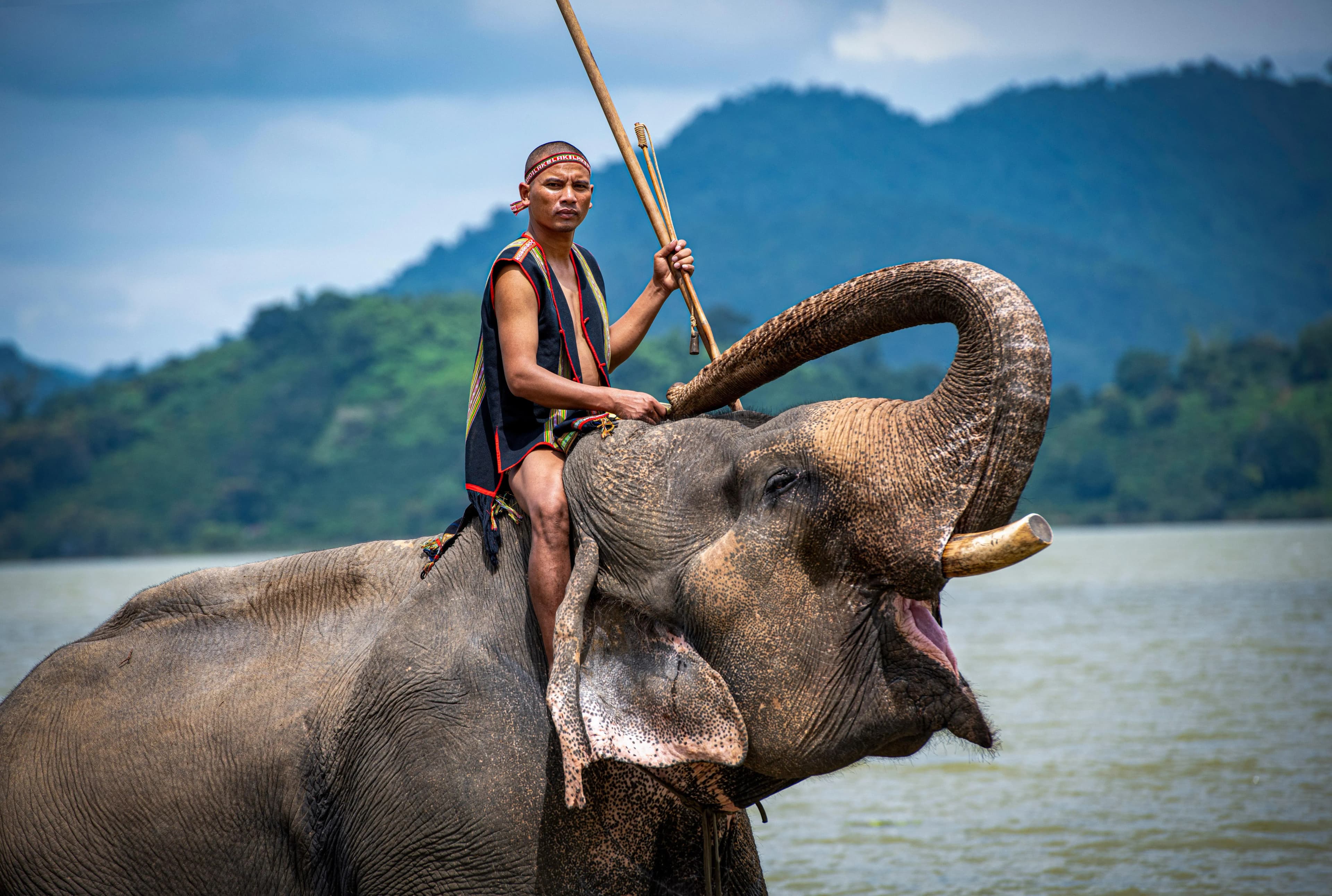
The Thai people have been present in Vietnam for a long time. The Thai people are considered a unique piece in the picture of 54 ethnic groups of Vietnam. iGuide.ai shares some interesting things about this ethnic group through the following article!
The Thai people originated in mainland Southeast Asia, and their ancestors were present in Vietnam very early. The Thai people in Vietnam are considered an ethnic community with many local groups. Their origins and presence in Vietnam are not entirely the same. According to ethnologists, the Thai people in Vietnam have two main groups: the White Thai and the Black Thai.
The Thai people live in the following main provinces in Vietnam: Hoa Binh, Lai Chau, Dien Bien, Son La, Lao Cai, Yen Bai, Thanh Hoa, Nghe An. The migration process since the early 1990s has expanded the residential area of this ethnic group to several other regions, including provinces in the Central Highlands.
Population: According to the 2019 Census of 53 Ethnic Minorities, the Thai ethnic group has 1,820,950 people. Of which, there are 910,202 males and 910,748 females.
Language: Belongs to the Tay - Thai language group (Thai - Kadai language family).
Traditional social institutions: The Muong village institution, a pre-state form of organization, marks the high level of development of Thai society.
Religion, belief: The Thai people worship their ancestors, the god of agriculture, and the god of mountains and rivers. Worship is closely linked to annual festivals such as: the rice-going ceremony, the rain-praying ceremony, the rice-soul-welcoming ceremony, the harvest-praying ceremony, the new rice celebration ceremony... Weddings and funerals are strictly organized according to traditional rituals.
Worship: The Black Thai worship their ancestors in the 7th and 8th lunar months. The White Thai celebrate Tet according to the lunar calendar. The village worships the gods of land, mountains, water, and the souls of the pillars.
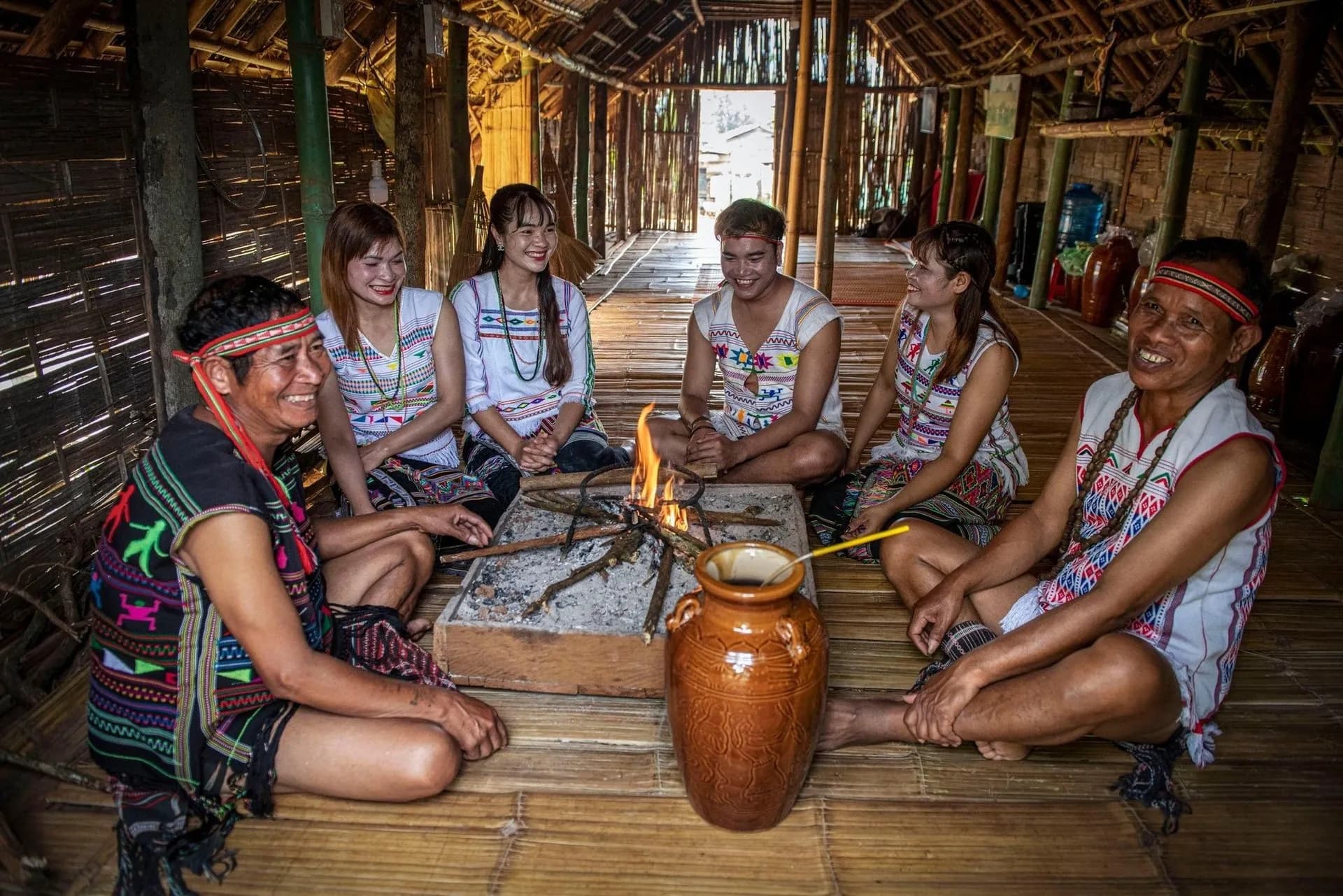
Housing: In the stilt house, the appearance is different. The image of “khau cut” is depicted as a unique symbol for the stilt house with a turtle-shaped roof of the Black Thai people. Meanwhile, the house of the White Thai people is often built on a rectangular ground plan, with wooden railings running in front or around the house. One of the architectural features of the Thai stilt house with many ethnic characteristics is the staircase, which preserves the ethnic cultural and spiritual values, religious values, and taboos about gender and childbirth.
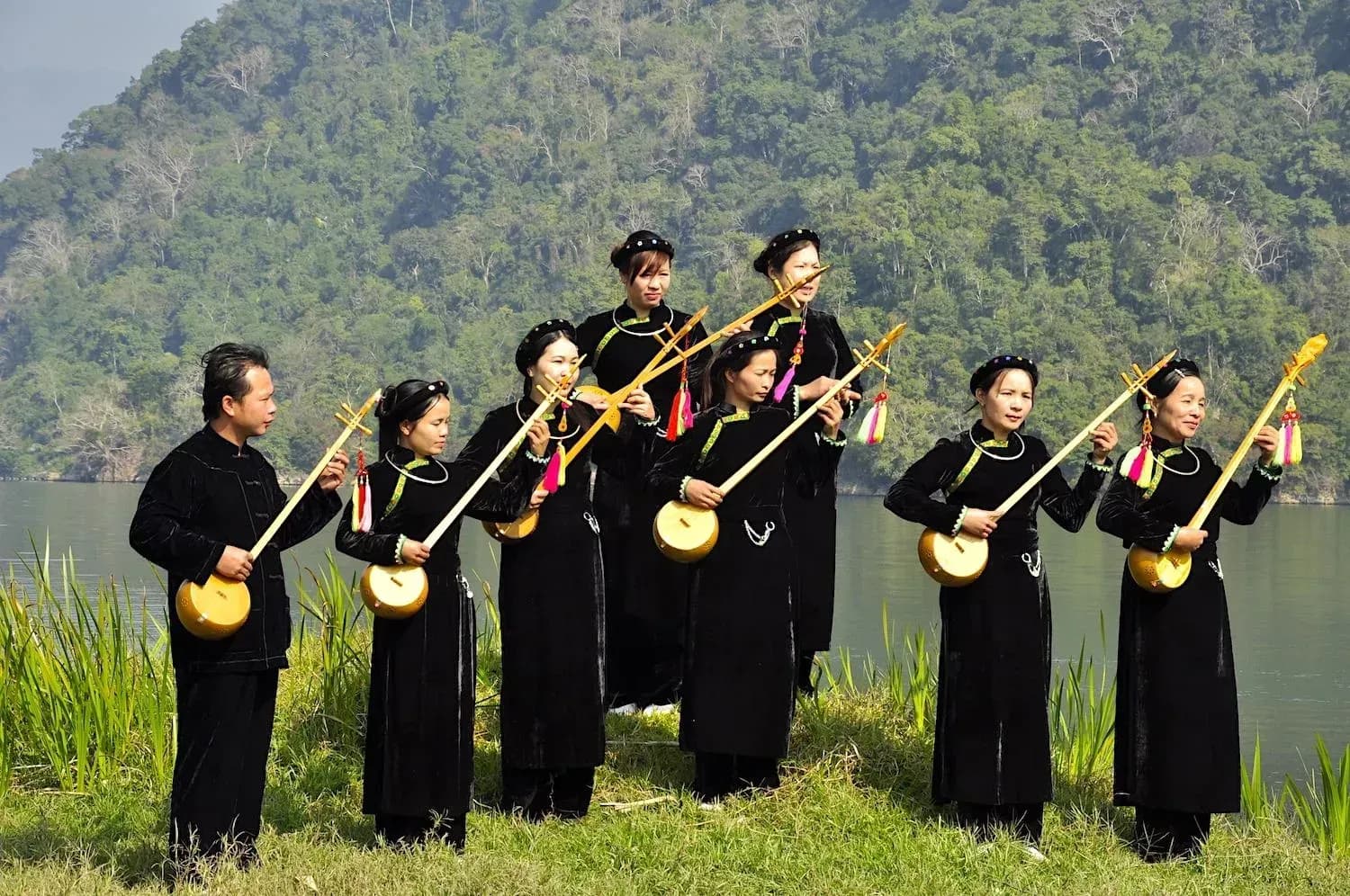
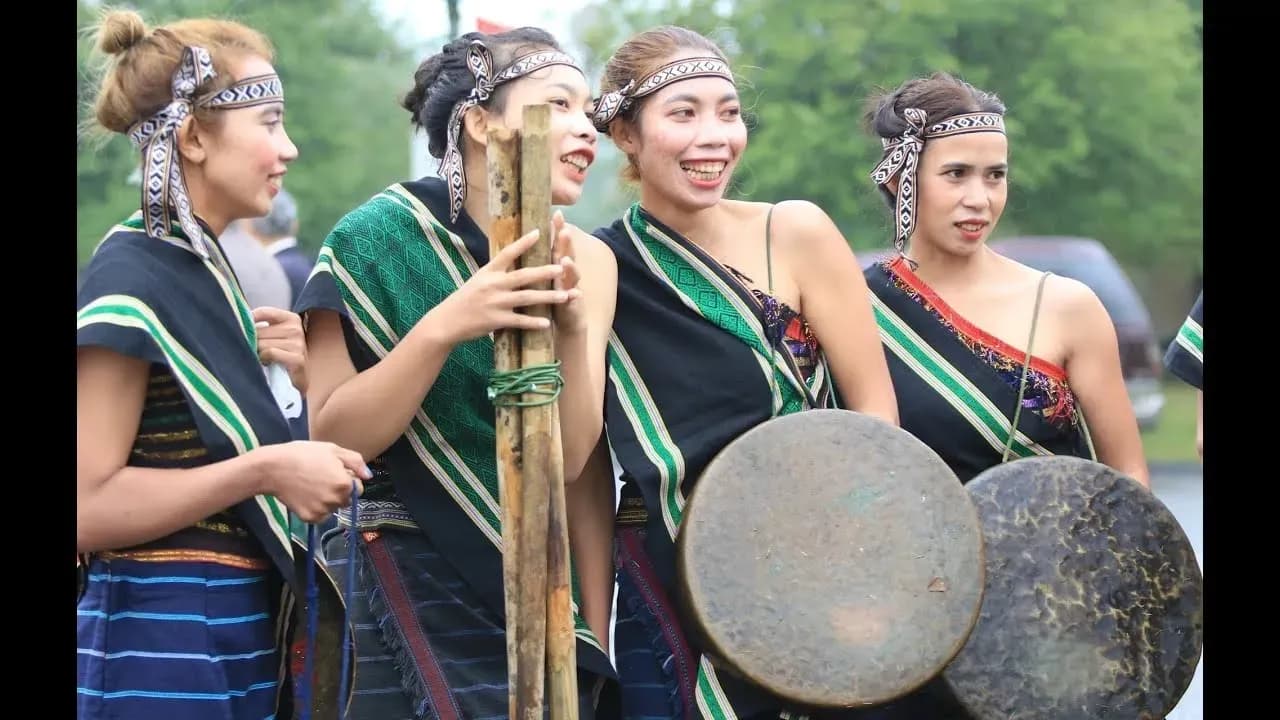
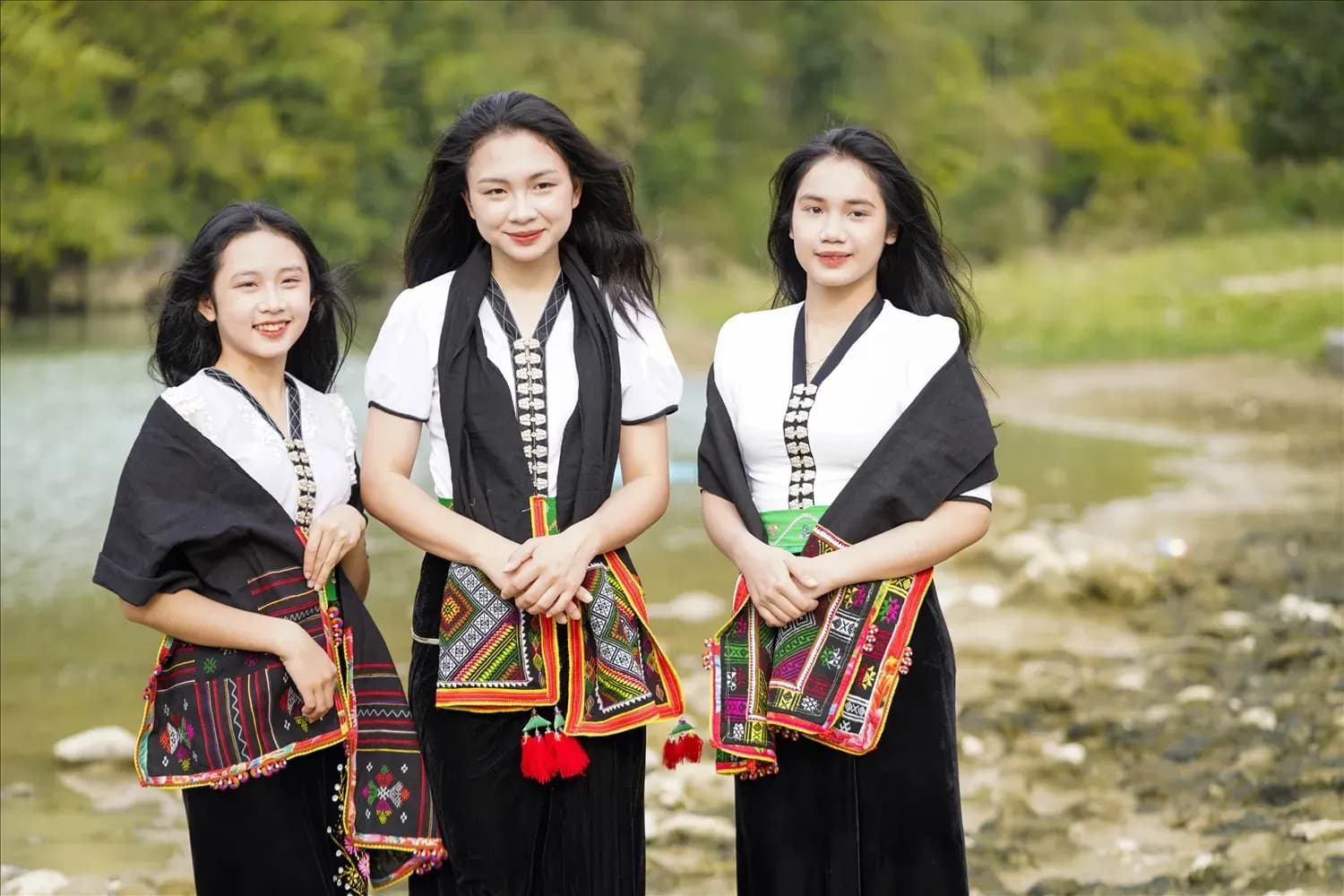
Skin: Thai ethnic groups such as the Black Thai and White Thai have many similarities in their daily attire, but their own unique characteristics still stand out to distinguish them. White Thai women wear short, light-colored, white blouses with silver buttons in the shape of butterflies or bees; black skirts without decorative patterns. Head scarves made of indigo fabric are about two meters long…
Cuisine: Sticky rice, bamboo rice, rice wine, and grilled foods are often considered typical of Thai cuisine.
Art: The Thai people have unique xoe dances, poetic singing, and rich love dialogues. Traditional musical instruments include flutes and flutes.
Folk games: Popular Thai games include throwing con, tug of war, horse racing, boating, crossbow shooting, xoe dance, spinning top and mak le.
Education: According to the 2019 Survey of 53 Ethnic Minorities.
Primary level: 100.8%;
Secondary school level is 94.6%;
High school level: 56.5%.
Cultivation: The Thai ethnic people grow wet rice and cultivate on the fields. In addition to growing wet rice, people also cultivate on the fields, growing rice interspersed with other crops such as soybeans, corn, potatoes, cassava, etc. The Thai people apply science and technology to production, bringing economic efficiency. Thai agricultural production is increasingly oriented towards the market instead of self-sufficiency as before.
Common livestock are: pigs, buffaloes, goats and silkworms. Free-range farming is no longer popular and is instead confined in barns. In addition, the Thai people also develop small-scale handicrafts such as weaving, knitting, etc.
Nowadays, in the general trend of development, income from non-agricultural activities such as: tourist services, employment, trading also tends to grow thanks to the development of the transportation system; market demand, and State policies.
Above is some interesting information about the Thai people. Let's plan to explore, meet and experience the culture with Thai people in the near future with iGuide.ai!
Source:
- Ethnic groups in Vietnam (National Political Publishing House Truth)
- Basic characteristics of 54 ethnic minorities in 2019 (Committee on Ethnic Minorities and General Statistics Office)
- Website of the Ethnic Committee, Website of Nhan Dan Newspaper
- Survey results collect information on the socio-economic status of 54 ethnic groups in Vietnam
Log in to leave a comment. Log in
Be the first to comment.
React to this story
Curate
Sign in to curate